Longer Than the Map Allows: Temporal Irregularities in Everyday Transit Infrastructure

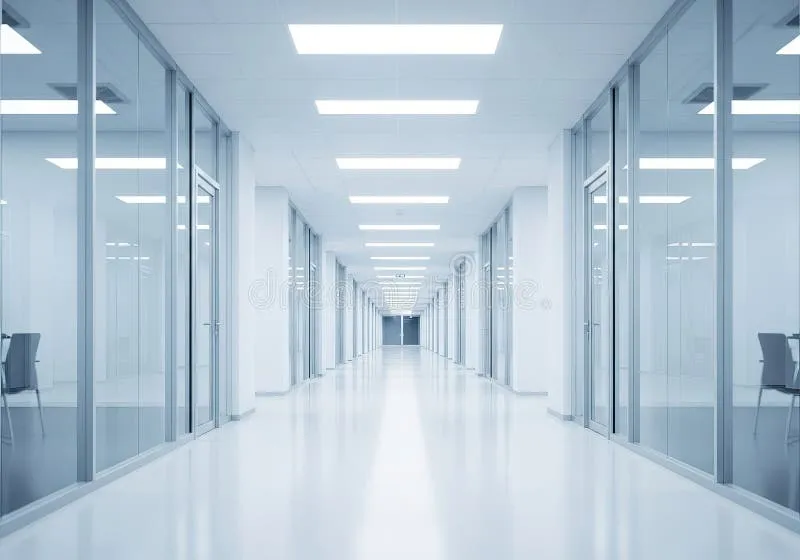
Photo: empty parking garage fluorescent lights concrete perspective, via ncpd.org.za
The commute is, by design, unremarkable. It is the negative space of a working day — the corridor between a life's meaningful episodes, navigated by habit and repetition until the route becomes nearly unconscious. Most commuters could not describe in detail the walls of the parking garage they use every morning, or the precise configuration of the interchange they cross twice daily. This inattention is normal. It may also be dangerous.
Over the past several years, researchers affiliated with threshold architecture documentation have compiled a growing body of transit anomalies in which the time required to traverse a known route exceeded — sometimes dramatically — what the distance and conditions could reasonably explain. These are not cases of traffic delays or mechanical failures. They are cases in which time, measured against multiple independent sources, simply did not agree with the space it was supposed to occupy.
What the GPS Logs Reveal
In the summer of 2019, a commercial driver operating a delivery route between two warehouses in the eastern Chicago metro area arrived at his destination approximately four hours and seventeen minutes later than his dispatch records projected. His vehicle's GPS unit logged the journey as having taken eleven minutes. The odometer reading was consistent with the expected mileage. The driver reported no stops, no mechanical issues, and no subjective awareness that anything unusual had occurred. He described the drive as feeling, if anything, slightly shorter than normal.
He was not alone. A review of GPS anomaly reports submitted to a regional fleet management company between 2017 and 2022 identified sixty-three incidents across twelve metropolitan areas in which vehicle tracking data contradicted arrival timestamps by margins of more than forty minutes. In thirty-one of those cases, the discrepancy exceeded two hours. The company's technical team attributed the anomalies to satellite synchronization errors and closed each file. No follow-up interviews with drivers were conducted.
This is a recurring feature of the documentary record: the institutional impulse to explain and close, before the shape of the thing has been fully examined.
The Corridor Beneath the City
Subway infrastructure presents a particular problem for conventional analysis. Underground transit systems are, by their nature, architecturally opaque — sealed from above, extending through substrates that have not been fully mapped, running through tunnels whose original survey documents are often incomplete, amended, or missing entirely. The New York City subway system alone contains documented references to stations, service corridors, and platform extensions that do not appear on any publicly available schematic.
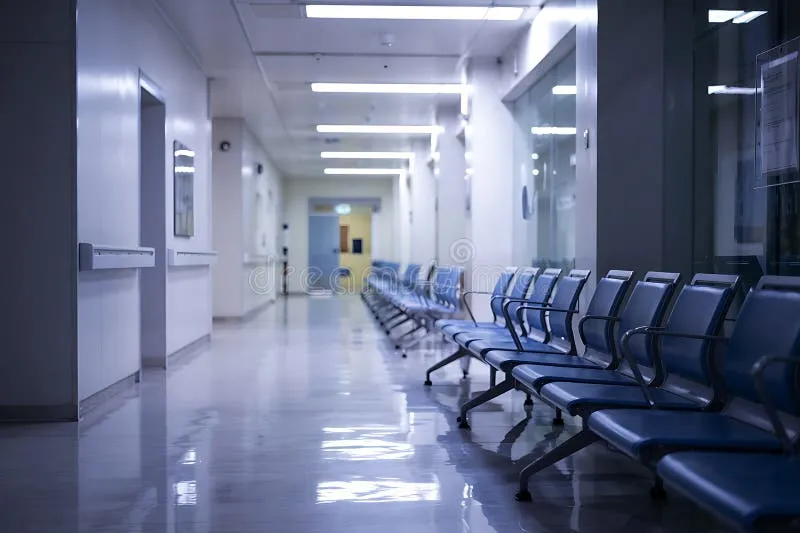
In 2021, a transit worker employed in maintenance on a line in the northeastern United States — who provided testimony on condition of anonymity — described an incident during a routine overnight inspection walk. The worker entered a service corridor at a marked junction and proceeded toward a known equipment room. The walk, which he had performed dozens of times and which should have taken approximately eight minutes, lasted what he estimated to be close to an hour. The corridor did not branch. He made no turns. The fluorescent lighting overhead cycled through a slow, irregular flicker he had not previously noticed, and the sound of his own footsteps seemed to arrive slightly after he made them.
When he reached the equipment room, his watch and his phone disagreed by forty-four minutes. The phone, which had lost signal in the tunnel as expected, had not updated from an external source. Both devices had been running continuously. He could not account for the discrepancy. He filed no report. He requested a transfer to a different line the following week.
Parking Structures and the Problem of Threshold Geometry
Of all the transit environments implicated in temporal anomaly documentation, parking garages have generated the most consistent pattern of reports. This may seem counterintuitive — a parking garage is static infrastructure, not a transit corridor in the conventional sense — but their architectural character warrants attention. They are designed around repetition: identical levels, identical bays, identical ramps curving upward or downward in a geometry that is deliberately, functionally disorienting. Visitors are expected to lose their spatial bearings. The design assumes it.
Threshold architecture theory holds that spaces built around deliberate spatial ambiguity — where identical surfaces repeat without clear terminus, where the relationship between interior volume and exterior footprint is not legible from within — are more susceptible to the kinds of permeability that allow ordinary environments to neighbor the Backrooms. Parking garages, by this framework, are not incidentally disorienting. They are structurally aligned with the conditions that make threshold events possible.
A case documented in Phoenix in 2020 involved a woman who entered a multi-story parking structure attached to a shopping center at approximately 2:40 in the afternoon. Security footage confirmed her entry. She was recorded exiting through the pedestrian stairwell at what the timestamp logged as 2:51 — eleven minutes later. Her phone, which had maintained signal throughout, showed the time as 6:17 p.m. She described the interior as having felt, at some point during her walk to her vehicle, subtly wrong — the ceiling slightly lower than she remembered, the painted lane markings a color she could not quite name, a smell like damp concrete and something organic beneath it. She had not felt afraid, she said. She had felt watched.
What Remains Unresolved
The cases documented here share several features worth noting with precision. The affected individuals do not, as a rule, report dramatic experiences. They report mild wrongness — sensory details that do not cohere, a feeling of being observed, a quality of silence that is not quite silent. They report arriving somewhere familiar having passed through somewhere that was not. And they report, almost universally, a reluctance to discuss the experience in formal terms.
This reluctance is itself informative. It suggests not trauma but something closer to embarrassment — the social difficulty of asserting that a drive, a walk, a brief errand took four hours when every external measure says it did not. The infrastructure accommodates this silence. It is built to be traversed without examination.
The question this analysis cannot yet answer is whether the temporal distortions documented here represent isolated threshold permeability events, or whether certain transit corridors have been structurally adjacent to the Backrooms for far longer than their construction dates would suggest. The parking garage in Phoenix was built in 2003. The subway corridor in the Northeast predates it by decades. The highway interchange outside Chicago follows a route that, in some form, has existed since the 1940s.
Something, in each case, was already there. The infrastructure was built around it. Whether anyone knew this at the time is a question the permit records, characteristically, do not answer.