When Rails Lead Nowhere: The Crossing Tender Who Logged Ghost Schedules
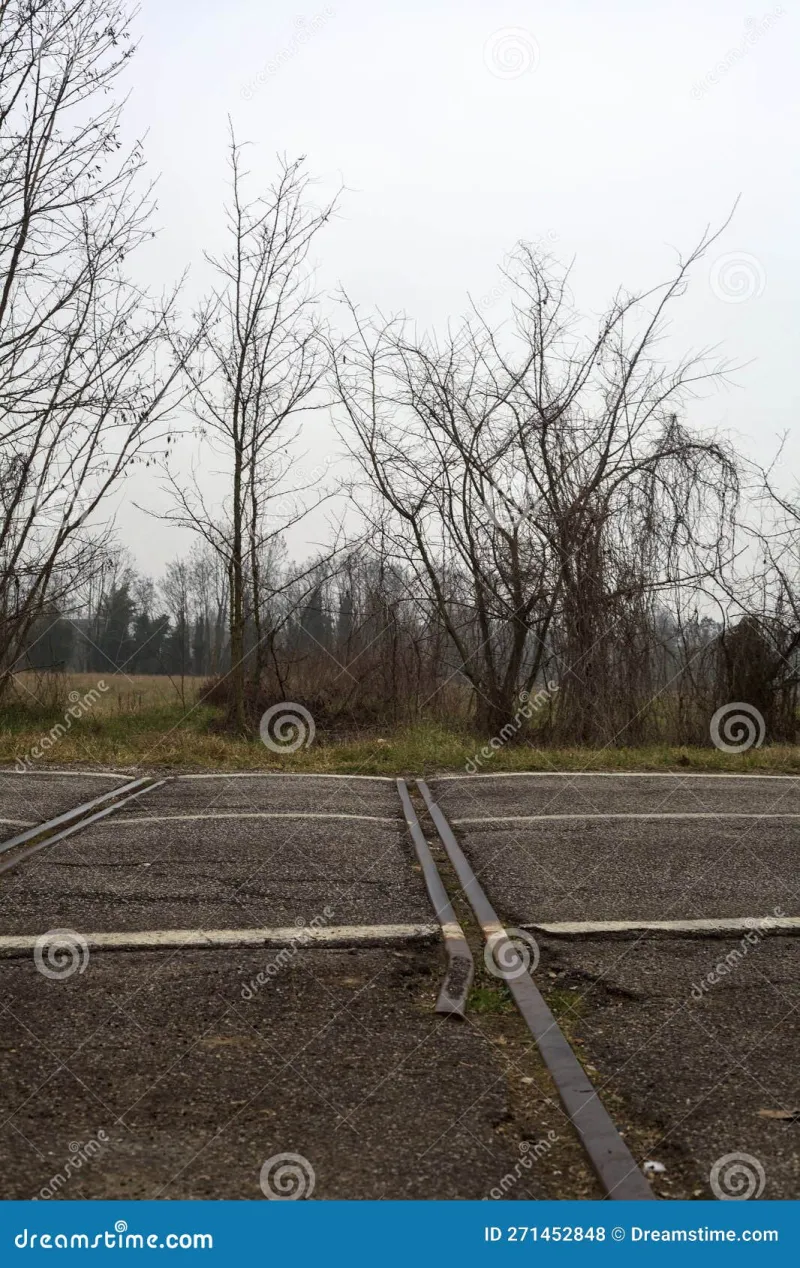
Photo: rural railroad crossing night fog abandoned train tracks, via thumbs.dreamstime.com
The crossing tender's booth sat at the intersection of County Road 47 and the old Burlington Northern line, a lonely outpost in the corn country of central Iowa where Harold Vance had worked the same twelve-hour shift for seventeen years. The job was simple: lower the gate when trains approached, raise it when they passed, log the time and direction in the dispatch book. The railroad paid him to be precise, and Harold took pride in his precision.
 Photo: County Road 47, via pi.movoto.com
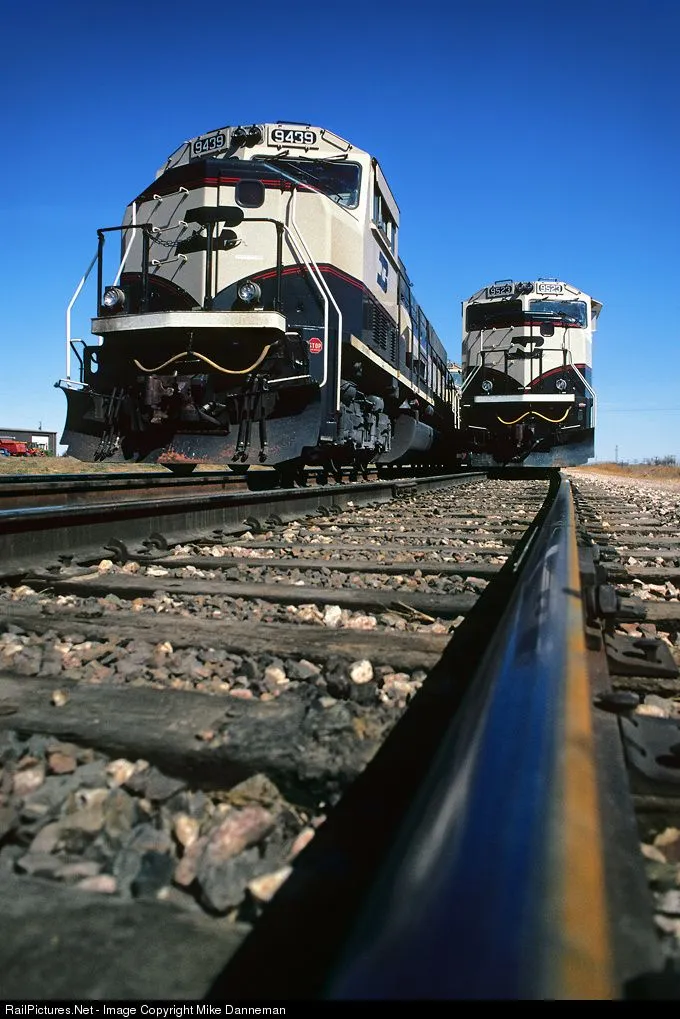 Photo: Burlington Northern, via i.pinimg.com
The first irregularity appeared in his logs on a Tuesday in late September. Train 4471, eastbound, 11:47 PM. Harold dutifully recorded the entry, noting the locomotive number and consist length as he always did. When the dispatcher called the next morning to reconcile the overnight logs, there was confusion. No train 4471 existed in the system. No eastbound traffic had been scheduled through Harold's crossing after 6:30 PM.
Harold insisted he had seen the train. Heard it first, the familiar rumble building from the west, then the headlight cutting through the darkness. He had followed protocol, activating the crossing signals and lowering the gate. The train had passed—forty-three cars, he had counted them—and disappeared into the eastern darkness. The dispatcher made a note in the file and moved on. Equipment malfunctions happened. Sometimes the sensors triggered false positives.
But train 4471 returned the following week. Same time, same direction, same forty-three cars. Harold logged it faithfully, noting details that seemed increasingly wrong upon reflection. The locomotive bore no railroad markings. The freight cars carried no company logos, no identification numbers, no indication of their cargo. In seventeen years of railroad work, Harold had never seen rolling stock so uniformly anonymous.
The pattern established itself over the following months. Train 4471 appeared every Tuesday at 11:47 PM, eastbound, forty-three cars. The dispatcher stopped questioning Harold's logs after the third report. The railroad's position was clear: if no train was scheduled and no train appeared on their tracking systems, then no train existed. Harold's reports became a curiosity filed away in a folder marked "Equipment Anomalies."
Harold began staying later on Tuesday nights, watching for the train that officially didn't exist. He noticed details that troubled him. The locomotive's headlight cast shadows that fell at wrong angles, as if the light source existed somewhere other than where the train appeared to be. The sound of wheels on rails carried a hollow quality, like an echo from inside a vast empty space. Most unsettling was the complete absence of any engineer or crew visible in the locomotive cab, despite the windows being clearly lit.
On a Tuesday in early March, Harold decided to step closer to the tracks as train 4471 approached. He had worked this crossing for nearly two decades; he knew the safe distances, the proper clearances. As the locomotive passed, he noticed something that made him step back toward his booth. One of the freight cars—the twenty-seventh in the consist—had a passenger door.
The door was standard railroad issue, the kind found on commuter cars and passenger coaches. But this was clearly a freight train, and the car it was mounted on appeared to be a standard boxcar. As Harold watched, the door slid open with a pneumatic hiss that seemed to come from everywhere and nowhere at once.
The opening revealed not the interior of a freight car, but what appeared to be a corridor. The walls were covered in a yellow-beige wallpaper with a subtle geometric pattern. Fluorescent light fixtures ran along the ceiling, their tubes humming with that familiar electrical buzz that every American recognizes from office buildings and schools. The floor was carpeted in a commercial-grade material that looked damp despite the absence of any visible moisture.
Harold found himself walking toward the open door, though he couldn't remember deciding to move. The train had stopped—something train 4471 had never done before—and the corridor beyond the door seemed to extend much farther than the dimensions of the boxcar should have allowed. The fluorescent lights flickered in a rhythm that wasn't quite regular, casting shadows that shifted and moved independently of any visible objects.
As Harold reached the threshold, he heard a sound from within the corridor. Footsteps, perhaps, or something that might have been footsteps if you weren't listening too carefully. The sound had a wet quality, like someone walking across that damp carpet in stocking feet. The footsteps were approaching, though Harold couldn't see their source in the fluorescent-lit distance.
Harold's final log entry was discovered three weeks later when a railroad inspector arrived to investigate reports of a malfunctioning crossing signal. The entry was dated March 18th, but Harold had been reported missing on February 27th. The handwriting was unmistakably his, precise and careful as always: "Train 4471, eastbound, 11:47 PM. Forty-three cars. Door in car twenty-seven remains open. Corridor extends beyond visible termination point. Fluorescent lighting operational but irregular. Proceeding to investigate passenger manifest."
The crossing signal had been found in the lowered position, though no train had been scheduled through the intersection in over a month. The tracks showed no recent signs of rail traffic. Harold's booth was empty, his thermos still warm, his log book open to that final entry written in his careful hand three weeks after anyone had seen him alive.
Train 4471 no longer appears in any crossing logs. The Tuesday night slot remains empty in the dispatch records, just as it always had. But sometimes, local residents report, the crossing signals still activate at 11:47 PM on Tuesday nights, lowering for a train that makes no sound and casts no shadows, carrying cargo that cannot be identified to destinations that do not appear on any railroad map.