The Tower at the End of the Flatness: A Story of the Lifeguard Who Watched Over a Shore With No Water
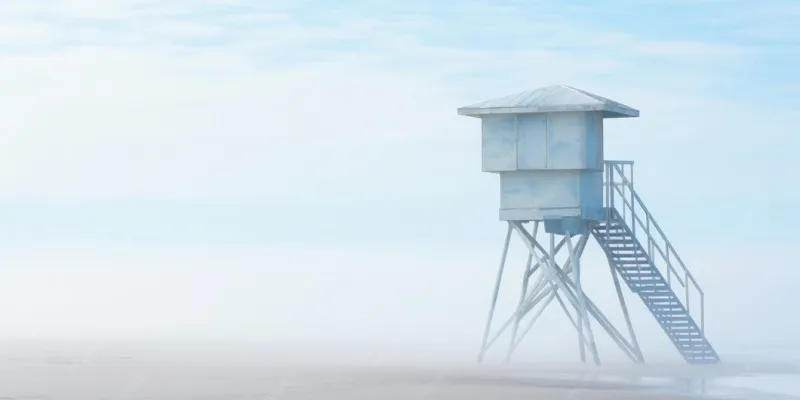
Photo: lifeguard tower empty beach fog overcast eerie, via img.freepik.com
She had driven four hours for this job. That was the first thing Mara told herself when she climbed the lifeguard tower and found no ocean.
 Photo: Mara, via ts2.tech
The posting had been legitimate — a seasonal position at Harwick State Coastal Recreation Area, a park she had never personally visited but had found on the state's official employment portal, complete with a valid park code and a benefits summary that included sunscreen reimbursement. She had packed accordingly. She had a whistle. She had a rescue buoy, fluorescent orange, coiled over her left shoulder. She had SPF 50 and polarized lenses and three years of certification behind her.
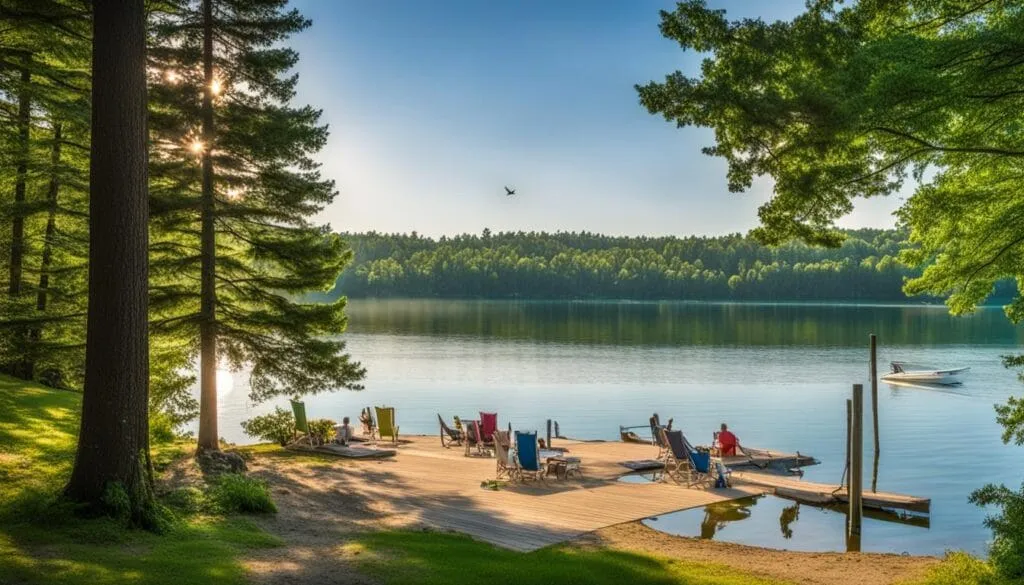 Photo: Harwick State Coastal Recreation Area, via verdanttraveler.com
What she did not have, climbing the last rung of the tower, was an explanation for what she was looking at.
The beach was there. Or something that occupied the same conceptual space a beach should occupy. It was flat in the way that only very wrong things are flat — not the flatness of a calm sea or a salt pan, but the flatness of a surface that has never had any reason to be otherwise, that has never been disturbed by weather or tide or the weight of anything living. It was the color of old carpet. Beige, with the faint suggestion of a pattern that resolved into nothing whenever she tried to focus on it. It extended in every direction she could identify as forward, and it did not end.
The sky above it was the color of a fluorescent tube at the end of its life — yellowish, faintly humming, neither day nor night.
Mara sat down in the tower chair because her legs required it.
She told herself: equipment malfunction. She told herself: trick of the light. She told herself: four hours of highway driving, low blood sugar, the particular dissociation that comes from too much podcast and too little sleep. She told herself all of this with the practiced efficiency of a person who has decided, in advance, not to be the kind of person who panics.
Then she heard the splashing.
It came from somewhere out in the flatness — not close, perhaps a hundred yards, perhaps more. It had the irregular, panicked rhythm of a swimmer in difficulty, the kind of sound she had trained herself to recognize across the noise of a crowded public beach. Arms striking water. The wet percussion of someone going under and coming up. She was on her feet before the thought completed itself, the rescue buoy already in her hand, her eyes scanning the expanse for a figure, a shape, anything.
There was nothing. The flatness was unbroken.
The splashing continued.
She blew her whistle. The sound traveled strangely — it left her lips at full volume and then simply stopped, as though the air beyond the tower had decided not to carry it. No echo. No fade. Just absence.
She looked down at the rescue buoy in her hand and realized she did not remember picking it up. She had set it down on the tower rail when she sat. She was certain of this. It was in her hand now regardless.
Somewhere in the flatness, a child's voice said: over here.
Mara did not go over there. This was either the best decision she ever made or a distinction without consequence — she would spend a great deal of time afterward unable to determine which. She stayed in the tower. She kept her eyes on the expanse. She did not look directly at whatever it was that she gradually became aware of standing at the edge of her peripheral vision, roughly forty yards to the left of the tower base, because looking directly at things in the Backrooms is one of the few pieces of advice that survivors agree on, and Mara had not read any of those accounts but arrived at the same conclusion through what she would later describe as a feeling in the back of the teeth.
The thing at the edge of her vision was tall. It was the approximate shape of a person who had been given a description of a person rather than an actual person to model themselves on. It was very still in the way that things are still when stillness is a strategy rather than a state.
She picked up the radio.
She said: *This is Harwick Tower One, I need backup, I need — * and then she stopped, because she had noticed something about the static that followed. It was not the static of an empty channel. It had texture. It had, if she was being precise, the quality of breathing.
Harwick Tower One, the radio said, eventually. We have your location.
She asked: Who is this?
The radio said: We've been waiting for you to call. The shift doesn't end until someone calls.
The splashing in the flatness had stopped. The thing in her peripheral vision had not moved, but she had the distinct impression that it was now facing her in a way it had not been before — not turned, exactly, but oriented, the way a sunflower orients without visibly moving.
Mara set the radio down.
The rescue buoy was in her hand again.
She does not remember the hours that followed with any reliability. What she can account for is this: at some point, the fluorescent sky dimmed further. At some point, the splashing resumed, closer. At some point, she became aware that the tower was no longer elevated — that the flatness had risen, or the tower had sunk, and she was now at eye level with whatever was out there in the beige expanse, which was the moment she stopped looking.
The last entry in the incident log she was required to keep — a laminated form zip-tied to the tower rail, already half-filled in a handwriting that was not hers — reads as follows:
Conditions: calm. Visibility: poor. Incidents: none reported. Swimmers in distress: present. Rescue attempted: pending.
The final line, written in her own hand, reads: They are not swimmers.
Below that, in the same handwriting as the entries that preceded hers: Correct. Shift continues.
Harwick State Coastal Recreation Area does not appear in the current state parks directory. The employment portal listing has been removed. The position has been re-posted.