The Gallery That Grew: When Museum Tours Extend Beyond the Floor Plan
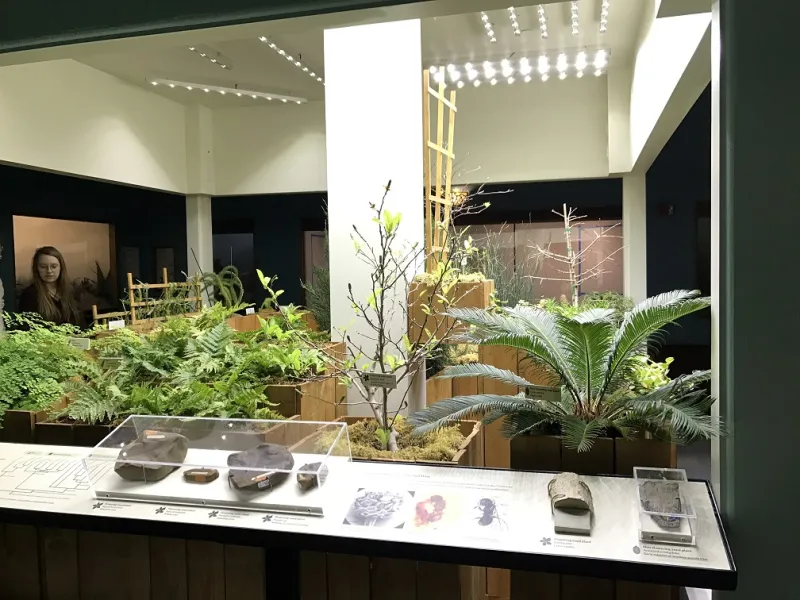
Photo: empty museum hallway fluorescent lighting natural history exhibits, via www.sunlitest.com
I should have questioned the tour group that appeared at closing time. Twenty-three people, adults and children, waiting patiently by the information desk at 4:55 PM on a Sunday when the museum closed at 5:00. They wore the expectant expressions of visitors who had traveled far to be here, clutching brochures and cameras, speaking in hushed tones about specimens they hoped to see.
"Excuse me," their leader said, approaching my volunteer station. "We're here for the extended tour." She was a woman in her fifties, wearing a sensible cardigan and comfortable shoes—the uniform of serious museum visitors. "I believe it was arranged through the education department."
I checked my clipboard. No extended tours were scheduled. Sunday volunteers like myself handled basic visitor services: directions to the restrooms, gift shop hours, general information about the permanent exhibits. Extended tours required advance booking and professional docent staff. But the woman seemed so certain, and the group looked so disappointed when I explained the confusion.
"Perhaps," she suggested gently, "you could just show us through the main galleries? We've driven up from Indianapolis specifically for this."
It was a reasonable request. I had been volunteering at the Midwest Natural History Museum for two years, leading informal walk-throughs for school groups and families. The main gallery route was simple: Paleontology Hall, Geology Wing, Native Species dioramas, then out through the gift shop. Thirty minutes, forty-five at most. What could be the harm?
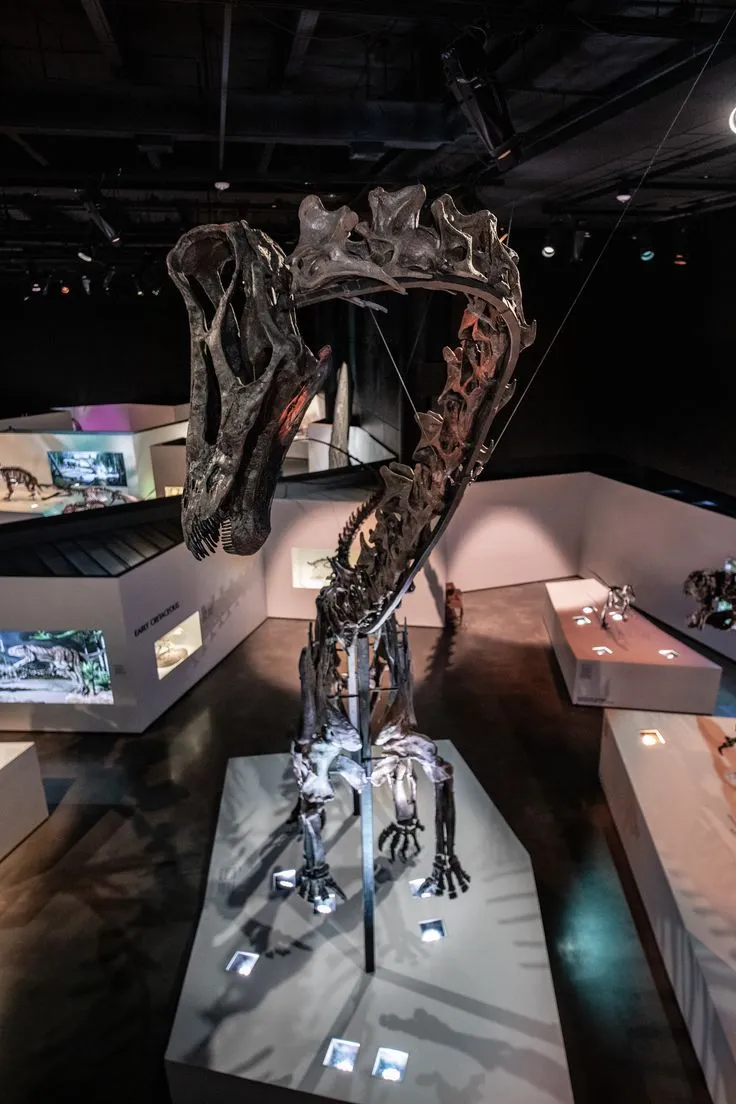 Photo: Paleontology Hall, via i.pinimg.com
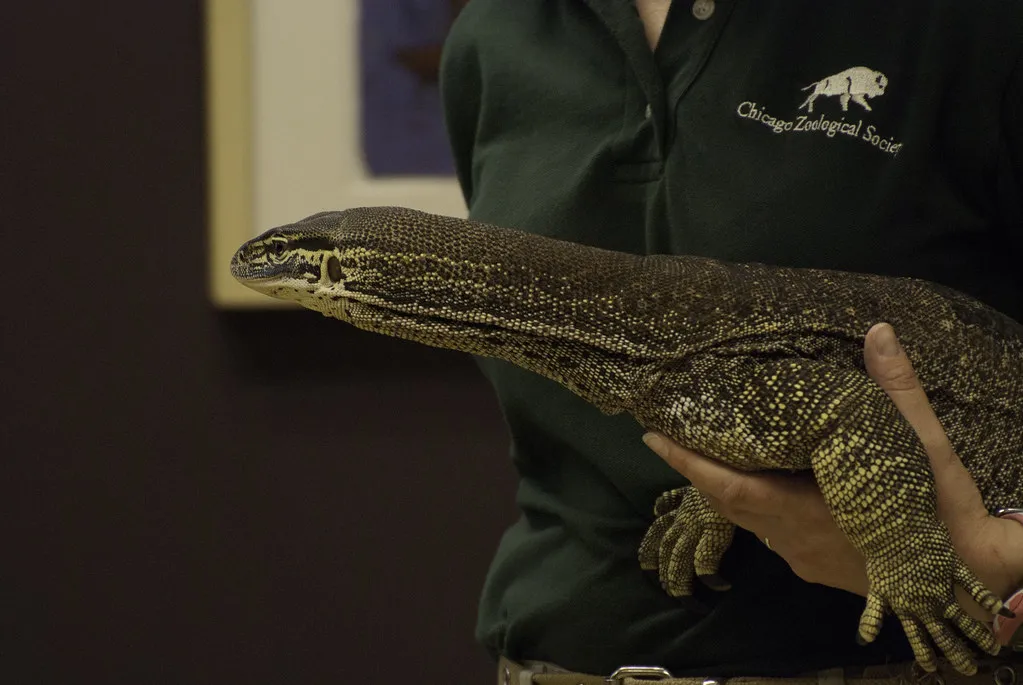 Photo: Midwest Natural History Museum, via live.staticflickr.com
We began in Paleontology Hall, where the Triceratops skeleton dominated the central space under the skylights. I delivered my standard introduction about the Late Cretaceous Period, pointing out the fossilized skull's defensive features. The group listened attentively, asking thoughtful questions about bone preservation and excavation techniques. Normal museum visitor behavior.
But as we moved deeper into the hall, I noticed we were walking farther than usual. The Paleontology Hall was a rectangular space, roughly a hundred feet long, with display cases along the walls and the major skeleton mounts in the center. I had walked its perimeter hundreds of times. Yet somehow, we kept walking forward, past familiar displays, toward what should have been the far wall.
Instead of a wall, there was another doorway. An archway I had never noticed before, leading to what appeared to be another exhibition space. The architectural style matched the rest of the museum—the same cream-colored walls, the same polished terrazzo floors, the same fluorescent lighting fixtures humming overhead. But this room was not on the floor plan I had memorized during volunteer training.
"The Mesozoic Marine exhibit," I heard myself saying, though I had no memory of learning about such an exhibit. "This showcases life in the ancient seas."
The room contained specimens I had never seen before. Massive ammonite fossils spiraled in glass cases, their shells catching the fluorescent light with an oily iridescence. A reconstructed plesiosaur hung from the ceiling, its neck serpentine and impossible. The placards described species with Latin names that seemed wrong somehow—too many syllables, too many consonants, names that made my throat feel strange when I tried to pronounce them silently.
The tour group moved through the space with quiet appreciation, examining the displays, reading the information cards. Their behavior remained perfectly normal, but I began to notice that I couldn't quite focus on their faces. When I looked directly at any individual member of the group, my eyes seemed to slide away, as if their features were somehow too bright or too dim to perceive clearly.
"The next gallery," I announced, though I wasn't sure how I knew there was a next gallery, "features our collection of contemporary ecological specimens."
We passed through another doorway that I was certain hadn't existed moments before. This room was larger than the previous ones, with higher ceilings that disappeared into shadow above the fluorescent fixtures. The displays here were different—living dioramas behind glass, showing ecosystems that looked almost familiar but subtly wrong.
A prairie scene featured grasses that grew in geometric patterns, forming spirals and hexagons across the artificial landscape. A forest diorama showed trees whose bark had a papery quality, like the wallpaper in an old office building. The animals in these displays moved with a sluggish, repetitive motion, following paths that looped endlessly through their artificial environments.
The sound in this room was different too. The fluorescent lights hummed at a frequency that seemed to resonate in my chest cavity. Underneath that electrical buzz, I could hear something else—a sound like distant footsteps on wet carpet, coming from somewhere beyond the dioramas. The footsteps had no visible source, but they maintained a steady rhythm, as if someone were walking the same path over and over again.
"This is fascinating," said the woman who had approached me at the information desk. Her voice seemed to come from farther away than where she was standing. "How much farther does the tour extend?"
I realized I didn't know. We had been walking for what felt like hours, though my watch showed only twenty minutes had passed since we left the main lobby. The galleries kept extending ahead of us, each room leading to another through doorways that appeared exactly when we needed them to appear.
"The final exhibit," I heard myself saying, "is just ahead."
But I was no longer certain who was leading whom. The tour group moved forward with purpose, as if they knew exactly where we were going. I followed, my volunteer badge bouncing against my chest, my clipboard clutched in hands that had grown damp with perspiration that smelled faintly of industrial carpet cleaner.
The final room was the largest yet, with walls that curved away into darkness beyond the reach of the fluorescent lights. In the center of the space stood a single diorama, larger and more detailed than any I had seen before. It showed a cross-section of a building—a museum, I realized, with multiple floors and exhibition halls filled with tiny figures of visitors and staff.
The detail was extraordinary. I could see miniature display cases, microscopic placards, even tiny fluorescent light fixtures that actually flickered with electrical current. In one section of the diorama, a small figure wearing a volunteer badge was leading a group of visitors through galleries that extended far beyond the building's apparent boundaries.
The placard beside the diorama read: "Contemporary Institutional Ecology: The Museum as Living System." Below that, in smaller text: "Note the recursive nature of the guided experience and the permeability of architectural boundaries in spaces designed for educational purposes."
I stared at the tiny figure with the volunteer badge, watching as it led its group through galleries that grew larger with each step, rooms that spawned new rooms, exhibitions that documented themselves in an endless spiral of observation and documentation.
"Thank you for the tour," said the woman in the cardigan. When I turned to respond, the group was gone. I stood alone in the vast, curved room, surrounded by the hum of fluorescent lights and the distant sound of footsteps on wet carpet.
I tried to retrace our path back to the main lobby, but the doorways we had come through were no longer there. The walls curved unbroken around the perimeter of the room. My watch showed 5:47 PM. The museum had been closed for nearly an hour.
In the center of the room, the diorama continued its tiny, perfect demonstration of a museum tour that never quite ended, led by a volunteer who could no longer remember when she had started walking, or whether she was showing the way or being shown the way deeper into galleries that existed only as long as someone was there to observe them.
The fluorescent lights hummed their electrical lullaby overhead, and somewhere in the darkness beyond their reach, the footsteps continued their wet, patient rhythm, walking the same path over and over again, leading tours through exhibitions that documented themselves in an endless spiral of observation and display.