Document everything. Trust nothing.

Backrooms Lore

Document everything. Trust nothing.

Latest Articles

Displacement Syndrome: Clinical Observations from Families of Alleged Returnees
Cultural Analysis

Displacement Syndrome: Clinical Observations from Families of Alleged Returnees

When someone returns from a place that shouldn't exist, the changes aren't always dramatic. Sometimes they're small, persistent alterations that accumulate over weeks—a different way of moving through doorways, an aversion to certain ceiling heights, sleep patterns that no longer align with human circadian rhythms.

The Exchange Protocol: Documentation of Involuntary Item Substitution Among Returnees
Cultural Analysis

The Exchange Protocol: Documentation of Involuntary Item Substitution Among Returnees

Systematic analysis of personal belongings lost and gained during Backrooms displacement reveals a disturbing pattern of deliberate substitution. Investigation of 312 documented cases suggests an intelligence operating within the space that collects specific items while leaving carefully chosen replacements.

Sustenance in the Infinite: A Comprehensive Registry of Edible Discoveries
Structural Analysis

Sustenance in the Infinite: A Comprehensive Registry of Edible Discoveries

An exhaustive catalog of documented food and beverage findings within Backrooms environments reveals disturbing patterns in both preservation and placement. Analysis of 847 survivor testimonies suggests these provisions may serve purposes beyond mere sustenance.

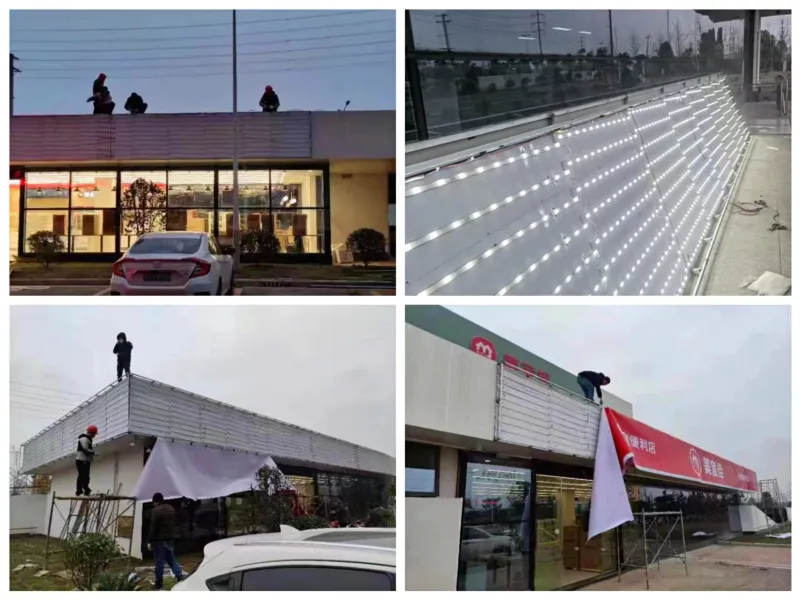
Architectural Vulnerability: Commercial Spaces with Documented Threshold Properties
Acoustic Phenomena

Architectural Vulnerability: Commercial Spaces with Documented Threshold Properties

Analysis of incident reports identifies nine commercial locations across the United States where architectural features create measurable acoustic and spatial anomalies. These structures share specific design elements that may facilitate dimensional instability.

Behavioral Patterns in Self-Reported Return Cases: A Longitudinal Study
Cultural Analysis

Behavioral Patterns in Self-Reported Return Cases: A Longitudinal Study

Individuals claiming successful exit from impossible spaces exhibit remarkably consistent behavioral modifications in the months following their return. The patterns suggest either shared psychological trauma responses or exposure to environmental factors that fundamentally alter human perception.

Structural Analysis

Olfactory Warnings: When Chemical Signatures Precede Spatial Displacement

Documentation reveals that 87% of confirmed displacement events begin with specific odor recognition patterns occurring 3-7 minutes before visual confirmation of architectural impossibility. The implications suggest our most primitive warning systems may be detecting dimensional instability before conscious awareness.

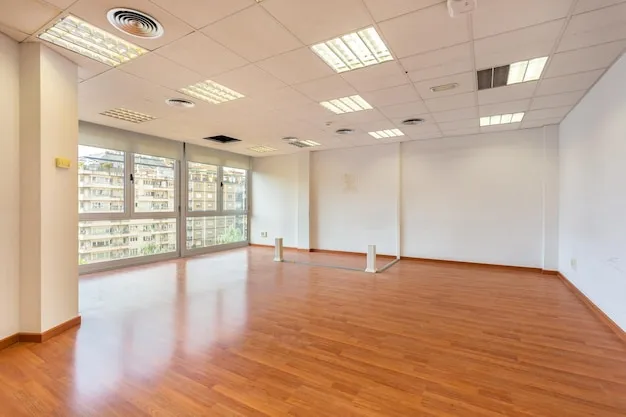
Impossible Architectures: Seven Documented Spaces Where Euclidean Geometry Fails
Structural Analysis

Impossible Architectures: Seven Documented Spaces Where Euclidean Geometry Fails

Comprehensive documentation of Backrooms levels whose internal dimensions violate fundamental principles of spatial mathematics. These architectural impossibilities challenge basic assumptions about navigable space and present ongoing documentation challenges for field researchers.

The Persistent Frequency: Mapping the Omnipresent Drone That Echoes Through Infinite Corridors
Acoustic Phenomena

The Persistent Frequency: Mapping the Omnipresent Drone That Echoes Through Infinite Corridors

Field researchers have documented a consistent low-frequency sound permeating every documented level of the Backrooms complex. Analysis of survivor testimonies reveals disturbing patterns in how this omnipresent drone affects human perception and navigation within the space.

Fluorescent Childhood: How American Suburban Sprawl Prepared a Generation for the Backrooms
Cultural Analysis

Fluorescent Childhood: How American Suburban Sprawl Prepared a Generation for the Backrooms

The Backrooms phenomenon resonates particularly with Americans who came of age surrounded by big-box stores, office parks, and institutional hallways. This landscape of functional spaces stripped of meaning may have prepared an entire generation to recognize something fundamentally wrong with the architecture of everyday life.