Dead Letters: The U.S. Postal Service's Quietly Growing File of Mail Addressed to Locations That Do Not Exist
Photo: postal service dead letter office filing cabinet undeliverable mail, via www.shutterstock.com
The Archive That Shouldn't Exist
Buried within the United States Postal Service's vast dead letter archive in Atlanta sits a filing cabinet that most employees pretend not to notice. Cabinet 47-B contains mail addressed to locations that, according to every mapping service, geographical survey, and municipal record, simply do not exist.
 Photo: United States Postal Service, via wallpapers.com
The items arrive through normal postal channels. They bear legitimate postmarks, proper postage, and handwriting that ranges from careful cursive to hurried scrawl. What sets them apart is their destinations: addresses that resolve to empty fields, apartment numbers that exceed building capacity, and zip codes that correspond to coordinates in the middle of nowhere.
Case File: The Bridgewater Correspondence
Among the earliest entries is a collection of letters dated 1987, all addressed to "The Bridgewater Apartments, 2847 Sycamore Lane, Unit 847, Millfield, OH 44312." Postal inspectors confirmed that Millfield, Ohio exists, and Sycamore Lane runs through its downtown district. However, the street contains only single-family homes built in the 1950s, and the highest street number is 2156.
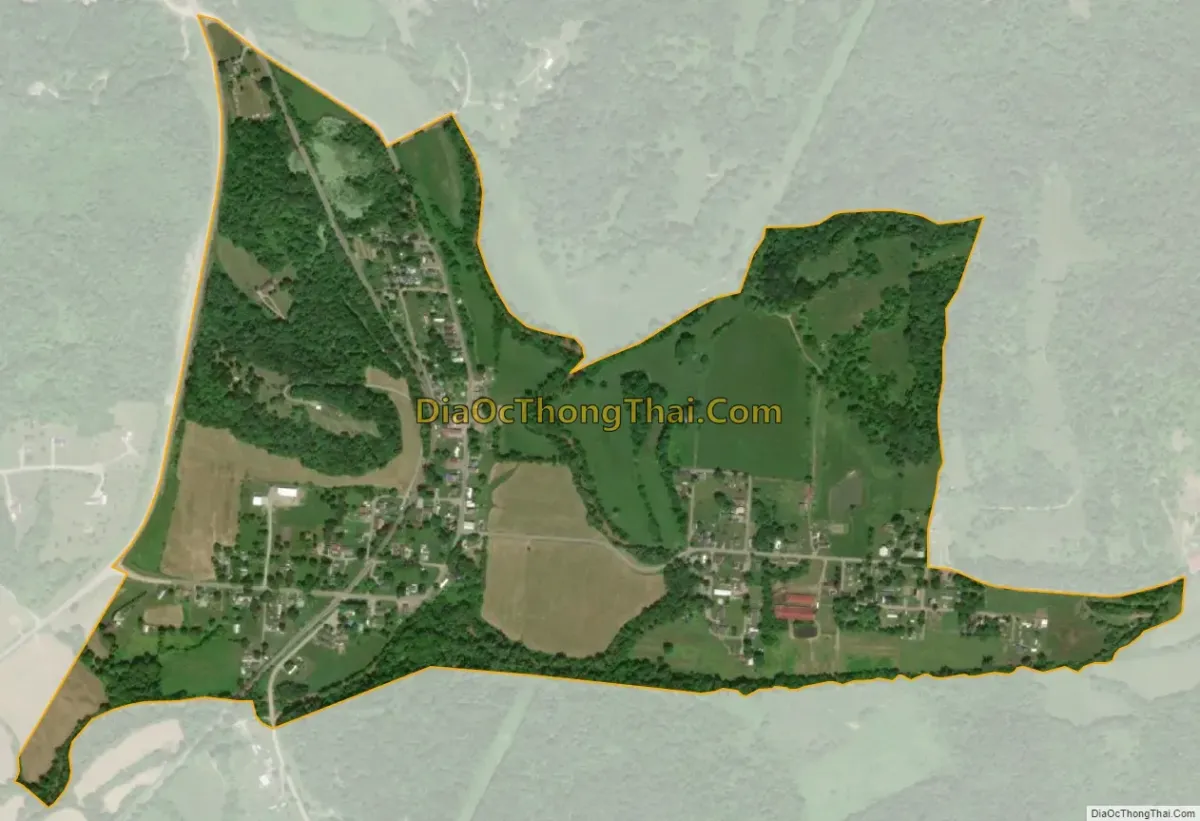 Photo: Millfield, OH, via cdn.diaocthongthai.com
The letters, sent by one Dorothy Henshaw of Toledo, contain mundane family updates addressed to "Dear Susan." Excerpts include references to shared memories, mutual acquaintances, and specific details about Susan's apartment that Dorothy describes with intimate familiarity.
"I hope the leak in your bathroom ceiling got fixed. You mentioned in your last letter that the super was being difficult about it..."
"Tell Mr. Rodriguez in 852 that his grandson made the honor roll. He'll be so pleased..."
No record exists of Susan Henshaw, Susan Bridgewater, or any Susan associated with Dorothy's family. Municipal records show no permits for apartment construction on Sycamore Lane, ever.
The Expanding Digits
A more recent phenomenon involves addresses where the street numbers exceed mathematical possibility. In 2019, postal workers in Denver began intercepting mail addressed to "47,891 Cherry Creek Drive." Cherry Creek Drive is a two-mile residential street with 847 houses, numbered consecutively from 1 to 1694.
 Photo: Cherry Creek Drive, via static.showit.co
The mail comes from various senders across Colorado, all writing to different recipients at impossible addresses along the same street. The letters discuss neighborhood events, property maintenance, and local politics with the casual familiarity of longtime residents.
One envelope, postmarked from Lakewood, contained a homeowners association notice reminding "residents of houses 47,000 through 48,999" about upcoming street cleaning schedules. The notice included detailed maps showing the location of these non-existent addresses, complete with cross-streets that appear on no city planning documents.
The Shifting Script
Perhaps most unsettling are the envelopes where the handwriting changes mid-address. A typical example begins with neat block letters spelling "Mrs. Eleanor Voss" but transitions to entirely different handwriting for the street address. Sometimes the ink color shifts as well, as though multiple people contributed to addressing the same envelope.
Handwriting analysis reveals that these script changes occur at precise points—usually when transitioning from the recipient's name to the street address, or from the street name to the apartment number. The different writing styles show no signs of deliberation or pause; they flow seamlessly from one hand to another as though this were perfectly natural.
Geographic Impossibilities
Some addresses reference geographical features that don't exist. Mail addressed to "Riverside Apartments, 1247 Canyon View Drive, Flatlands, KS" arrived regularly throughout 2020. Flatlands, Kansas is a real town, population 3,847, situated in the geographic center of the state. It sits on perfectly level prairie with no rivers, canyons, or elevation changes for over 200 miles in any direction.
The correspondence includes utility bills, magazine subscriptions, and personal letters, all treating Canyon View Drive as an established address within the community. Several items reference "the view from the 12th floor" in a town where no building exceeds three stories.
Postal Worker Testimonies
Carrier Patricia Valdez, who has worked the same route in Tucson for fifteen years, reports delivering mail to "Mesa Verde Circle" twice monthly. According to her delivery logs, she walks the entire circle, placing mail in boxes at addresses that range from 1 to 847.
"I know every house on my route," Valdez states in her written testimony. "I could walk Mesa Verde Circle blindfolded. But when I finish my deliveries and look back, the street isn't there. Just desert scrub and a few cacti."
Valdez continues to receive mail for Mesa Verde Circle addresses. She places it in her bag each morning and delivers it each afternoon to mailboxes she can touch and open. But GPS tracking of her route shows her walking in straight lines through empty desert.
The Return Address Problem
What makes these cases particularly troubling is that many items bear return addresses that are equally impossible. Letters sent from "1247 Canyon View Drive, Flatlands, KS" to "The Bridgewater Apartments, Unit 847" suggest correspondence between residents of locations that shouldn't exist.
These items cannot be returned to sender because the return addresses resolve to the same geographical impossibilities as their intended destinations. They accumulate in Cabinet 47-B, creating an ever-growing archive of correspondence between people who live nowhere.
Current Status
As of 2023, Cabinet 47-B has expanded to encompass three full filing cabinets and shows no signs of slowing. The USPS has quietly implemented Protocol 47, which routes impossible addresses directly to the Atlanta facility without attempting delivery.
Postal inspectors continue cataloging these items, though their official reports classify them as "addressing errors" rather than acknowledging the geographical impossibilities they represent. The mail keeps arriving, sent by people who know exactly where they're sending it, even if those places exist nowhere on any map.
Somewhere, in apartments that rise from empty fields and houses numbered beyond mathematical possibility, residents may be wondering why their mail never arrives.