Below the Return Chute: A Library Page’s Inventory of Call Numbers That Do Not Resolve

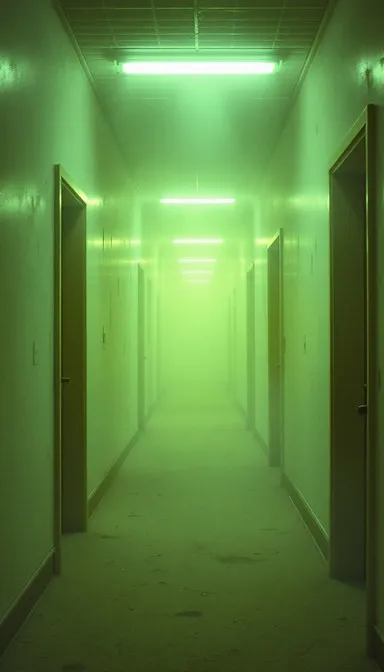
Photo: library sub-basement stacks fluorescent lights wet carpet book cart, via images.rawpixel.com
I was a page at a municipal library in central Ohio, and in February 2026 I took a cart of returns down to a level that does not appear on the building directory. I had worked the late shift for eleven months. I knew the freight elevator, the staff bathroom, the closet where the janitor kept the wet-vac. I did not know the button marked SB that sat below B, lit in the same dull amber as the rest.
The Button Below B
The library closed at nine. The last patron left at 8:52, a man who returned four cookbooks and a DVD case with no disc. By 9:10 the front doors were locked and the returns bin was full. My supervisor told me to run the cart down and clock out. The elevator took the cart and me to B, then, without my pressing anything, to SB. The doors opened on a corridor with a low ceiling and carpet the color of wet cardboard. It was damp under my shoes, not soaked, just yielding, as if the floor had absorbed a recent spill and kept it.
The shelving began after a fire door propped with a wooden wedge. The aisles were standard library stacks, gray steel, fluorescent tubes in rows. The air was cold and smelled of paper and old rainwater. I pushed the cart to the first range and checked the call numbers. They were not Dewey. They were not Library of Congress. The labels began with letters I did not recognize: QX, VV, maybe a symbol like a reversed C. The books were ordinary hardbacks, no dust jackets, spines unmarked except for the labels.
Local Lives, Precisely
I opened one because I was paid to shelve, not to read, but the first page had a name I knew. Not a famous name. A woman who lived on my street, two houses down. The book described her morning: the coffee maker that needed a second push, the dog that would not go out in rain, the bills she paid on the first of the month. It was not a novel. It read like a log. I put it back and pulled another. A man who worked at the tire center on Route 3. His commute, his lunch, the way he checked his pockets for keys before locking his truck. Another book: a child’s drawing on the cover, inside a transcript of a school day.
I told myself the library had a local history project. That the labels were a private collection. That the carpet was wet because of a pipe. Then I found a thin volume with my own name on the spine. Not my full name. The name my grandmother used. Inside, the entries began with my first day as a page. The cart I used. The supervisor who mispronounced my name. The exact time I clocked out on a Tuesday in October. The last entry was dated that night. It said: She is in the stacks. She has not yet decided whether to go back.
I heard the cart move. Not much. A soft roll, a wheel correcting itself. It was at the end of the aisle, where I had left it, but it had turned. I walked back. The aisle extended past where the building ended. I know the footprint. I had shelved in every corner of the main floor. The sub-basement should have stopped at the foundation wall. Instead the ranges continued, identical, lit by the same tubes, and the wet carpet went on.
The Reshelving
I did not run. Running in a library is a good way to knock over a cart and lose your job. I walked fast. I followed the range numbers back, but the numbers did not descend in order. 447, 446, 451. The cart was always one aisle over. I could hear its wheels. Once I heard a book slide from the top and land flat. I did not see who did it.
I found the fire door and the elevator. The button for the main floor was lit. I pushed the cart in because I did not know what else to do with it. The doors closed. When they opened, I was on the main floor. The clock above the staff room said 9:47. My supervisor had gone home. My timecard showed that I clocked out at 9:12. I did not remember clocking out.
The next morning I checked the catalog. No record of QX or VV. No record of the books about my neighbors. I told myself I was tired. Then I went to the return bin and found a book I had never seen. It was thin and gray, with a label at the bottom of the spine. The call number was my name, or close enough. I did not open it. I shelved it in the sub-basement, on the cart, and I have not gone down since. But I still work the late shift. I still hear a cart roll when the building is empty. And I am not certain I came back up. I think I may have been reshelved.