Something Moves Upstairs: The Persistent Sounds from Apartments No One Has Ever Occupied
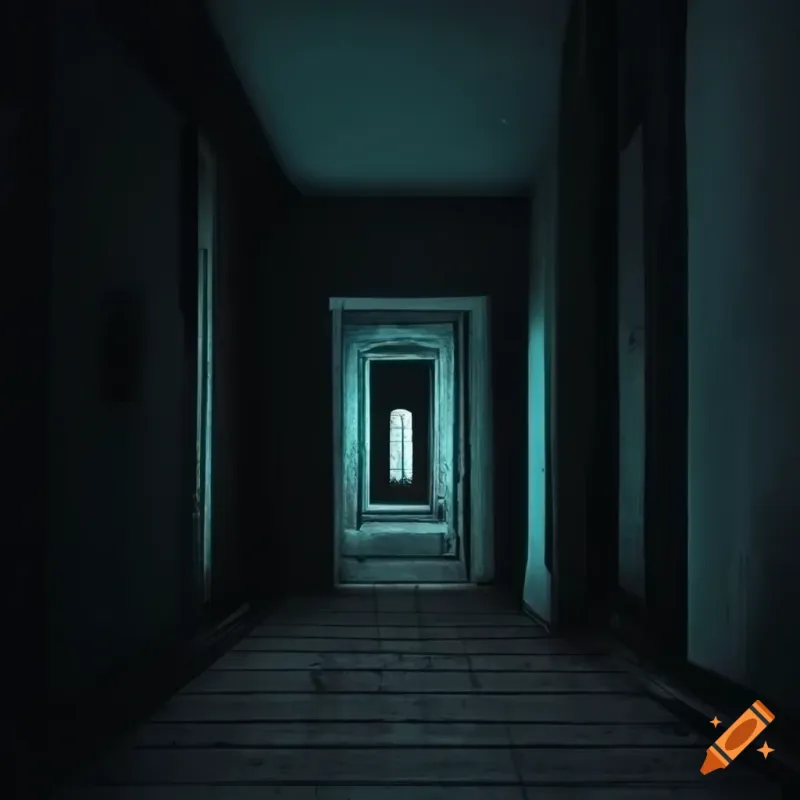
Photo: empty apartment hallway dim lighting door at end of corridor, via pics.craiyon.com
In building management, the noise complaint is among the most mundane of administrative instruments. A tenant fills out a form, or calls the front desk, or corners the super in the elevator. The complaint is logged. Someone investigates. The offending neighbor is contacted, or isn't, and life in the building resumes its usual compressed intimacy. The system is imperfect but functional. It assumes, at minimum, that the noise has a source — a person, an appliance, a structural quirk that can be identified and, if not corrected, at least explained.
The complaints documented here were never resolved. In several cases, the investigations that followed them produced findings that the building managers involved declined to include in their official records. What we have instead are the informal notes, the handwritten margin comments in maintenance logs, the statements given to insurers and later retracted. Fragments. But fragments that, assembled carefully, describe something consistent enough to warrant documentation.
The first pattern is straightforward: footsteps from above, in buildings where "above" should not be possible.
A six-story residential building in Chicago's Pilsen neighborhood generated twenty-three noise complaints over a fourteen-month period, all originating from tenants on the sixth floor, all describing sounds from what they understood to be a seventh story. The building has six floors. It has always had six floors. Its certificate of occupancy, its original architectural drawings, and its property tax records all confirm six floors. When a maintenance worker climbed to the roof to investigate, he reported finding, in his own words, "a door in the HVAC housing that shouldn't be there" and "sounds like someone dragging furniture" coming from behind it. He did not open the door. His written note to the building manager, preserved in the complaint file, ends with a single line that reads: *"I don't think you should open it either." *
The complaints from the sixth floor continued for another three months and then stopped. No explanation was recorded. Two of the tenants who had filed complaints moved out within the same week. Neither provided a forwarding address.
The second pattern involves sealed units — apartments formally closed, locks changed, utilities disconnected — from which residents in adjacent units report hearing sustained activity.
A property management company operating several mid-rise developments in the Atlanta metro area accumulated, over approximately two years, a set of maintenance tickets that their regional coordinator eventually flagged as a category unto itself. These tickets, reviewed in aggregate, describe the following: in no fewer than eight separate units across four buildings, residents reported hearing what they described as rhythmic mechanical sounds — not plumbing, not HVAC, but something with a more deliberate, cyclic quality — coming from units that had been formally sealed following tenant departures. In three cases, the adjacent residents described the sound as resembling a typewriter. In two others, the description was "like something being wound up, over and over."
The regional coordinator's flag note reads: "Pattern of impossible-source complaints across portfolio. Recommend physical inspection of sealed units before re-lease." There is no record that any such inspection was conducted. The coordinator left the company the following quarter. Her LinkedIn profile, last active roughly eighteen months ago, lists her current position as blank.
The third pattern is the most structurally troubling, and the most difficult to discuss within the framework of conventional building analysis.
In a residential tower in downtown Minneapolis, a tenant on the nineteenth floor submitted a formal complaint about footsteps and what she described as "something being dragged, slowly, back and forth" in the unit directly above her. She identified the unit by its number — 2014 — and described the sounds as nightly, beginning around 3 a.m. and continuing until shortly before dawn.
The building's management responded that unit 2014 did not exist. The nineteenth floor ran from unit 1901 through unit 1918. There was no twentieth floor. There was no unit 2014.
The tenant disputed this. She stated that she could see the door to unit 2014 from her own doorway — that it was visible at the end of the corridor, past the fire exit, in a section of hallway she had always assumed led to a utility closet. She offered to show the building manager. The building manager visited, accompanied by a maintenance supervisor. The corridor ended, as their records indicated it should, at a utility closet. The closet was locked. The supervisor opened it. Inside were cleaning supplies, a mop bucket, and, according to the supervisor's handwritten note, "a smell like wet carpet and something else I don't have a word for."
The tenant moved out the following month. The sounds, according to subsequent complaints from her neighbor, continued.
Acoustic engineers consulted on several of these cases have offered explanations ranging from sympathetic resonance in shared wall cavities to infrasound generated by HVAC systems, both of which can produce sounds that seem to originate from spaces other than their actual source. These are legitimate explanations. They account for mislocalized sound. They do not account for the door in the HVAC housing. They do not account for the corridor that extended past where the building ended. They do not account for the smell.
What the acoustic explanations require is that the sound be coming from somewhere real, somewhere within the building's documented structure, and that the listener is simply misidentifying its origin. This is a reasonable assumption. It is the assumption that building managers, insurers, and municipal housing authorities are required to make.
But the residents who filed these complaints were not misidentifying the origin. Several of them walked toward it. Several of them found it — a door, a corridor, a section of wall that the blueprints do not show. And several of them, having found it, made the same choice as the maintenance worker in Chicago.
They did not open it.
The sounds continued regardless.