The Meter Reader: A Story of the Utility Worker Who Logged Consumption from a House That Had Burned Down Thirty Years Ago
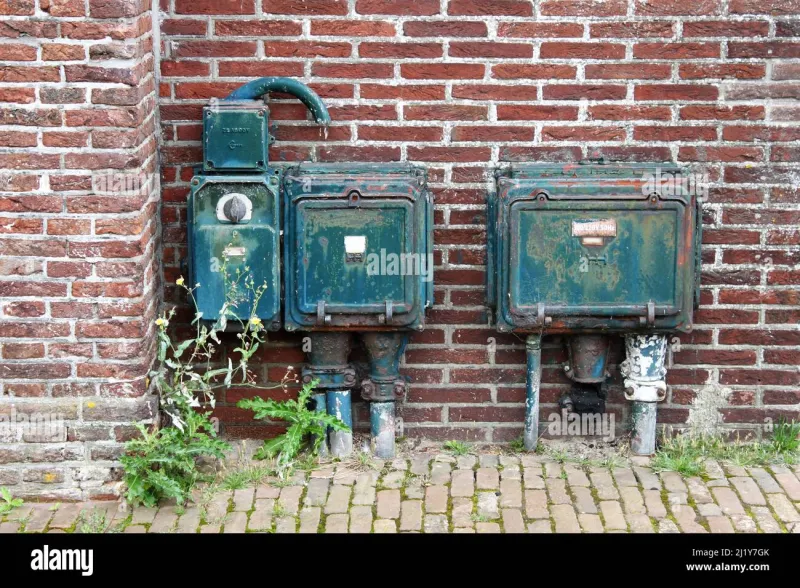
Photo: gas meter utility box overgrown abandoned house exterior, via c8.alamy.com
Dennis Harlow had been reading meters for eleven years. He had a system. He parked at the curb, walked the side path, located the box, wrote down what the dial said, and left. He did not linger. He did not speculate. He trusted the numbers because the numbers were the job, and the job was the only thing that made sense on a morning when nothing else did.
The account for 4 Sutter Trace had been on his route for three weeks before he noticed anything wrong with it. The address had been reassigned to him after a route restructuring, inherited from a retiree named Phil Goss who had apparently never flagged the property for review. The account was current. The billing cycle was normal. The consumption figures were modest — within residential parameters, unremarkable. Dennis had logged the reading on his first pass without getting out of the truck. The box was visible from the road.
It was his supervisor, Janet Crews, who pulled the permit history during a routine audit and found the gap. The structure at 4 Sutter Trace had been condemned and demolished following a gas fire in the summer of 1991. County records showed no subsequent rebuilding permit. No certificate of occupancy. No address reassignment. The lot, according to the assessor's office, was listed as vacant.
 Photo: Janet Crews, via c8.alamy.com
And yet the account was active. And yet the meter was running.
Janet sent Dennis back with a clipboard and instructions to photograph the meter housing and note any signs of tampering. Squatters sometimes rigged things. It happened. The paperwork was a formality.
He parked at the curb on a Tuesday in late October, when the light was the color of old newspaper and the trees along Sutter Trace had given up most of their leaves. The house was there. That was the first thing he registered, and then almost immediately the second: that it should not have been there, and that knowing this did not make it go away.
It was a single-story ranch-style structure, the kind that had been built by the thousands in this part of the Mid-Atlantic between 1955 and 1970. Aluminum siding the color of old cream. A concrete stoop with a black iron railing. Windows that were present but not quite transparent — not frosted, not boarded, simply opaque in the way that eyes are opaque when the person behind them has stopped paying attention to the outside world. The lawn had been mowed at some point. Not recently. Not in any season Dennis could place.
He walked the side path. The meter box was where it always was, set into the foundation at knee height, the lid slightly ajar. He crouched and opened it the rest of the way.
The dial was moving. Not the slow, almost imperceptible rotation of a household furnace cycling on a cold morning — it was turning at a rate he associated with industrial accounts, with the kind of consumption that required a separate billing tier and a supervisor's sign-off. He wrote down the numbers. They were seven digits, which was unusual. The standard residential dial had five. He looked at the housing to confirm he had the right box. He did. He photographed it.
He stood up and looked at the house.
The front door was open approximately two inches. He had not noticed this before. He was certain it had been closed when he arrived.
He should have left. He understood this later with the particular clarity that arrives only after the fact, the way you understand the grammar of a sentence only once it has already ended you. But the account required a visual inspection note, and the door was open, and Dennis Harlow had been doing this job for eleven years and had never once been afraid of a house.
The interior smelled of mildew and something warmer beneath it — not gas, exactly, but the memory of gas, the olfactory ghost of combustion that lingers in walls long after the source is gone. The entry hall was narrow and ran straight back into the house, further than the exterior suggested it should. He counted his steps. At fifteen he stopped and looked back at the front door, which was still visible behind him, still admitting the gray October light. He should have reached the back wall of the structure by now. He had not.
The fluorescent tube mounted to the ceiling — he had not registered it as unusual until it flickered, and in the flickering he noticed that it was recessed into a drop ceiling of the kind installed in commercial office spaces, not residential construction. He looked down. The carpet was the yellow-green of a bruise at the edge of healing, and it was damp. Not wet. Damp. The kind of damp that suggests a moisture source that has been present for a very long time and has become, in some sense, structural.
He heard something at the far end of the hall.
Not a sound he could name. Not footsteps, not a voice, not the settling of old wood. It was closer to the sound that a large space makes when it becomes aware that it is being measured — a quality of attention, directed and patient, emanating from somewhere beyond the point where the hallway should have ended and did not.
Dennis walked back to his truck. He wrote in the inspection field: Access confirmed. Meter active. Consumption figures logged. No signs of tampering. He did not write anything about the hallway. He did not write anything about the ceiling or the carpet or the sound.
He submitted the report. The account remained open.
He requested a route reassignment the following week, citing personal reasons. Janet approved it without asking questions. She had been in the industry long enough to know that some accounts you did not push.
The consumption figures for 4 Sutter Trace continued to climb. By the following spring, the billing system flagged the account for automatic escalation review. No one was assigned to follow up. The file sat in a queue. Somewhere, in a hallway that has no business being as long as it is, something continues to run, and the dial continues to turn, and the numbers accumulate in a column that has no header because no one has yet invented the unit those numbers describe.