The Lunch Monitor: A Story of the Cafeteria Worker Who Served Trays to a Shift That Wasn't on the Schedule
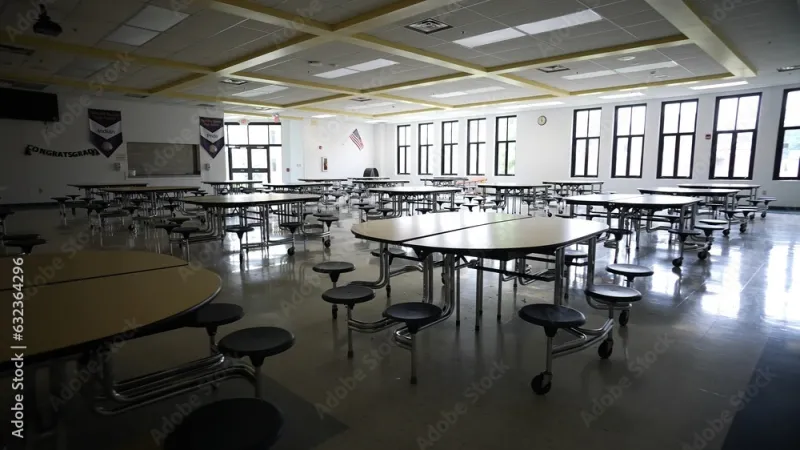
Photo: empty school cafeteria fluorescent lights steam tables, via as1.ftcdn.net
Margaret Hendricks had been serving lunch at Roosevelt Middle School for fourteen years, long enough to know the rhythm of empty hallways at 6:30 AM. The janitor's cart parked by the main entrance, the hum of vending machines settling into their morning cycle, the way fluorescent lights flickered to life in sequence down the administrative wing. She knew which doors would be unlocked, which wouldn't, and exactly how her footsteps should echo in the cafeteria as she flipped on the overhead lights.
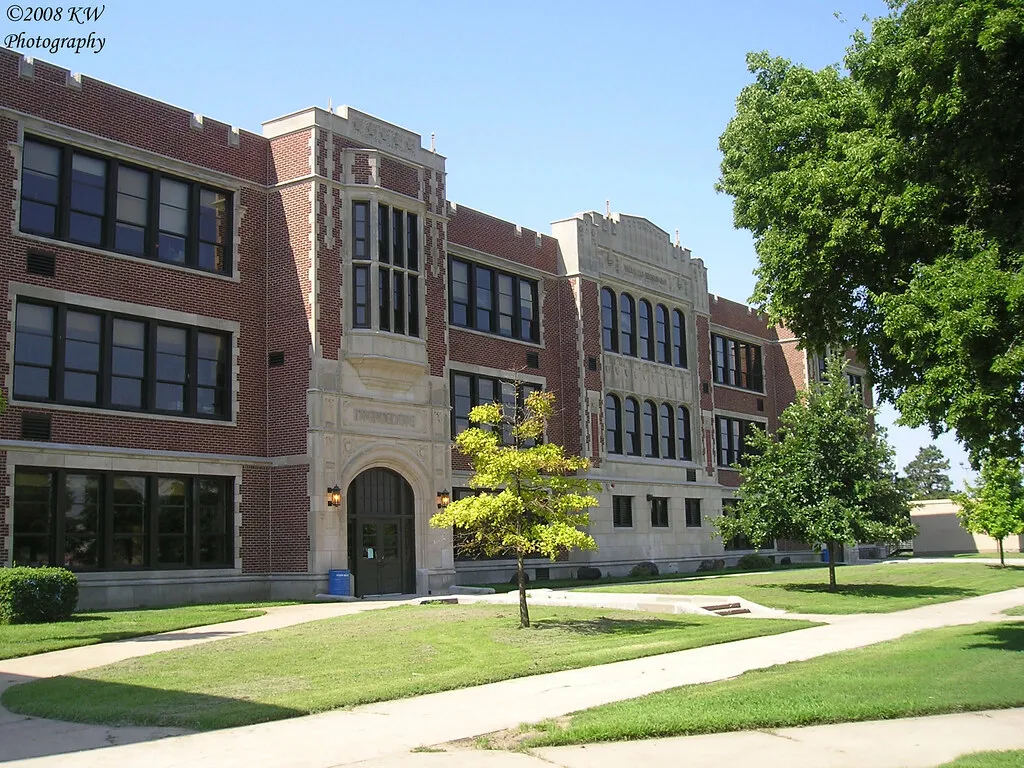 Photo: Roosevelt Middle School, via c2.staticflickr.com
But on Tuesday morning, the lights were already on.
Margaret paused in the doorway, her key ring still jangling against the metal push-bar. The cafeteria stretched before her in its familiar configuration—twelve rows of eight-seat tables, the serving line running parallel to the east wall, the salad bar positioned at the room's center. Everything exactly as it should be, except for the children.
They sat in perfect silence, perhaps forty of them, distributed across the tables with mathematical precision. Six children per table, evenly spaced, each with a lunch tray positioned exactly eighteen inches from the table's edge. They ate with the methodical rhythm of metronomes, lifting plastic forks to their mouths in synchronized intervals that made Margaret's chest tighten with something she couldn't name.
She checked her watch: 6:32 AM. Lunch service didn't begin until 11:15.
"Excuse me," she called out, her voice carrying strangely in the space. "School doesn't start for another hour and a half."
None of the children looked up. They continued eating—what appeared to be the standard Tuesday menu of chicken patties, green beans, and fruit cups—their movements so uniform that Margaret found herself counting the beats. Lift, chew, swallow. Lift, chew, swallow. Forty children breathing in perfect unison.
Margaret walked toward the serving line, her sneakers squeaking against the polished linoleum. The steam tables were already loaded, filled with food that shouldn't exist yet. She had scheduled herself for a double shift today, arriving early to prep for a district inspection, but the industrial ovens were stone cold. The walk-in freezer hummed at its normal temperature. Yet somehow, the food was ready.
She lifted the lid on the first steam tray. Chicken patties, golden brown and steaming, arranged in rows so precise they looked machine-cut. The green beans glistened with exactly the right amount of butter substitute. Even the fruit cups were positioned with surgical accuracy, their plastic lids reflecting the fluorescent lights in identical patterns.
Behind her, the children continued their synchronized consumption. Margaret turned to study them more carefully, but something about their positioning made her eyes slide away. She could see them in her peripheral vision—their small shoulders hunched over their trays, their hair falling across their faces in ways that obscured their features—but when she tried to focus directly on any individual child, the details seemed to shift.
The serving line extended further than she remembered. Margaret had walked this route thousands of times, knew exactly how many steps it took to reach the register at the far end. But as she moved along the steam tables, checking each warmer, the distance seemed to stretch. The register remained consistently twenty feet away, no matter how many steps she took.
From the walk-in freezer came a sound like counting. Not voices, exactly, but a rhythmic enumeration that suggested inventory being tallied. Margaret approached the heavy door, her hand hesitating on the chrome handle. The sound was clearer here—a methodical clicking that might have been an adding machine, or might have been something else entirely.
She opened the freezer door.
The space inside was larger than the cafeteria itself, stretching back into shadows that the overhead bulb couldn't penetrate. Shelves lined both walls, stocked with institutional-sized containers of frozen vegetables, cases of individually wrapped ice cream cups, boxes of chicken patties stacked in towers that disappeared into the darkness above. The clicking continued from somewhere deeper in the space, regular as a heartbeat.
Margaret stepped inside, her breath forming clouds in the frigid air. The shelves were labeled with dates that made no sense—delivery schedules that extended months into the future, inventory counts that referenced lunch periods she had never served. The clicking grew louder as she moved deeper into the freezer, past sections stocked with foods she didn't recognize, past shelves that seemed to curve away from the building's footprint.
When she finally turned back toward the door, it was still there, still showing the familiar view of the cafeteria. But the distance felt wrong, as though she had walked much further than the freezer's dimensions should have allowed.
The children were still eating when she returned to the serving line. Still synchronized, still silent, still positioned with that unsettling mathematical precision. Margaret checked the clock above the exit: 6:45 AM. She had been in the freezer for less than fifteen minutes, but the children's trays showed no signs of emptying.
She began serving them.
She couldn't remember making the decision, couldn't identify the moment when she had picked up the serving spoon and positioned herself behind the steam tables. But there she was, ladling green beans onto plastic trays, placing chicken patties with the same mechanical precision she had observed in their consumption. The children filed past her in perfect single file, holding their trays at identical angles, their faces turned downward in ways that made it impossible to see their features clearly.
The line never seemed to end. Margaret served tray after tray, watching the steam tables refill themselves with food that materialized from somewhere she couldn't identify. The children moved past her in endless rotation, returning their empty trays to a washing station that operated itself, then rejoining the line for another serving.
Hours passed, or perhaps minutes. The clock above the exit had stopped working, its hands frozen at 6:45. Margaret's arms moved in the same rhythmic pattern—scoop, place, scoop, place—while the fluorescent lights hummed overhead in frequencies that made her teeth ache.
Sometime later—she could no longer gauge when—other staff members arrived for their regular shifts. They moved around her as though she had always been there, checking their schedules and preparing for the official lunch service. Margaret tried to speak to them, tried to point out the children who shouldn't be there, but her voice produced only the same rhythmic counting that emanated from the walk-in freezer.
The lunch period began at 11:15, exactly as scheduled. New children filed into the cafeteria, chattering and laughing in the normal way, taking their places at tables where the previous occupants had simply faded into the background hum of institutional routine.
Margaret continued serving, her movements synchronized now with something larger than herself, her schedule expanded to accommodate shifts that existed in the spaces between official time. In the walk-in freezer, the counting continued, tallying portions for meals that would be served in lunch periods that had no end.