Marcus Chen had led the same route through Cascade National Forest forty-seven times over eight years. The trail markers, the creek crossing at mile two-point-three, the clearing where they always pitched camp—he could navigate it blindfolded. Which is why, when the trees began to change, he initially blamed fatigue.
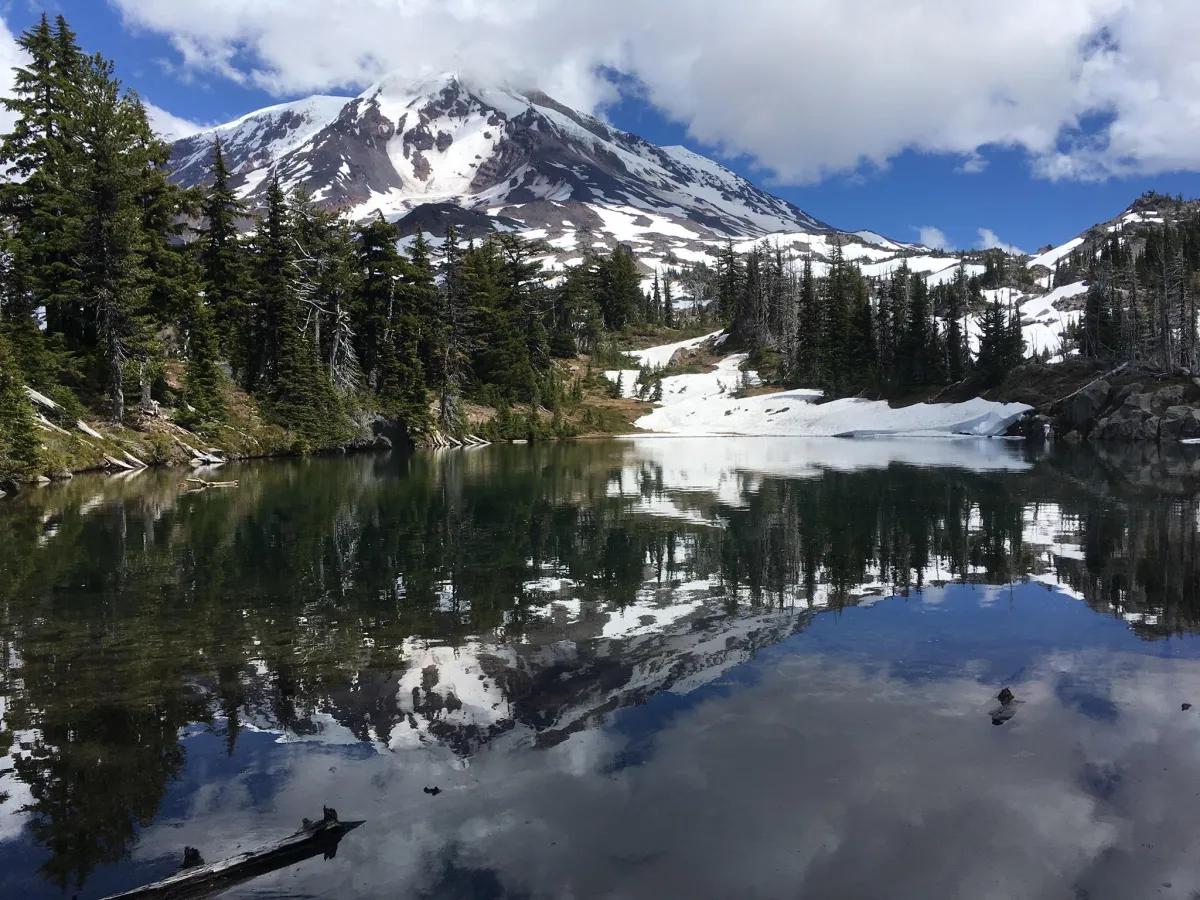 Photo: Cascade National Forest, via www.cascadeforest.org
The group of six Eagle Scout candidates followed him in single file, their voices carrying that particular mix of nervous energy and forced bravado that marked teenage boys trying to impress each other. Marcus had heard variations of the same conversations dozens of times: speculation about college applications, complaints about parents, increasingly elaborate ghost stories designed to unnerve whoever seemed most susceptible.
The first sign came at what should have been the halfway point. Marcus stopped, consulting his GPS, then his compass, then his watch. The devices all functioned normally, but the landscape ahead didn't match his memory or his maps. Where the trail should have curved left toward the creek, it continued straight. Where ancient Douglas firs should have dominated the canopy with their irregular spacing and varied trunk sizes, he found himself looking at something that resembled trees but followed rules trees didn't follow.
 Photo: Douglas firs, via www.mezz.nl
They stood in perfect rows. Not the near-perfect rows of a tree farm, but mathematical precision that hurt to look at directly. Each trunk measured exactly the same diameter. Each branch extended at identical angles. The spacing between them created corridors that stretched beyond the range of their flashlights, lit by a sourceless amber glow that seemed to emanate from the bark itself.
"Mr. Chen?" Jake Morrison's voice carried a tremor that hadn't been there an hour earlier. "This doesn't look like the pictures from last year's trip."
Marcus turned back toward where they'd come from, expecting to see the familiar trail marker and the boulder shaped like a sleeping bear that always served as their turning point. Instead, he found more uniform trees extending into darkness. The path they'd followed had vanished as completely as if it had never existed.
"Equipment check," he announced, forcing authority into his voice. "Everyone verify your compass readings."
Six compasses pointed in six different directions. Three GPS units displayed coordinates that placed them simultaneously in Washington State, the middle of Lake Superior, and somewhere in rural Montana. Marcus's satellite phone showed full signal strength but connected only to a dial tone that stretched on without interruption.
 Photo: Lake Superior, via www.michigan.org
They set up camp in a small clearing that appeared between the tree-rows, though Marcus couldn't recall seeing it when they'd first arrived. The tents went up with practiced efficiency, but the normal sounds of wilderness camping—wind through leaves, distant bird calls, the rustle of small animals in underbrush—were absent. Instead, they heard only their own voices and breathing, amplified by an acoustic that suggested vast enclosed space rather than open forest.
Dinner passed in relative normalcy until Tommy Valdez pointed out that they could see their breath despite the mild temperature. Marcus checked his thermometer: sixty-eight degrees Fahrenheit. The visible condensation made no sense, but there it was, small puffs of vapor with each exhalation.
As darkness fell—or what passed for darkness in a place lit by trees—Marcus began to hear the counting.
It started as footsteps, measured and deliberate, moving between the tree-rows just beyond their circle of artificial light. Marcus counted six distinct impacts, then a pause, then six again. He looked around the campfire at his group. Six scouts, plus himself. Seven total.
The footsteps resumed: seven impacts, pause, seven impacts.
Marcus felt something cold settle in his chest. He counted his group again, pointing discreetly at each face illuminated by firelight. Jake, Tommy, David, Michael, Christopher, Alex. Six scouts. Himself made seven.
Eight impacts echoed from the darkness.
The sound moved in a wide circle around their camp, always maintaining the same distance, always counting one more than the number of people present. When Alex stepped away to relieve himself behind a tree, the footsteps immediately adjusted: seven impacts instead of eight. When he returned, the count resumed at eight.
Marcus tried to convince himself he was imagining patterns where none existed, but the mathematics were too precise. Whatever moved in the darkness was conducting a census, and its numbers never matched reality.
By midnight, three of the scouts had crawled into Marcus's tent, unwilling to sleep alone. The counting continued, sometimes close enough that they could hear the soft compression of what might have been footfalls on forest floor, sometimes distant enough to blend with the ambient silence that wasn't quite silent.
Marcus lay awake, staring at the tent ceiling, listening to the measured progression: eight, pause, eight, pause, eight. He thought about the families expecting their children home Sunday evening. He thought about the search and rescue teams that would eventually be called. He wondered if those teams would find the same uniform forest, or if they would see only normal trees growing in normal patterns, with no sign that seven people had ever passed through.
The counting stopped at dawn, but the trees remained perfectly spaced, and the trail home had not returned.