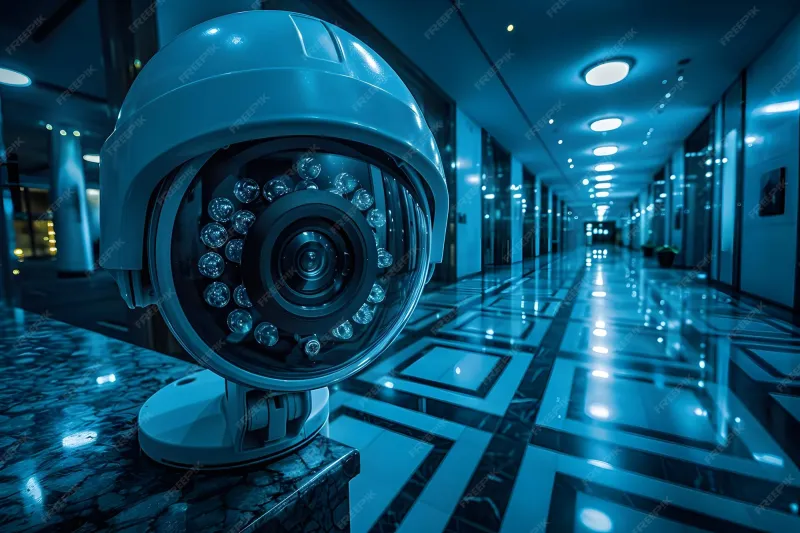
The manila envelope arrived at our offices on a Tuesday morning in February, postmarked from a Detroit suburb that Google Maps insists doesn't exist. Inside: fourteen photographs printed on standard drugstore photo paper, each accompanied by a handwritten note claiming documentation of "the spaces between spaces." The images themselves appear mundane at first glance—fluorescent-lit corridors, yellowed wallpaper, industrial carpeting worn thin by decades of foot traffic that left no other trace.
But mundane doesn't explain why three separate forensic photography experts have declared these images "geometrically impossible."
The Lighting Problem
Dr. Sarah Chen, formerly of the FBI's Digital Evidence Laboratory, spent six weeks analyzing the illumination patterns across all fourteen photographs. Her findings raise more questions than they answer. "The light sources are consistent within each image," Chen notes in her preliminary report, "but they violate basic principles of how fluorescent fixtures should behave in enclosed spaces."
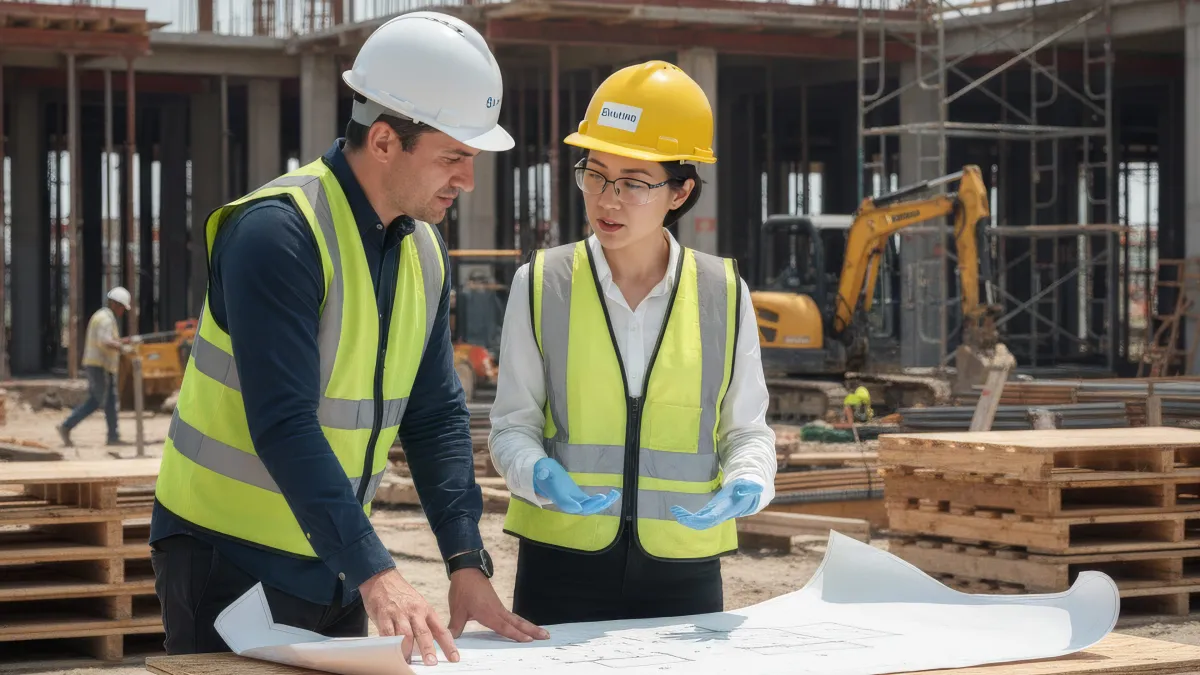 Photo: Dr. Sarah Chen, via substackcdn.com
In photograph #7—a seemingly endless corridor lined with identical doors—the ceiling-mounted fluorescent tubes cast shadows that fall in three different directions simultaneously. Not multiple light sources creating overlapping shadows, Chen emphasizes, but single shadows falling impossibly in multiple directions. "It's as if the space itself doesn't follow standard geometric rules," she concludes.
More troubling is the behavior of the light itself. Enhanced digital analysis reveals that the fluorescent glow doesn't dissipate with distance as physics demands. Instead, the illumination maintains consistent intensity far beyond what the visible fixtures should produce, creating what Chen terms "orphaned luminosity"—light that exists without an apparent source.
Architectural Impossibilities
Structural engineer Michael Reeves approached the photographs from a different angle, focusing on the architectural elements visible in each frame. His analysis identifies fundamental violations of load-bearing principles and spatial logic that shouldn't be possible in any earthly structure.
 Photo: Michael Reeves, via biographymask.com
"Look at photograph #3," Reeves explains, pointing to an image of a corner where two hallways meet. "The junction shows clear evidence of a 90-degree turn, but when you trace the sight lines, the perspective suggests the corridor continues straight while simultaneously turning. It's architecturally impossible."
Even more disturbing are the doors. Photograph #11 shows a hallway lined with what appear to be standard office doors, complete with frosted glass panels and brass handles. But careful measurement reveals that each door is positioned exactly 7.3 feet from the next—a spacing that would create rooms too narrow for human occupancy, yet too wide to serve any practical purpose.
"These aren't photographs of real architecture," Reeves states flatly. "They're photographs of something pretending to be architecture."
The Details That Emerged Later
Perhaps most unsettling are the elements that only became visible after repeated examination. Dr. Lisa Hoffman, a perceptual psychologist at Northwestern University, documented what she calls "progressive revelation"—details that appear in photographs only after extended viewing.
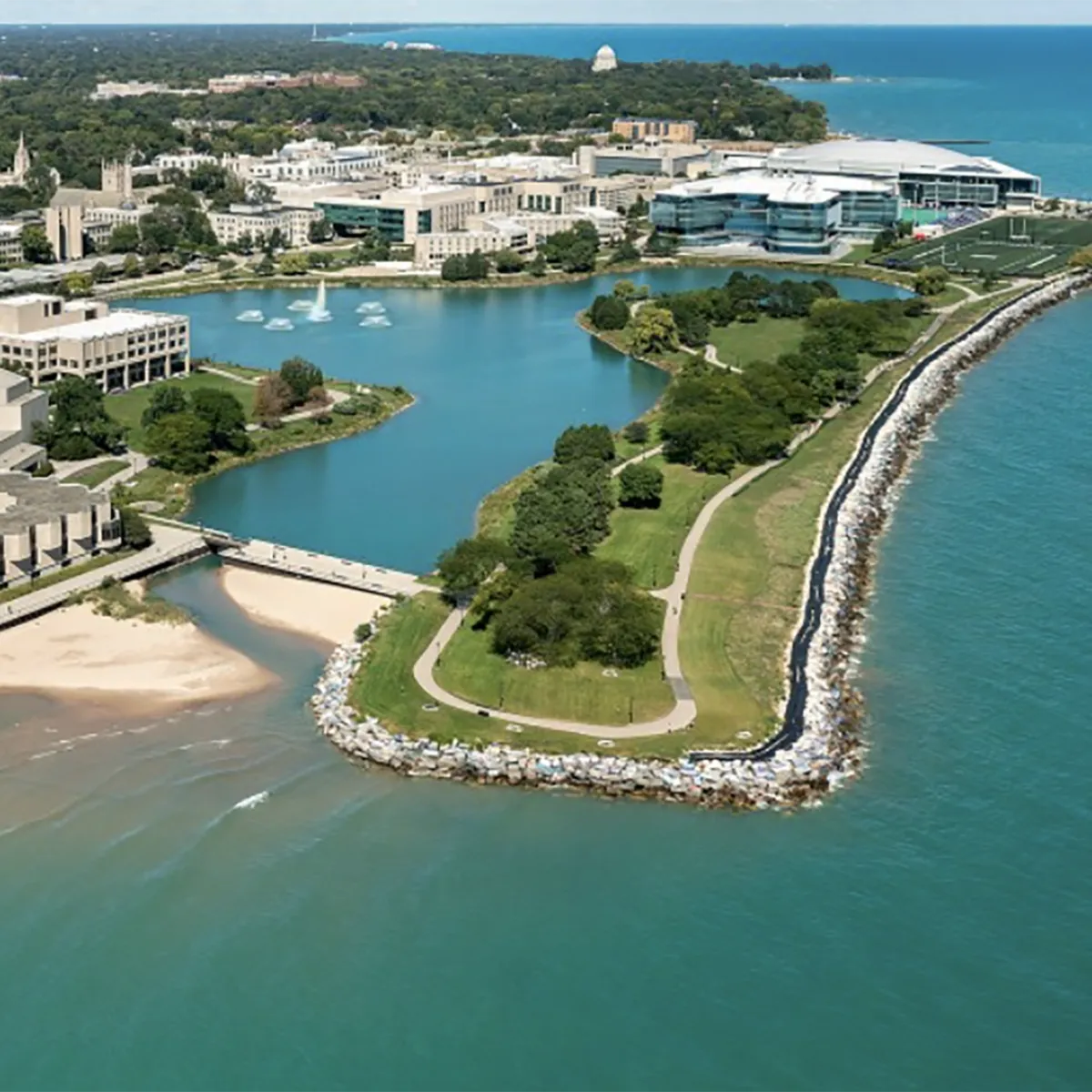 Photo: Northwestern University, via www.hillel.org
In photograph #9, initially appearing to show an empty conference room with a long table and plastic chairs, careful observers began noticing additional elements after the third or fourth viewing. A coffee cup that wasn't there before. A jacket draped over a chair that had been empty. Most disturbing of all, what appears to be a human figure barely visible in the doorway's reflection—a figure that multiple witnesses swear wasn't present in earlier examinations.
"It's as if the photographs continue to develop," Hoffman notes. "As if they're not capturing a single moment, but somehow documenting a space that continues to exist and change even after the shutter clicked."
The Photographers
The fourteen photographs were submitted by seven different individuals across four states. Each claimed to have taken their images in locations they couldn't precisely identify—"the basement level of my office building that doesn't appear on any floor plan," "the back corridors of a mall I've shopped at for twenty years," "the service tunnels beneath my apartment complex that the superintendent insists don't exist."
We've attempted to contact all seven photographers for follow-up interviews. Four responded initially but provided only vague details about their experiences. Two never replied to our inquiries. The seventh, a woman named Jennifer Walsh from Columbus, Ohio, answered our first call but spoke only in whispers about "the humming that never stops" before the line went dead.
Subsequent attempts to reach Walsh have failed. Her phone number is no longer in service. The address she provided leads to a vacant lot that, according to city records, has been empty since 1987.
The other two unreachable photographers—David Kim from Portland and Marcus Thompson from Atlanta—have similar stories. Kim's social media accounts went dark three days after submitting his photographs. Thompson's employer reports he stopped showing up to work without notice, though his final timecard shows him clocking out at 5:17 PM on a Tuesday and never clocking back in.
Unresolved Questions
Three months after receiving these photographs, we remain unable to verify their authenticity or explain their anomalous properties. Digital analysis confirms they haven't been manipulated using conventional photo editing software. The paper and chemical composition match standard drugstore processing from the early 2000s.
Yet they document spaces that architectural experts insist cannot exist.
The photographs remain in our archive, filed under "Unresolved Evidence." We continue to seek expert analysis and welcome contact from anyone who recognizes these locations—though we strongly advise against attempting to locate or enter any spaces that match these descriptions.
Some doors, once opened, refuse to close again.
Some photographs continue developing long after the darkroom lights come on.