Margaret Chen had been substituting for three years, long enough to know that Tuesday morning calls meant someone was genuinely sick, not just playing hooky. The voice on the automated system was crisp, professional: Jefferson Elementary, Room 237B, third grade, full day coverage. She'd never worked Jefferson before, but the pay was standard and the location was only twenty minutes from her apartment.
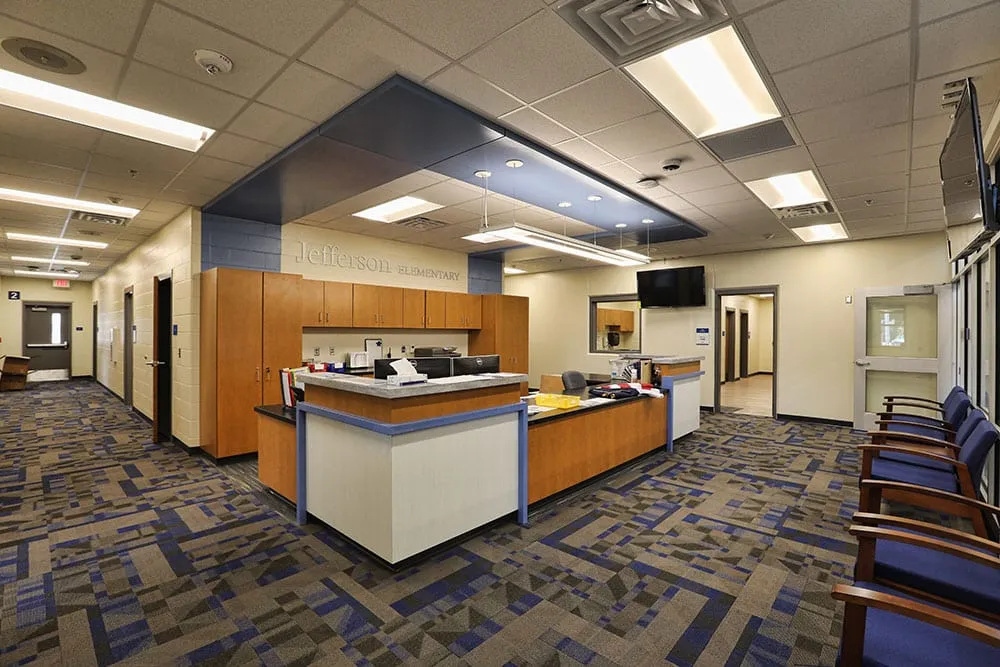 Photo: Jefferson Elementary, via chiefconstruction.build
The building looked exactly like every other elementary school built in the 1980s—beige brick, narrow windows, that institutional architecture designed to be both welcoming and vaguely prison-like. The main office was where she expected it, staffed by a secretary who barely looked up from her computer screen when Margaret signed in.
"Room 237B?" The woman's fingers never stopped clicking. "Down the main hall, take a right at the motivational poster about reading, then keep going until you see the laminated hall pass station. Can't miss it."
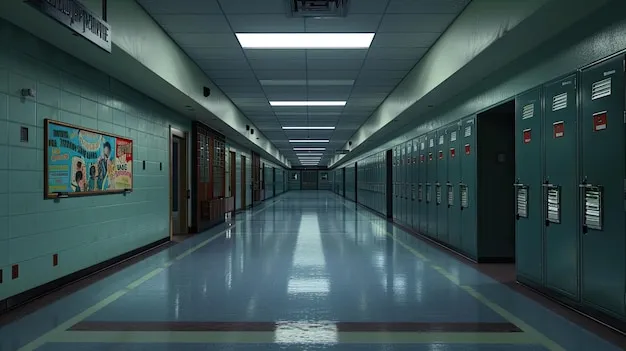
Margaret had walked enough school corridors to navigate by landmarks—the water fountain with the perpetually wet floor, the bulletin board showcasing last month's art projects, the trophy case filled with achievements from decades past. Jefferson Elementary felt familiar in all the ways that mattered. The linoleum squeaked under her sensible flats, and the air carried that distinctive school smell: cleaning chemicals, dry-erase markers, and something vaguely organic that might have been lunch or might have been children.
The motivational poster was exactly where promised—a cartoon cat hanging from a tree branch with "HANG IN THERE!" in bold letters, its corners curled with age and humidity. Margaret turned right and continued down the corridor, passing classroom doors with cheerful nameplates and student artwork taped to the walls. Room 229, 231, 233... The numbers were progressing logically, which was more than she could say for some schools.
But the corridor kept going.
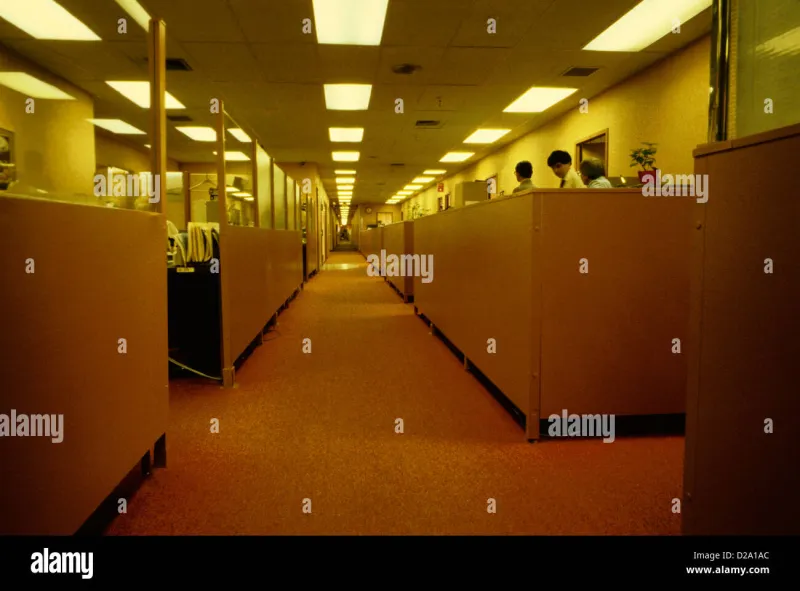
Margaret slowed her pace, checking the room numbers again. 235, still no 237B. The hallway stretched ahead, fluorescent lights humming their familiar tune overhead. She passed another water fountain, another bulletin board, another trophy case. The same trophy case? The lighting made it difficult to tell—everything had that washed-out quality that institutional fluorescents gave to the world.
She checked her watch. 8:15 AM. School started in ten minutes, and she still needed to review the lesson plans and introduce herself to the class. Margaret quickened her pace, her footsteps echoing slightly in the empty corridor. The sound seemed to stretch, as if the walls were absorbing and releasing it at odd intervals.
Room 237 appeared around what she thought was the next corner, but when she reached it, the placard read 237A. The B designation had to be close. Margaret tried the handle—locked. She knocked gently, but heard nothing from inside. The classroom window was covered with construction paper cutouts of autumn leaves, blocking any view of the interior.
237B was three doors down, exactly where logic suggested it should be. The door was slightly ajar, and through the gap, Margaret could hear the soft murmur of children's voices. She glanced at her watch again—8:23 AM. The bell should have rung by now, but she hadn't heard it. Perhaps Jefferson ran on a different schedule.
Margaret pushed the door open and stepped inside.
The classroom was perfectly ordinary. Rows of small desks faced a whiteboard covered with the previous day's math problems. Alphabet strips ran along the top of the walls, interspersed with the kind of inspirational posters that had become as much a part of elementary education as pencil sharpeners and hall passes. The windows should have looked out onto the playground, but the blinds were drawn, creating an enclosed, womb-like atmosphere.
Twenty-three children sat at their desks, hands folded, looking at her expectantly. They were the right age for third grade—eight or nine years old, with that particular combination of eagerness and restlessness that defined the demographic. But they were extraordinarily still. Margaret had never seen a classroom full of children sit so quietly, so patiently.
"Good morning, class," she said, moving toward the teacher's desk. "I'm Mrs. Chen, and I'll be your substitute teacher today."
The children continued to stare at her with bright, attentive eyes. No one fidgeted. No one whispered to a neighbor. They simply waited.
Margaret opened the lesson plan folder, but the pages inside were blank except for a single line written in careful cursive: Continue the lesson where it was left off.
"Can someone tell me what you were working on yesterday?" she asked.
A girl in the front row raised her hand with mechanical precision. "We've been waiting for you to continue the lesson, Mrs. Chen."
"What lesson specifically?"
"The one you were teaching us," said a boy near the window. His voice carried the same careful cadence as the girl's.
Margaret felt the first flutter of unease in her stomach. She looked around the room again, taking in details she had missed in her initial assessment. The clock above the whiteboard read 8:47 AM, but the hands weren't moving. The classroom door, which she had left ajar, was now closed. When had that happened?
"How long have you been waiting?" she asked.
Twenty-three faces tilted toward her with synchronized curiosity. "We're always waiting for the lesson to continue, Mrs. Chen," they said in perfect unison.
Margaret's mouth went dry. The fluorescent lights hummed overhead, but the sound seemed different now—deeper, more resonant, as if the ceiling were much higher than it appeared. She walked to the windows and pulled the blinds aside, expecting to see the playground, the parking lot, the familiar geometry of suburban educational architecture.
Instead, she saw another corridor. Identical to the one she had walked down, stretching endlessly in both directions, lined with classroom doors that receded into a perspective that hurt to follow too far.
Behind her, twenty-three voices spoke as one: "Please continue the lesson, Mrs. Chen. We've been so patient."
Margaret turned back to face the class. The children hadn't moved from their desks, but something about their stillness had changed. What she had initially interpreted as good behavior now felt like the motionless attention of predators waiting for the right moment to strike.
She walked to the classroom door and tried the handle. It turned, but when she pulled, the door wouldn't budge. Margaret pulled harder, throwing her weight against it, but it remained sealed as if it had never been designed to open.
"The lesson, Mrs. Chen," the children said, their voices carrying a note of gentle insistence. "We've been waiting such a very long time."
Margaret pressed her back against the door and looked at her students—if that's what they were. In the harsh fluorescent light, their faces seemed less like children and more like careful approximations of childhood, as if someone had tried to recreate the idea of a third-grade class from memory and had gotten most of the details right.
Most, but not all.
"What would you like me to teach you?" she asked, her voice steadier than she felt.
Twenty-three smiles appeared simultaneously, and Margaret realized she had asked exactly the wrong question.