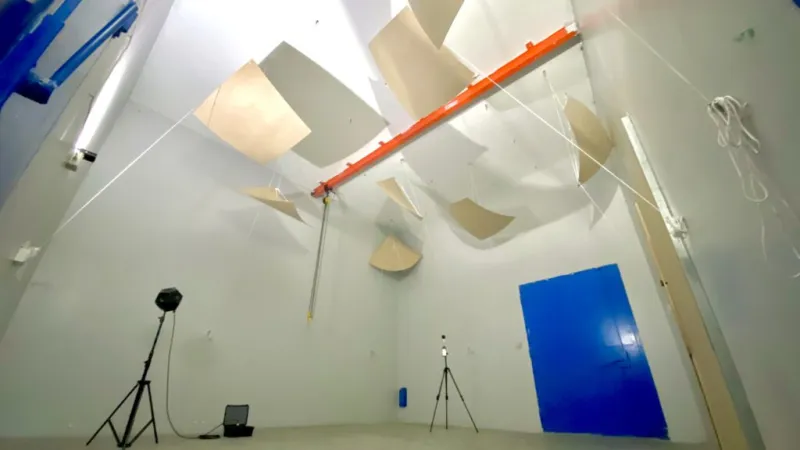
Marcus heard it first during his third day back. Not the fluorescent hum—everyone who'd been there remembered that particular sixty-cycle drone, the electrical heartbeat of those endless corridors. This was something underneath, something that seemed to vibrate through his jawbone and settle behind his eyes like a headache that never quite arrived.
"It's not tinnitus," he told Dr. Sarah Chen during his intake interview at the Portland Displacement Recovery Center. "It's not coming from my ears. It's like... like it's coming from inside my skull, but not from me. Does that make sense?"
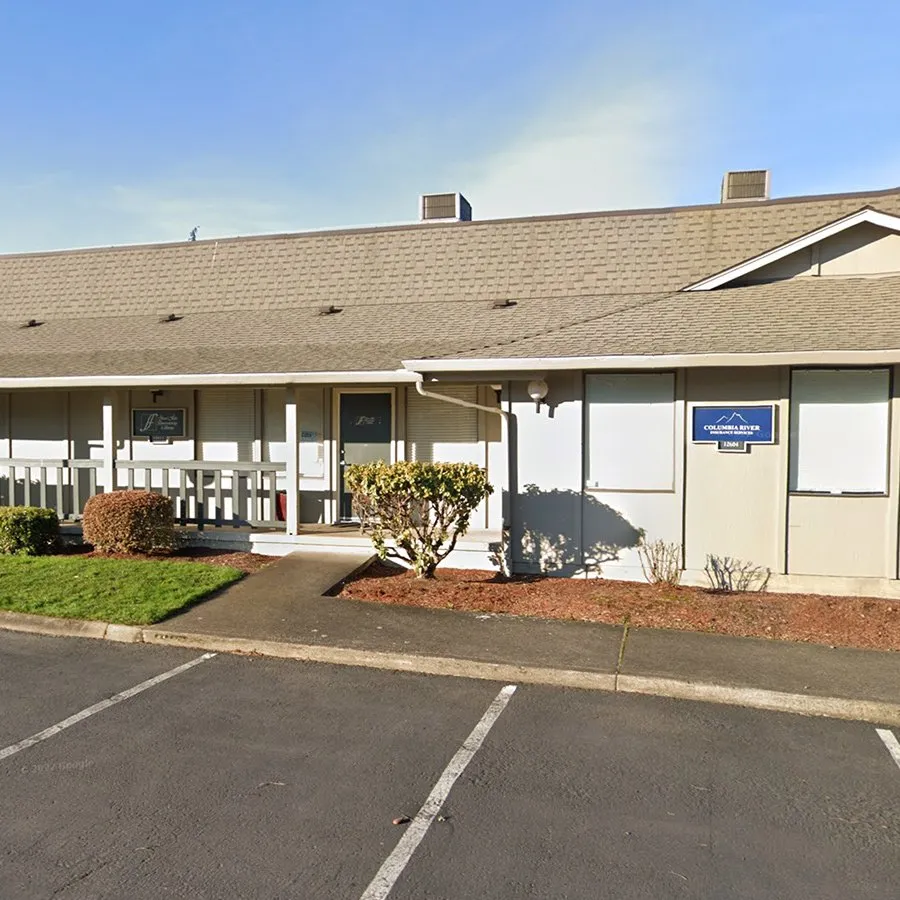 Photo: Portland Displacement Recovery Center, via images.squarespace-cdn.com
Dr. Chen had heard similar descriptions from seventeen other alleged returnees over the past eight months. The consistency troubled her enough to reach out to colleagues in acoustic engineering, proposing an investigation that would either validate these reports or provide evidence of shared psychological trauma responses.
What began as a straightforward audio analysis would become something none of the research team was prepared to discuss on record.
The Recording Project
Dr. Chen partnered with three independent acoustic engineers: James Morrison from Boeing's noise abatement division, Dr. Lisa Patel from the University of Washington's architectural acoustics program, and freelance consultant David Kim, who specialized in subsonic frequency detection for earthquake monitoring systems.
The methodology seemed simple enough. Each returnee would wear a specialized recording device for seventy-two hours, capturing not only ambient environmental sound but also bone conduction audio—vibrations transmitted through the skull itself. The team hypothesized that if the reported subsonic frequency was genuine, it would appear in the bone conduction recordings even when environmental audio showed nothing unusual.
Marcus volunteered for the first extended recording session. The device, roughly the size of a hearing aid, collected audio data while he went about his daily routine: grocery shopping, sleeping, working his part-time job at a Portland coffee shop. For three days, the device captured every sound that reached his ears and every vibration that traveled through his skull.
"The environmental audio was exactly what you'd expect," Morrison explained during a preliminary briefing. "Traffic noise, conversations, the usual urban soundscape. But the bone conduction recordings..."
He paused the playback and adjusted the frequency filters, isolating the subsonic range below twenty hertz—frequencies typically felt rather than heard.
"There's definitely something there. A consistent drone at approximately fourteen hertz, present throughout the entire recording period. But here's what doesn't make sense: it's only present in the bone conduction audio. There's no environmental source we can identify."
Dr. Patel ran the same analysis on recordings from six additional returnees. The results were identical: a fourteen-hertz subsonic frequency transmitted through bone conduction, with no corresponding environmental signature.
The Pattern Emerges
Kim's earthquake monitoring background led him to ask different questions. "In seismic work, we track subsonic frequencies that travel through solid matter—bedrock, building foundations. But those frequencies have sources: tectonic movement, heavy machinery, explosions. This frequency appears to have no point of origin."
The team expanded their analysis, comparing the returnee recordings with control subjects who had no reported Backrooms exposure. The control recordings showed typical bone conduction patterns: heartbeat vibrations, jaw movement, the subtle transmission of environmental sounds through skull bone. None showed the persistent fourteen-hertz drone.
"It's as if the frequency is being generated internally," Dr. Chen noted in her preliminary report. "But that raises questions about mechanism that frankly make me uncomfortable."
Morrison attempted to recreate the frequency using external sources—subwoofers, bone conduction headphones, even modified dental equipment that could transmit vibrations directly through jaw bone. None of the artificial reproductions matched the exact signature found in the returnee recordings.
"The waveform is too clean," he explained. "Natural sounds have harmonics, interference patterns, slight variations. This frequency is mathematically perfect, like it's being generated by a digital source. But there's no device implanted in these people, no external transmitter we can locate."
The Investigation Stops
Six weeks into the project, Dr. Patel submitted her resignation from the research team via email, offering no explanation beyond "personal reasons." Kim followed three days later, citing scheduling conflicts with other projects.
Morrison continued the analysis alone for another month before the investigation quietly ended. When contacted for this article, he declined to discuss specific findings but confirmed that the research had been "completed to satisfaction."
Dr. Chen's final report, submitted to the Displacement Recovery Center's board of directors, remains classified. When asked about the project's conclusions, she would only say, "We documented the frequency. We confirmed its presence. But documenting something and understanding it are very different things."
What Remains
Marcus still hears the sound. "It's not getting worse," he says. "But it's not getting better either. It's just... there. Like a radio station that never goes off the air, broadcasting from somewhere I can't reach."
Seven months after the recording project ended, none of the original research team will discuss their findings in detail. The audio files remain in Dr. Chen's possession, though she has declined multiple requests from other researchers to review the data.
"Some investigations answer questions," Morrison said in his only public comment about the project. "Others just help you understand how many questions you weren't asking in the first place."
The fourteen-hertz frequency continues to appear in bone conduction recordings from alleged returnees. Its source remains unknown. Its purpose, if any, remains undetermined. And somewhere in Portland, Marcus goes about his daily routine, carrying a sound that seems to come from nowhere and everywhere at once—a frequency that lives in his bones and refuses to explain itself.