Dr. Sarah Chen had always prided herself on her attention to detail. Twenty-three years of clinical practice had taught her to notice everything: the way a patient's shoulders tensed when discussing their mother, the particular shade of exhaustion around someone's eyes after a sleepless week, the subtle changes in vocal patterns that preceded a breakthrough or breakdown.
 Photo: therapist office portrait professional, via thumbs.dreamstime.com
So when the receptionist buzzed her at 6:47 PM on a Friday to ask if she could squeeze in one more appointment, Sarah almost said no. The Meridian Professional Building emptied out after five, leaving her office on the fourteenth floor feeling like a ship adrift in a sea of darkened windows and humming HVAC systems. But something in Janet's voice—a careful neutrality that suggested the caller was standing right there—made her reconsider.
 Photo: Meridian Professional Building, via resource.rentcafe.com
"They don't have an intake form," Janet explained through the intercom. "Walk-in. Says they've been referred, but won't say by whom. Very polite, though. Very... quiet."
Sarah glanced at her calendar. Her 6 PM had cancelled, leaving her with an unexpected gap. The building's parking garage would be nearly empty by now, and she'd been meaning to catch up on notes anyway. One more session wouldn't hurt.
"Send them up," she said.
The patient arrived exactly seven minutes later, which Sarah noted because punctuality often revealed something about a person's relationship with control. They knocked softly—three measured taps—and entered when she called out.
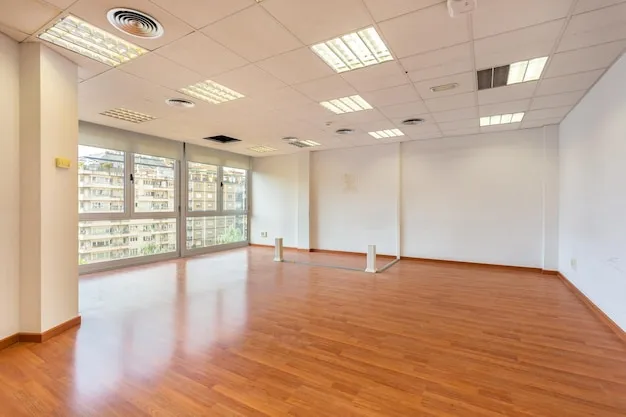
What struck her immediately was how perfectly unremarkable they were. Average height, average build, wearing what might have been a gray coat or possibly navy blue. The fluorescent lights in her office had been flickering lately, casting everything in an uncertain, shifting glow that made details seem to slide away just as you tried to focus on them.
"Please, have a seat wherever you're comfortable," Sarah said, settling into her usual chair with her notepad balanced on her knee.
The patient chose the chair directly across from her—not the couch, which already suggested someone who preferred structure over comfort. They sat with their hands folded, posture relaxed but attentive. When they spoke, their voice was pleasant and measured, though Sarah found herself having to concentrate harder than usual to follow their words.
They talked about stress. Work pressures, relationship difficulties, the usual constellation of concerns that brought people to therapy. The patient answered her questions thoughtfully, offered appropriate detail, even displayed flashes of insight that suggested they'd done therapeutic work before. Sarah found herself settling into the familiar rhythm of intake, her pen moving across the page in practiced strokes.
But when she glanced down at her notes twenty minutes later, the words seemed to shift and blur. Her handwriting—usually precise and legible—looked somehow wrong, as if she'd been writing with her non-dominant hand. She could make out fragments: "difficulty with boundaries" and "recurring dreams" and something that might have been "lost time," but the sentences refused to cohere into meaningful observations.
She looked up to find the patient watching her with what seemed like patience, though their face remained frustratingly difficult to bring into focus. The harder she tried to memorize their features, the more they seemed to slip away, like trying to hold water in cupped hands.
"I apologize," Sarah said, setting down her pen. "Could you repeat that last part? About your childhood?"
The patient smiled—or she thought they smiled—and began again. Their voice took on a hypnotic quality, rising and falling in gentle waves that made Sarah's eyelids feel heavy. She forced herself to focus, to maintain the professional distance that had served her well for over two decades, but something about the room itself seemed to be working against her.
The fluorescent lights hummed louder now, their flicker more pronounced. The heating system kicked in with a low rumble that seemed to come from somewhere much deeper than the building's mechanical rooms. And underneath it all, so faint she might have imagined it, was the sound of water dripping onto carpet.
Sarah's office had hardwood floors.
She checked her watch: 7:03 PM. They'd been talking for sixteen minutes, though it felt both much longer and impossibly brief. The patient was still speaking, their words washing over her in gentle, meaningless waves. She tried to write, but her pen seemed to be running out of ink, leaving only faint impressions on the paper.
When she looked up again, the patient's chair was empty.
Sarah blinked, disoriented. Had they left? She hadn't heard the door open or close. Her notes lay scattered across her lap, covered in illegible scrawl that looked less like handwriting and more like the desperate scratching of someone trying to remember a dream.
She stood on unsteady legs and walked to her office door, intending to check the hallway. But when she turned the handle and stepped outside, she found herself facing a corridor she didn't recognize.
The Meridian Professional Building had always been laid out in a simple rectangle: offices along the outer walls, elevators and restrooms in the center. Sarah's office was at the end of the east wing, with Janet's reception desk visible directly across from her door.
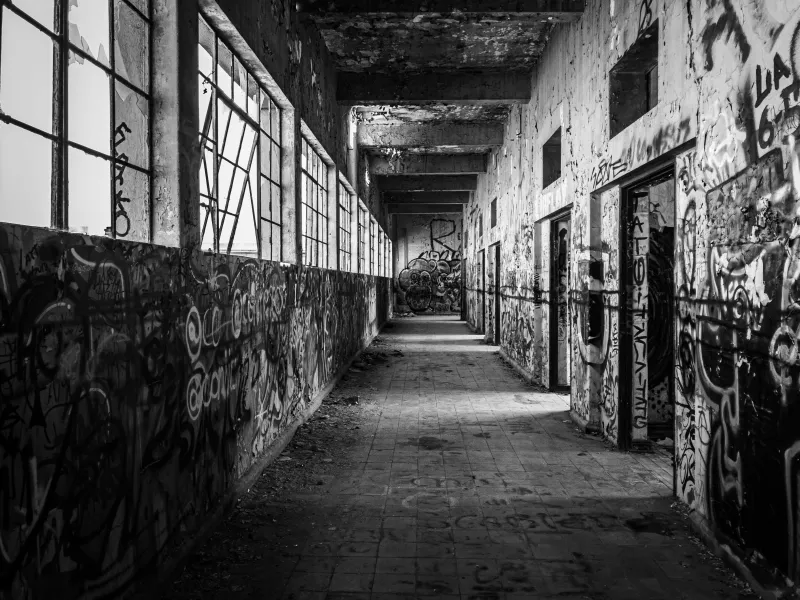
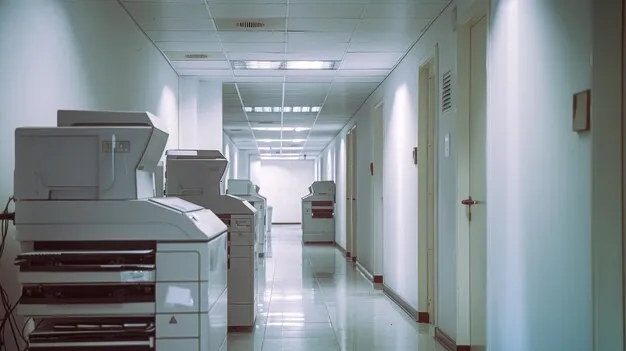
Now she stood in a hallway that stretched in both directions farther than should have been possible, lined with doors that bore no nameplates or numbers. The fluorescent lights overhead cast the same uncertain, flickering glow she'd noticed in her office, and the carpet beneath her feet felt damp, as if someone had recently spilled something that hadn't quite dried.
She counted the doors: her office, then three others before the hallway curved away into shadows. There should have been only one door—the emergency exit that led to the stairwell.
Sarah checked her watch again: 7:07 PM. Four minutes had passed, though she felt certain she'd been standing in the hallway much longer than that. Her body ached with the particular exhaustion that came after a difficult session, the kind where a patient's pain seemed to seep into your bones.
Behind her, she heard the soft sound of a door closing.
She turned to find her office door slightly ajar, though she was certain she'd left it open. Through the gap, she could see her notepad lying on the floor where she'd dropped it, the pages covered in writing that seemed to move and shift in the unstable light.
From somewhere down the impossible hallway came the sound of footsteps—measured, patient, growing neither closer nor farther away.
Sarah Chen had always prided herself on her attention to detail. But as she stood in a corridor that couldn't exist, listening to footsteps that might have belonged to anyone, she realized that some details were never meant to be remembered.
The fluorescent lights hummed overhead, casting their uncertain glow on doors that led nowhere she recognized, while somewhere in the distance, water continued to drip onto carpet that should have been hardwood, marking time in a place where time itself seemed negotiable.
She checked her watch one more time: 7:07 PM.
It hadn't moved.