Marcus had been driving for FleetDelivery for eight months when the algorithm sent him to 4425 Millbrook Corporate Drive at 11:47 PM on a Tuesday. The package was small, unremarkable—a manila envelope marked "URGENT" in red block letters, destination ZIP code 43701. He'd delivered to office parks after hours before. Security guards, skeleton crews, the occasional insomniac pulling an all-nighter.
The GPS guided him through familiar suburban arteries, past strip malls and chain restaurants shuttered for the night, then into a development he couldn't place despite knowing this part of Columbus intimately. Millbrook Corporate Drive stretched ahead in a gentle curve, lined with identical three-story buildings rendered colorless under sodium streetlights.
4425 sat at the end of the loop, indistinguishable from its neighbors except for the glowing suite numbers beside glass doors. Marcus parked in the empty lot, grabbed the envelope, and approached the entrance. The lobby beyond the glass was lit but vacant—beige carpet, artificial plants, a reception desk abandoned for the night.
He tried the door. Locked, as expected. The delivery instructions specified "Suite 340B," but there was no after-hours dropbox, no security intercom. Marcus circled the building, looking for a service entrance or night window. Nothing. Just more glass doors, more empty lobbies, more beige.
That's when he noticed the side entrance—a plain door marked "Authorized Personnel Only" that definitely hadn't been there during his first circuit. The handle turned easily.
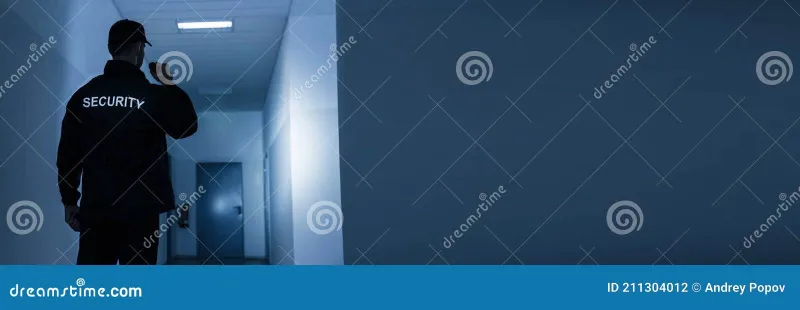
The corridor beyond was wrong immediately. Too long, extending past where the building's exterior walls should have ended. Fluorescent tubes flickered overhead in an irregular pattern that reminded him of Morse code. The carpet was industrial-grade, that particular shade of blue-gray that existed only in office buildings, and it felt damp beneath his shoes despite the dry November air outside.
Marcus checked his phone: 11:52 PM. Five minutes to make the delivery window. The hallway branched ahead—left toward what should have been the building's edge, right toward an area that definitely extended beyond the parking lot he'd just left. He went right, following suite numbers that climbed steadily: 312, 314, 316.
The numbers reached 340 at a T-intersection. Left led to more numbered doors stretching into fluorescent distance. Right opened into something that made his delivery app crash.
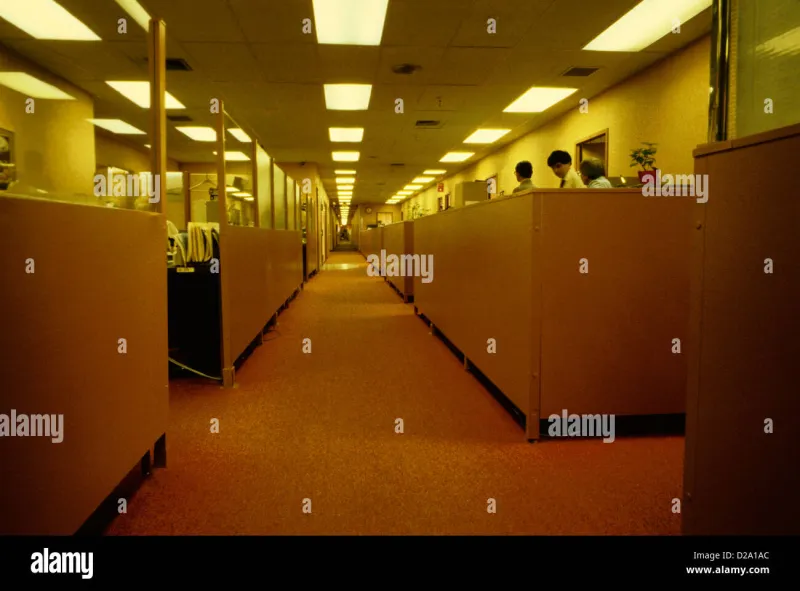
Cubicles. Hundreds of them, maybe thousands, arranged in perfect grids that extended beyond the reach of the overhead lighting. Each workstation identical: beige partition walls, black office chairs, blank computer monitors reflecting the sickly light. The air hummed with the sound of ventilation systems and electrical current, but underneath that mechanical drone was something else—a rhythm like breathing, like the building itself was alive.
Marcus's phone chimed. New delivery notification. He glanced at the screen: "Package delivered - 4425 Millbrook Corporate Drive, Suite 340B. Customer satisfied." The timestamp read 11:53 PM.
But he was still holding the envelope.
He looked up from the phone to find the cubicle farm had changed. The nearest workstations now showed signs of recent occupancy—coffee cups still warm, computer screens glowing with active sessions, desk chairs swiveled as if their occupants had just stepped away. The breathing sound was louder now, more deliberate.
Marcus turned back toward the corridor, but the T-intersection was gone. In its place stood a wall of cubicles, their gray fabric surfaces absorbing the fluorescent light like a hunger. His phone chimed again. Then again. A cascade of notifications, each one confirming the same delivery to the same address at the same time: 11:53 PM.
He began walking through the cubicle maze, using the delivery timestamps as breadcrumbs. Each notification was a moment he could anchor to, proof he existed in linear time. But the chimes were coming faster now, overlapping into a digital symphony that seemed to emanate from the workstations themselves.
Somewhere in the partitioned darkness, something chimed back. The same tone, the same cadence, but wrong—like an echo that arrived before the original sound. Marcus stopped walking. The breathing sound had synchronized with his own.
His phone showed 847 delivery confirmations for the same package, all timestamped 11:53 PM. The envelope in his hand felt heavier now, as if it contained more than paper. He set it on the nearest desk and backed away.
The chiming stopped.
Marcus ran then, following the gaps between cubicles, seeking any path that led anywhere but deeper into the grid. Behind him, he heard the sound of an office chair rolling across carpet, then another, then dozens—a percussion of wheels and plastic as invisible workers returned to their stations.
Three days later, FleetDelivery received a customer service complaint from 1247 Riverside Drive in Akron, Ohio. A manila envelope marked "URGENT" had appeared on their doorstep without explanation. The delivery confirmation in Marcus's account showed the package successfully delivered at 3:47 AM to ZIP code 43701.
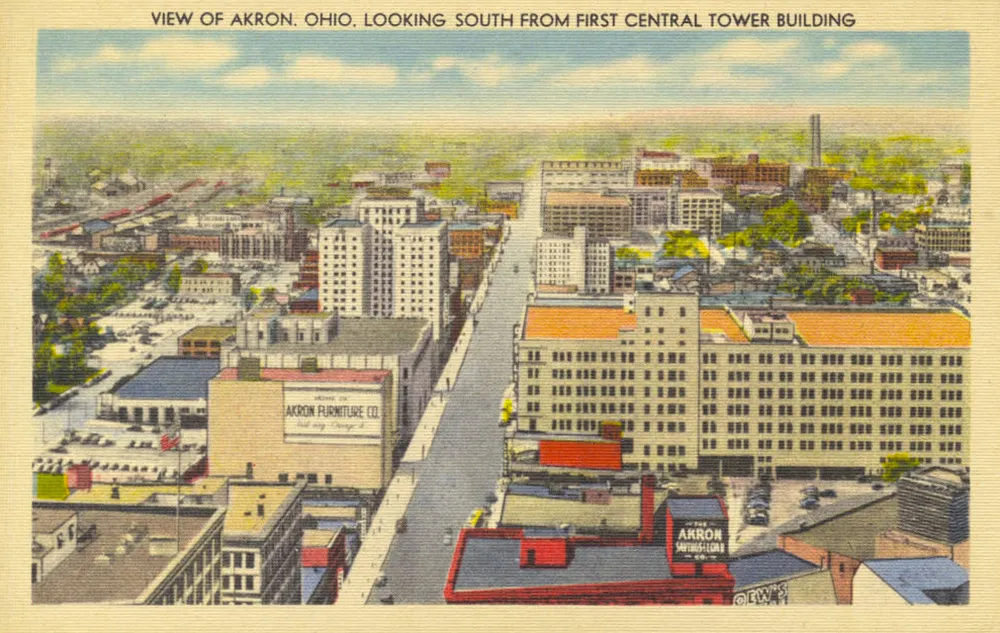 Photo: Akron, Ohio, via akron.thomconte.com
The postal service has no record of that ZIP code ever being assigned.