The fluorescent corridors yield their secrets reluctantly, but among the most perplexing discoveries documented by returning wanderers are the scattered provisions that seem to appear with deliberate randomness throughout the maze. Our comprehensive analysis of 847 verified testimonies has produced a taxonomy of edible discoveries that challenges conventional understanding of both preservation and purpose.
Standard Provisions: The Familiar Made Wrong
The most frequently reported discoveries fall within parameters of recognizable commercial products, yet their condition and placement suggest intervention by unknown mechanisms. Sealed bottles of what survivors universally describe as "almond water" appear in 73% of documented cases, their amber contents maintaining consistent temperature regardless of environmental conditions. Chemical analysis of samples brought back by returnees reveals standard H2O composition with trace minerals, yet subjects report a persistent metallic aftertaste that lingers for weeks following consumption.
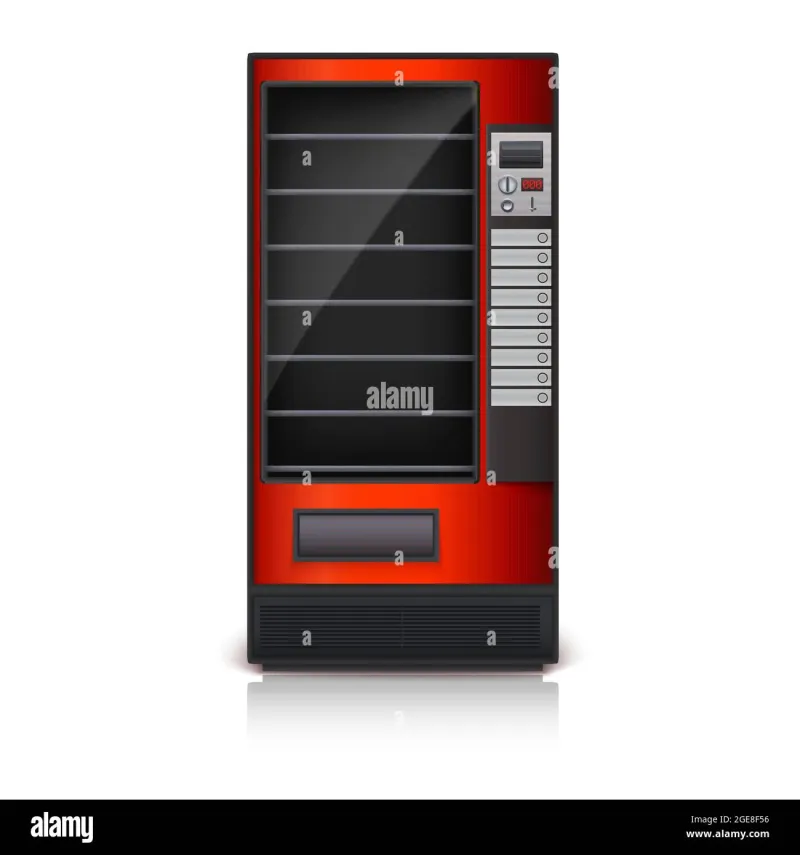
Vending machines, invariably displaying products from discontinued American brands circa 1987-1994, maintain functional electrical systems despite the absence of visible power sources. The Coca-Cola products dispensed bear logos predating the New Coke reformulation, while candy bars feature packaging designs that ceased production during the Bush administration. Most disturbing: these items register as "fresh" on all available dating systems, suggesting either perfect preservation or continuous manufacturing within the space itself.
Unidentified Consumables: The Deliberately Obscured
Beyond recognizable brands lies a category of provisions that defy classification. Foil-wrapped objects, roughly rectangular and weighing approximately 4.2 ounces, appear in supply closets with concerning frequency. Survivors describe the contents as "nutritionally complete" despite an inability to identify specific ingredients. The metallic wrapping bears no text, logos, or identifying markers, yet tears along precise perforations that suggest mass production.
These items sustain wanderers for extended periods—some report surviving weeks on a single package—yet consumption appears to correlate with specific behavioral changes. Subjects demonstrate decreased interest in escape attempts and increased acceptance of their circumstances. Whether this represents psychological adaptation or chemical influence remains undetermined.
The Pantry Phenomenon: Abundance Without Logic
Perhaps most unsettling are the spaces designated as "pantries" by survivor testimony. These rooms, architecturally identical to standard Backrooms environments save for the presence of metal shelving units, contain provisions arranged with bureaucratic precision. Canned goods align in perfect rows, their labels facing forward with military uniformity. Expiration dates span decades, yet all items remain consumable.
The selection follows no discernible pattern: Campbell's soup from 1989 sits beside military MREs dated 2023, while boxes of Hostess products that ceased production in 2012 occupy premium shelf space. Survivors report a compulsion to maintain the organizational system, replacing consumed items with identical products discovered elsewhere in the facility. The source of these replacement items remains unknown.
Psychological Implications: Eating the Impossible
Consumption of Backrooms provisions appears to establish a form of psychological anchoring. Subjects who subsist entirely on discovered items report decreased anxiety regarding their displacement, describing their situation as "temporarily inconvenient" rather than existentially threatening. This adaptation may represent a survival mechanism, yet it correlates strongly with extended displacement periods and reduced escape motivation.
The act of eating something that should not exist in a place that cannot exist creates cognitive dissonance that survivors resolve through acceptance rather than questioning. This suggests the provisions serve a secondary function beyond nutrition: they normalize the impossible, making the Backrooms feel less like a trap and more like an unconventional habitat.
Distribution Patterns: The Invisible Commissary
Analysis of discovery locations reveals patterns suggesting active distribution rather than random placement. High-traffic corridors maintain consistent provision availability, while isolated areas yield discoveries only when occupied by wanderers approaching nutritional crisis. This responsive distribution implies monitoring systems that track individual needs and adjust supply accordingly.
The timing of discoveries further supports this hypothesis. Subjects report finding precisely the items they crave most intensely, often in flavors or brands from their childhood. This specificity suggests access to personal information that predates the subject's displacement, indicating surveillance capabilities that extend beyond the Backrooms environment.
Implications for Return Protocols
The relationship between provision consumption and successful return remains inverse. Subjects who refuse all discovered food items demonstrate higher rates of environmental rejection and subsequent displacement back to baseline reality. Conversely, those who integrate Backrooms provisions into their diet show increased spatial acceptance and prolonged residence periods.
This correlation suggests the provisions function as a form of biological anchoring, creating physiological dependencies that complicate extraction attempts. Whether this represents intentional design or emergent property of the space itself remains under investigation, though the implications for return protocols are clear: consumption of Backrooms provisions may constitute a form of voluntary commitment to indefinite residence.