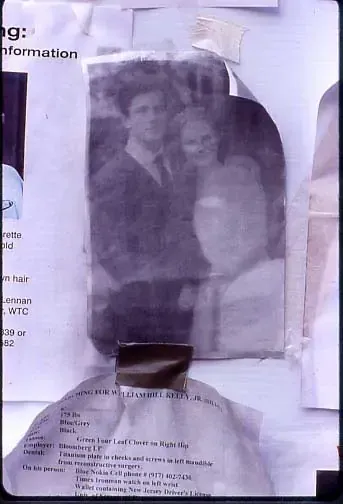
At 2:47 AM on a Tuesday in March, Linda Vasquez received an alert on her phone. Another missing person case had been flagged by the algorithm she'd spent three years refining — a 34-year-old construction worker named Travis Chen had vanished from a Boise office building during routine electrical work. No security footage. No signs of struggle. No trace.
Vasquez, a retired librarian from Portland, has never met Chen's family. She's never been to Boise. But within six hours of receiving that alert, she'd cross-referenced the disappearance location against her database of documented threshold sites, plotted the building's construction date against reported spatial anomalies, and added Chen's case to a network of volunteers who refuse to accept that some people simply vanish.
"We're not conspiracy theorists," Vasquez insists, speaking from her home office lined with printed spreadsheets and hand-drawn maps. "We're just people who've noticed patterns that official investigations miss."
The Network Forms
What began as scattered forum discussions has evolved into a sophisticated volunteer network spanning fourteen states. The "Last Known Position" project — named for the final confirmed location of each case they track — operates through encrypted channels, shared databases, and a grim understanding that traditional search and rescue protocols fail when the missing haven't gone anywhere that exists on conventional maps.
The network emerged organically around 2019, as forum users began noticing correlations between certain missing persons cases and reports of architectural anomalies. A warehouse worker disappears during a night shift in a building later condemned for "structural irregularities." A janitor vanishes from a shopping mall that tenants describe as having "impossible" back corridors. A security guard goes missing from an office complex where employees report elevators that sometimes stop at floors that don't exist.
"The official investigations always conclude the same way," explains Marcus Webb, a network coordinator based in Minneapolis. "No evidence of foul play. No indication of voluntary departure. Case goes cold. Family stops getting updates. But we keep looking."
The Algorithm
Vasquez's algorithm flags cases based on seventeen criteria developed through analysis of over 3,000 missing persons reports. Disappearances from commercial buildings constructed between 1970-1995. Vanishing during maintenance or after-hours work. Last known positions in areas with documented electrical anomalies. Buildings with reported "navigation difficulties" among regular occupants.
"The pattern recognition isn't perfect," Vasquez acknowledges. "But when you see enough cases that fit the profile, you start understanding that some disappearances aren't disappearances at all. They're displacements."
The network maintains detailed files on 847 active cases across their coverage area. Each file includes architectural blueprints when available, utility company reports, tenant complaints about "spatial irregularities," and testimonies from witnesses who describe the missing person's last known location as somehow "wrong."
The Psychological Toll
Volunteer burnout is constant. Sarah Kim, who coordinates the Pacific Northwest division from Seattle, estimates that 60% of active volunteers leave within their first year. "You can't close these cases," she explains. "There's no resolution. No body found. No evidence of what happened. You're searching for people who might be walking through endless corridors in spaces that don't appear on any map."
Kim herself joined after her brother Daniel disappeared from a Portland office building in 2020. Security footage shows him entering a maintenance corridor at 11:43 PM. He never emerged. The corridor, when investigated, led to a utility room with no other exits.
"I know he's somewhere," Kim says quietly. "Not dead. Not missing in any conventional sense. Just... displaced. Walking through rooms that shouldn't exist, trying to find his way back to spaces that make sense."
The Returnee Problem
The network's most disturbing discovery involves cases where the missing person eventually reappears. Cross-referencing their database with hospital admissions, psychiatric holds, and John Doe cases reveals a troubling pattern: individuals who match the physical description of their missing persons, but who exhibit severe disorientation and claim no memory of their previous identity.
"We've identified at least twelve potential returnees," Webb reports. "People who reappeared months or years after disappearing, but who show no recognition of their former lives. They describe experiences that align with Backrooms testimonies — endless corridors, fluorescent lighting, the sensation of being lost in impossible architecture."
The network faces an ethical dilemma: approach families with individuals who might be their missing loved ones, forever changed by displacement? Or maintain surveillance from a distance, documenting cases that may never achieve resolution?
The Search Continues
Every Tuesday at 2 AM, Vasquez's algorithm runs its weekly scan. New cases appear. New patterns emerge. The network grows, driven by volunteers who understand that some searches never end — they simply expand into territories that shouldn't exist.
"We're not looking for closure," Vasquez explains, reviewing Chen's case file as morning light filters through her office windows. "We're maintaining hope that somewhere in those endless rooms, people are still walking toward exits that might lead home. Someone needs to remember they existed. Someone needs to keep looking, even when the search leads into spaces that were never meant to be found."
The network's motto, printed on business cards they'll never distribute, captures their mission: "Still searching. Still waiting. Still believing they'll find their way back."