The Weight of Open Sky
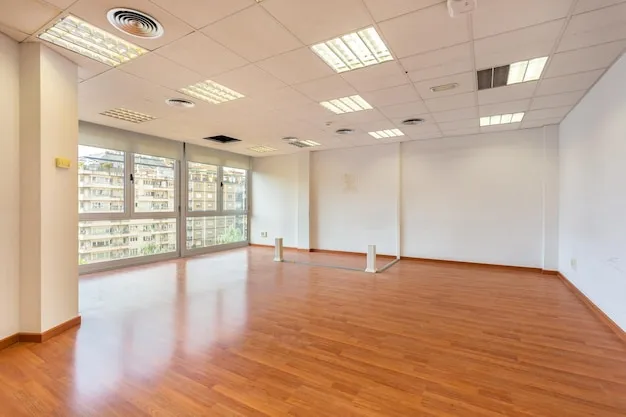
Sarah M. describes the moment she found herself standing in her childhood bedroom after three subjective months in the endless yellow corridors as "like being crushed by infinity." The ceiling, which had once felt protective, now pressed down with the weight of a universe that suddenly seemed too vast, too open. "I couldn't stop looking up," she tells me during our phone interview, her voice barely above a whisper. "In there, the ceiling was always eight feet, nine inches. Always. Here, it just... goes on forever."
 Photo: Sarah M., via lookaside.instagram.com
This paradox—finding infinite space claustrophobic while finite space feels overwhelming—appears in nearly every account from alleged returnees. Dr. Marcus Chen, who has been documenting these cases since 2019, notes that traditional agoraphobia doesn't adequately explain the phenomenon. "They're not afraid of open spaces," he explains. "They're afraid of spaces that don't follow the rules they learned to survive by."
The Grammar of Absence
What troubles returnees most isn't what they brought back, but what they left behind. Michael Torres, who claims to have spent eighteen months navigating what he describes as "Level 0," obsessively counts his possessions. "I had a wallet when I went in. Brown leather, worn corner where my thumb always went. I came out with a wallet, but it's not the same one. Same cards, same cash, but the wear patterns are wrong. It's like someone made a copy that's 99% accurate."
These substitutions follow no logical pattern. Jennifer Walsh returned with her wedding ring, but not the small scar on her finger from when she'd caught it on a fence as a child. David Kim found his phone in his pocket with all the same photos, but the background wallpaper—a picture of his dog—showed the animal in a slightly different pose, tail positioned an inch to the left.
"They're mourning objects," observes Dr. Chen. "But they can't explain what exactly they're mourning, because the replacement is functionally identical. It's grief without a clear object of loss."
The Persistent Echo
Perhaps most unsettling are the reports of sensory echoes—phantom experiences that suggest the Backrooms maintain some connection to those who have left. Maria Santos, who emerged from what she describes as a "maintenance area with too many doors," still hears the fluorescent hum. "It's not in my ears," she clarifies. "It's in my bones. When it's really quiet here, I can feel it vibrating."
The fluorescent buzz appears in 78% of return testimonials, followed by the sensation of damp carpet underfoot (64%) and the smell of old paper and cleaning chemicals (52%). These phantom sensations intensify in certain environments: office buildings after hours, basement storage areas, and notably, any space lit primarily by fluorescent fixtures.
Robert Chen (no relation to Dr. Chen) describes walking through a 24-hour pharmacy at 3 AM when the phantom sensations became so overwhelming he collapsed. "The aisles stretched out wrong," he recounts. "For maybe thirty seconds, I was back there. The cashier said I just stood there staring at the ceiling, but I was walking those yellow halls again."
The Geometry of Memory
Returnees consistently struggle with spatial reasoning in ways that suggest their time in impossible architectures has fundamentally altered their perception. Lisa Park, formerly an architect, can no longer trust her professional instincts. "I'll look at blueprints and see problems that aren't there. Corners that don't add up to 90 degrees, rooms that are bigger inside than outside. My colleagues think I'm having a breakdown, but I'm seeing things more clearly than I ever have."
This hypervigilance regarding architectural impossibilities creates a strange form of expertise. Several returnees have identified structural anomalies in buildings—load-bearing walls that shouldn't exist, corridors that bend in ways that violate the building's footprint—that were later confirmed by professional surveys.
"They're not crazy," Dr. Chen emphasizes. "They're calibrated to a different kind of reality. The question is whether that calibration is an asset or a liability in our world."
The Question of Return
Most troubling are the returnees who express not relief at their escape, but a profound sense of displacement. "I know I should be grateful," says Thomas Wright, who claims to have spent two years in what he calls "the hub rooms." "But I understood the rules there. Here, everything changes constantly. Weather, traffic, people's moods. There, the walls were always the same color, the lights always hummed the same frequency. It was predictable."
When asked if he would return to the Backrooms given the choice, Wright pauses for nearly a minute. "I think about it," he finally admits. "Every day, I think about it. And that terrifies me more than anything I saw in those corridors."
The psychological profiles of returnees suggest that successful adaptation to the Backrooms requires a fundamental rewiring of how the mind processes reality. The question that haunts their testimonials is whether this rewiring can ever truly be undone—or whether those who claim to have escaped have simply traded one form of imprisonment for another.