Initial Observations
The case files accumulate with disturbing consistency. Subject after subject describes the same progression: first the smell, then the wrongness, then the understanding that return may not be possible. Dr. Sarah Chen's research team at the Institute for Spatial Anomalies has catalogued over 400 testimonies, and the pattern emerges with statistical significance that defies coincidence.
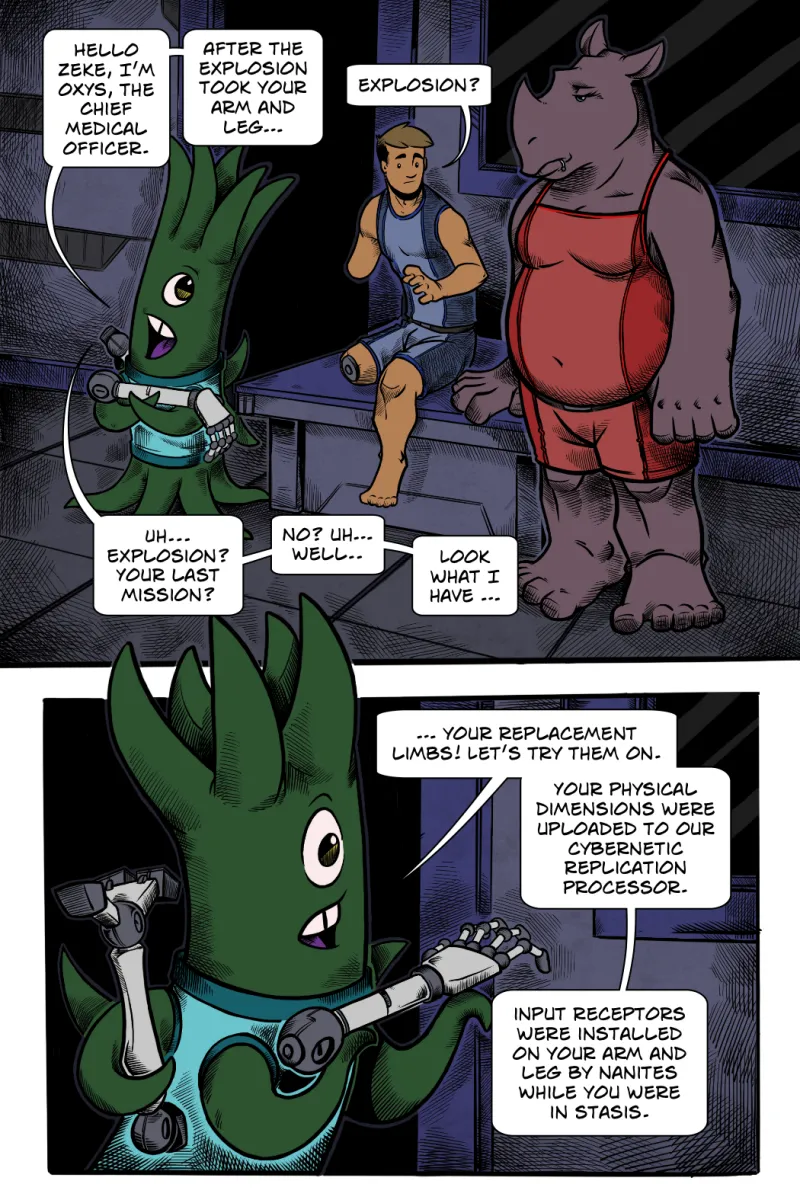 Photo: Institute for Spatial Anomalies, via spatialanomaliescomic.com
 Photo: Dr. Sarah Chen, via substackcdn.com
The olfactory markers appear in a predictable sequence. Industrial carpet adhesive — that particular sweetness of deteriorating polymer bonds. Mold spores suspended in recycled air that tastes of copper pennies and forgotten time. The ozone aftermath of fluorescent ballasts burning themselves to death in fixtures that may have been running for decades without maintenance.
"What's remarkable," Chen notes in her field recordings, "is how subjects describe these smells as familiar before they become threatening. Like walking into a basement they've never seen but somehow remember."
The Neuroscience of Recognition
The human olfactory system processes chemical information faster than any other sensory input, bypassing the thalamus entirely to connect directly with the limbic system. This evolutionary advantage — the ability to detect poison, predator, or fire before conscious thought intervenes — may be our only early warning system for spaces that shouldn't exist.
Dr. Michael Reeves, formerly of Johns Hopkins before his research took him into less conventional territories, has documented how these specific chemical signatures affect brain activity. "The amygdala responds to Backrooms-associated odors with the same activation patterns we see in subjects exposed to genuine mortal threats," he explains. "But there's something else. The hippocampus shows activity consistent with false memory formation. As if these smells are triggering recognition of places the subjects have never been."
 Photo: Dr. Michael Reeves, via assets.answersingenesis.org
The most unsettling finding: subjects exposed to synthetic recreations of these odor combinations in laboratory settings report immediate spatial disorientation. Three test subjects required medical intervention when they became convinced the testing facility's exits had vanished.
Chemical Composition Analysis
Laboratory analysis of air samples collected from threshold locations reveals compounds that shouldn't coexist in normal atmospheric conditions. Formaldehyde concentrations typical of industrial manufacturing, combined with organic decay signatures suggesting moisture damage spanning years, mixed with trace elements of cleaning chemicals that ceased production in the 1980s.
"It's as if these spaces are breathing out the accumulated exhalations of abandoned buildings," reports environmental chemist Dr. Lisa Park. "But the ratios are wrong. The decay signatures suggest decades of neglect, while the industrial compounds indicate active off-gassing. These chemical fingerprints describe impossible timelines."
The most frequently documented combination includes:
- 4-phenylcyclohexene (carpet backing degradation)
- 2-ethyl-1-hexanol (plasticizer breakdown)
- Various terpenes (mold metabolites)
- Unidentified aromatic compounds with molecular weights suggesting synthetic origin
Subjects consistently report detecting this combination 3-7 minutes before visual confirmation of architectural anomalies. The question that keeps researchers awake: if the smell precedes the sight, when exactly does displacement begin?
Implications for Early Detection
The documentation suggests our understanding of noclip events may be fundamentally incomplete. Rather than sudden displacement from normal space, the evidence points toward gradual transition periods where reality becomes negotiable. The chemical signatures may indicate that subjects are breathing the atmosphere of impossible spaces before the geometry fully manifests.
"We're looking at this backwards," Chen admits in her latest report. "We assumed the smell was a feature of the Backrooms bleeding into normal space. But what if it's evidence that normal space is already gone?"
Recent testimonies support this interpretation. Subjects report that familiar environments — their own homes, workplaces, schools — begin emitting these chemical signatures hours or sometimes days before complete displacement occurs. As if the building itself is slowly forgetting how to be real.
The implications resist comfortable conclusions. If olfactory warning systems activate before spatial displacement becomes irreversible, the window for escape may be measured in minutes rather than the seconds previously assumed. But the testimonies also suggest something more disturbing: that once you can smell the wrongness, the geometry may have already begun changing around you.
The research continues, though Chen's team has noted increasing difficulty maintaining laboratory spaces. Three research facilities have reported persistent odor intrusions despite negative air pressure systems and industrial filtration. The chemical signatures they study appear to be studying them back.