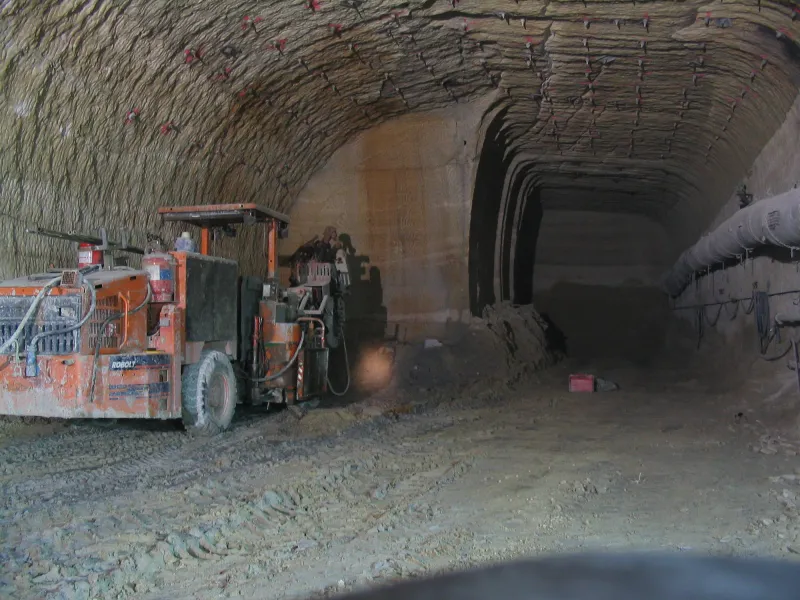
The Underground Cartography Movement
In the basement of a Milwaukee coffee shop, Marcus "Cave_Mapper_87" Rodriguez spreads out hand-drawn schematics across three folding tables. The maps show storm drains, abandoned subway tunnels, and the forgotten maintenance corridors beneath the city's financial district. Each line is precise, each measurement verified with military-grade equipment. But scattered among the conventional blueprints are documents that shouldn't exist—maps of spaces that extend far beyond the physical boundaries of the buildings above them.
"Started noticing the inconsistencies about five years ago," Rodriguez explains, pointing to a section of tunnel that, according to his measurements, extends three blocks past the building's foundation. "Thought my equipment was faulty. Then I started finding others online who were documenting the same impossible geometries."
The urban exploration community has always attracted obsessive personalities—people willing to risk arrest, injury, and worse to document the hidden spaces beneath America's cities. But within this already niche subculture, a smaller group has emerged: cartographers who've become fixated on spaces that actively resist being mapped.
Digital Communities and Dangerous Obsessions
The forum "GeometryGlitches" hosts 847 active members, each contributing to a growing database of anomalous architectural discoveries. Posts follow a predictable pattern: initial excitement over finding a "glitched" space, detailed documentation attempts, then increasingly frantic updates as the measurements stop making sense.
User "DeepMeasure_TX" documented his exploration of the sub-basement beneath a Dallas office complex over fourteen posts spanning six months. His initial survey showed a simple rectangular storage area, roughly 40 by 60 feet. But each subsequent visit revealed additional corridors, branching passages that his blueprints insisted couldn't exist within the building's footprint.
"The weirdest part," DeepMeasure_TX wrote in his final post, "is that I keep finding my own survey stakes. The orange flags I planted to mark dead ends. But they're in new locations, marking passages I've never seen before. It's like the space is rearranging itself around my measurements."
The user hasn't posted in eight months. His profile shows he was last active 127 days ago, viewing a thread titled "When the Tunnels Watch Back."
The Documentation Curse
Dr. Amanda Reeves, a cognitive psychologist who studies urban exploration communities, has identified what she calls "documentation obsession disorder" among certain mappers. "There's something about encountering impossible geometry that triggers a compulsive need to document, measure, and chart," she explains. "The more the space resists mapping, the more determined they become."
This obsession manifests in increasingly elaborate measurement systems. Members of GeometryGlitches share techniques for using laser rangefinders, ground-penetrating radar, and even seismic equipment to verify their findings. One popular post, "Advanced Surveying for Anomalous Spaces," provides detailed instructions for conducting three-dimensional mapping using consumer-grade LiDAR scanners.
But the technology seems to make things worse. User "GridLock_CA" reported that his 3D scans of a San Francisco basement showed the same room occupying multiple locations simultaneously—overlapping floor plans that should be physically impossible. "The scanner doesn't lie," he wrote. "But it's showing me things that can't be real. The basement extends under three buildings, but also somehow exists entirely within one of them."
Pattern Recognition and Entity Encounters
As the community has grown, certain patterns have emerged. Spaces that resist mapping often share characteristics: fluorescent lighting that flickers in specific patterns, carpeting that shows wear despite being in areas where no foot traffic should occur, and an acoustic environment that members describe as "wrong."
More disturbing are the increasing reports of encounters during mapping expeditions. These accounts rarely describe entities directly, instead focusing on evidence of presence: wet footprints leading to dead ends, survey equipment moved overnight despite locked access points, and the sensation of being observed while working alone in supposedly empty spaces.
"TunnelRat_MI" documented one such encounter while mapping the basement levels beneath Detroit's Renaissance Center. His posts describe finding a maintenance corridor that extended far beyond the building's known boundaries, lined with the familiar yellow walls and fluorescent fixtures reported by other community members.
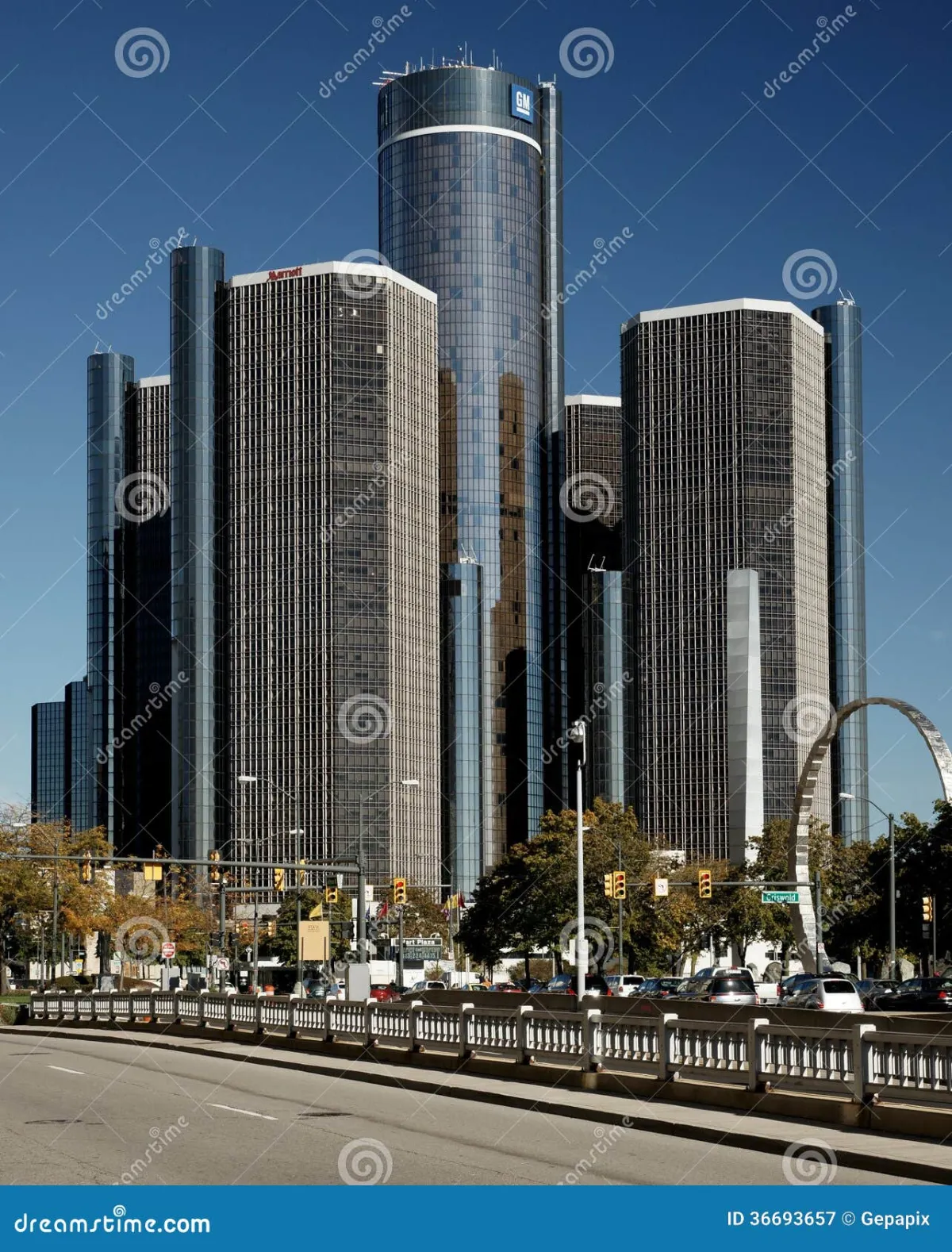 Photo: Renaissance Center, via thumbs.dreamstime.com
"Was setting up my laser level when I heard footsteps," he wrote. "Heavy boots on concrete, coming from the unmapped section. But when I followed the sound, the corridor just... ended. Solid wall. No doors, no branching passages. Just the echo of footsteps that couldn't exist."
TunnelRat_MI's account includes detailed measurements proving the corridor's impossible length, along with photographs that show the familiar yellow walls stretching beyond the camera's flash range. His final post, uploaded three weeks later, consists of a single sentence: "The measurements are fighting back."
The Cost of Curiosity
What's most concerning to researchers like Dr. Reeves is the community's response to these anomalous experiences. Rather than backing away from dangerous situations, members become more determined to document them. The GeometryGlitches forum features an entire subforum dedicated to "hostile architecture"—spaces that actively interfere with mapping attempts.
"There's a addictive quality to encountering impossible geometry," explains Dr. Reeves. "The human brain craves pattern recognition, logical spatial relationships. When those expectations are violated, some individuals become compulsively driven to restore order through documentation."
This compulsion may explain why so many community members eventually stop posting. Forum moderators maintain a "missing mappers" list—active contributors who've simply vanished from the community. The list currently includes forty-seven names, each representing someone who was actively documenting anomalous spaces before disappearing entirely from online activity.
The Question of Attention
Perhaps the most unsettling theory emerging from the community involves the idea that documentation itself may be dangerous. Several members have reported that their mapping activities seem to attract unwanted attention—not from security or authorities, but from something else entirely.
User "MeasureTwice_NV" described returning to a previously mapped location in Las Vegas to find his survey markers rearranged into geometric patterns. "Someone or something had moved every stake, every flag, every piece of equipment I'd left behind," he wrote. "But arranged them into perfect triangles and squares. Like a message. Like something was showing me it could impose order on my chaos."
The post included photographs showing the rearranged markers, each positioned with mathematical precision impossible to achieve accidentally. The images also revealed something else: additional survey equipment that MeasureTwice_NV insisted wasn't his, arranged in the same geometric patterns but showing signs of age and weathering that suggested they'd been there for years.
"Maybe," wrote one commenter, "we're not the first ones to try mapping these spaces. And maybe that's why they don't want to be mapped."
MeasureTwice_NV never responded to the comment. His account shows he logged in once more, twelve days later, to view a private message from an unknown sender. The subject line, visible in screenshots shared by other users, read: "Stop measuring what doesn't want to be measured."
He hasn't been seen online since.