Methodology and Documentation Standards
The following survey represents eighteen months of collaborative measurement and mapping across seven distinct levels within the Backrooms complex. Each entry utilizes standard architectural documentation protocols adapted for anomalous spatial conditions. Measurements were taken using laser rangefinding equipment, traditional surveying tools, and photogrammetric analysis where possible.
All dimensions listed represent averages across multiple measurement sessions. Variance in readings has been attributed to equipment malfunction, human error, or environmental factors affecting measurement accuracy. Alternative explanations are not considered within the scope of this documentation.
Level 0: The Infinite Office Complex
Documented Anomaly: Corridor extension beyond structural capacity
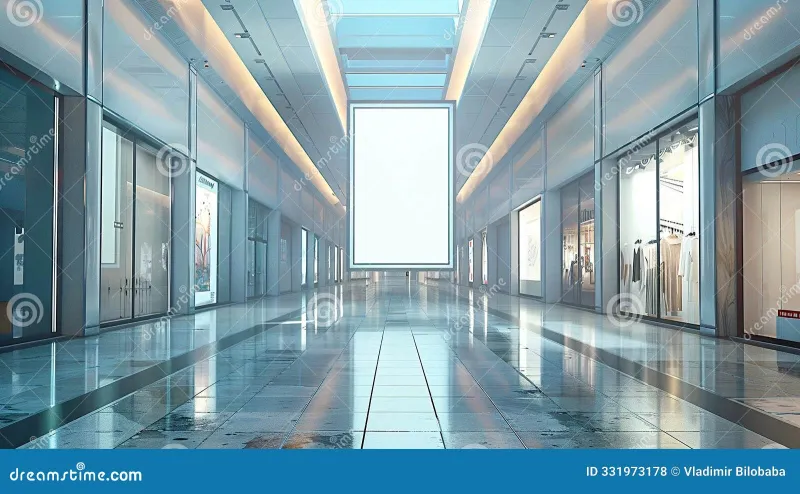
Initial Measurements: Standard office corridors measuring 8 feet in width, 9 feet in height, with fluorescent lighting panels installed at 4-foot intervals. Wall construction appears consistent with commercial drywall over metal framing. Carpet shows industrial-grade installation with standard adhesive backing.
Anomalous Findings: Linear measurement of individual corridors yields distances exceeding 2.3 miles in structures that, when viewed from junction points, appear to extend no more than 200 feet. Photogrammetric analysis confirms perspective remains consistent throughout measured distance—lighting panels maintain uniform spacing, wall height shows no variation, carpet pattern alignment continues without interruption.
Attempts to map the complete floor plan have been unsuccessful. The space contains approximately 847 individual offices, each measuring 12×14 feet, arranged along corridors that, by square footage calculation, should require a building footprint of roughly 400,000 square feet. However, measurement of the complex's exterior boundaries—where identifiable—suggests a maximum footprint of 180,000 square feet.
The discrepancy becomes more pronounced with extended exploration. Teams that spend multiple days mapping report discovering office clusters that, according to their documentation, should overlap with previously mapped areas. Yet physical navigation between these spaces requires traversing corridors that connect them in geometrically impossible configurations.
Level 94: The Ascending Stairwell
Documented Anomaly: Vertical circulation returning to origin point
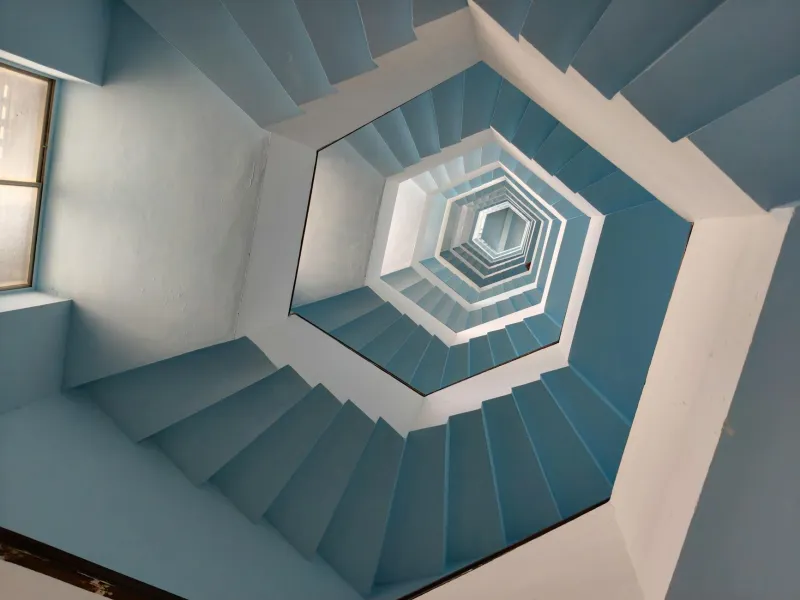
Initial Assessment: Concrete stairwell with metal handrails, standard 7-inch rise per step, 11-inch tread depth. Emergency lighting provides minimal illumination at regular intervals. Construction quality consistent with mid-20th century institutional buildings.
Measurement Protocol: Teams ascending the stairwell were equipped with altimeters, step counters, and marking chalk to track elevation changes and document progress. Multiple ascent attempts were conducted with careful attention to maintaining consistent climbing pace and accurate record-keeping.
Findings: After ascending 2,847 steps—representing an elevation gain of approximately 1,663 feet—teams consistently arrived at a landing identical to their starting point. Chalk marks placed at the beginning of ascent were found at the "destination" landing, confirming return to origin despite continuous upward movement.
Subsequent attempts using descent protocols yielded identical results. Teams descending for comparable distances arrived at their starting position, with altimeter readings confirming consistent downward elevation change throughout the descent.
The stairwell contains no visible loops, curves, or architectural features that would account for this circular navigation. Each flight consists of standard straight-run stairs connecting rectangular landings. Visual inspection during ascent shows consistent upward perspective with no indication of curvature or redirection.
Level 188: The Narrowing Passage
Documented Anomaly: Progressive dimensional reduction without terminal point
Survey Parameters: Initial corridor width measures 12 feet with standard 10-foot ceiling height. Walls constructed of concrete blocks with painted finish. No architectural features interrupt the passage—no doorways, alcoves, or intersecting corridors.
Progressive Measurements: The corridor narrows at a consistent rate of 0.3 inches per linear foot of travel. This reduction affects both width and ceiling height proportionally. At 500 feet of travel, the passage measures 10.5 feet wide with an 8.5-foot ceiling. At 1,000 feet, dimensions reduce to 9 feet by 7 feet.
Extended Documentation: Teams equipped with specialized narrow-passage gear have documented the corridor's continued reduction to widths of 4 feet and ceiling heights of 3.5 feet at distances exceeding 1.8 miles from the entry point. The narrowing continues at the same mathematical rate with no indication of approaching a terminal dimension.
Most troubling, teams report that return navigation—traveling back toward the entry point—shows the corridor continuing to narrow rather than expanding. This creates a scenario where the passage simultaneously narrows in both directions from any given point, a geometric impossibility that has prevented complete documentation of the space's termination.
Attempts to measure the corridor's total length have been abandoned due to equipment limitations and safety concerns regarding team extraction from passages too narrow to permit normal human movement.
Level 37: The Poolrooms Extension
Documented Anomaly: Subaqueous architecture exceeding container volume
Environmental Conditions: Tiled recreational facility containing multiple swimming pools of varying sizes. Ambient temperature 82°F, humidity 87%, with consistent chlorine odor throughout. Fluorescent lighting reflects off water surfaces and white ceramic tiles.
Volumetric Analysis: The facility contains 23 documented swimming pools ranging from standard 25-yard competition size to smaller recreational pools. Combined water volume totals approximately 847,000 gallons based on measured dimensions and depth calculations.
Structural Impossibility: The building containing these pools measures 340 feet by 180 feet externally—a footprint that should accommodate, at maximum, 61,200 square feet of floor space. However, the documented pool area alone requires 94,500 square feet, not including walkways, changing areas, or mechanical spaces.
Additionally, several pools show depths exceeding 12 feet in a structure that, based on foundation analysis, sits on a concrete slab with no basement level. Ground-penetrating radar confirms the slab sits directly on undisturbed soil, yet pools with documented depths of 15-20 feet continue to function normally.
Water circulation systems operate continuously despite no identifiable connection to external utilities. The source of water replacement and waste removal remains undetermined.
Level 223: The Recursive Cafeteria
Documented Anomaly: Self-containing spatial loop within finite structure
Physical Description: Standard institutional cafeteria with seating for approximately 200 individuals. Serving line, kitchen area, and dining room follow conventional restaurant layout principles. All equipment appears functional though no food service has been observed.
Navigation Anomaly: The cafeteria contains a single entrance/exit door leading to a short corridor that connects to an identical cafeteria. This second cafeteria also contains a single door leading to an identical corridor and identical cafeteria space. Documentation teams have confirmed the existence of at least 47 consecutive identical cafeterias connected by identical corridors.
Each space maintains individual identity—tables and chairs show different arrangements, wear patterns vary, and ambient lighting levels differ slightly between locations. However, architectural measurements confirm identical dimensions and layout across all documented iterations.
Most significantly, teams report that after traversing 12-15 identical cafeterias, they arrive at a space that matches their original entry point in every detail, including specific table arrangements and equipment positions that had been deliberately altered for identification purposes.
Level 906: The Expanding Library
Documented Anomaly: Collection growth exceeding physical storage capacity
Initial Survey: Traditional library with wooden shelving units arranged in parallel rows. Estimated capacity based on shelf dimensions suggests storage for approximately 85,000 volumes. Books appear to cover standard academic and reference topics, though specific titles have proven difficult to catalog comprehensively.
Ongoing Documentation Challenges: Return visits to the library consistently reveal additional shelving sections that were not present during previous surveys. New sections appear to integrate seamlessly with existing architecture, maintaining consistent lighting, flooring, and environmental conditions.
Current estimates suggest the collection has grown to exceed 340,000 volumes across shelving that, by measured square footage, should not fit within the documented building structure. Teams report discovering new wings, additional floors, and basement levels that were not accessible during initial documentation.
Book acquisition appears ongoing despite no observed delivery mechanism. New titles consistently appear on shelves, with publication dates ranging from historical texts to volumes bearing publication dates several years in the future.
Level 505: The Infinite Basement
Documented Anomaly: Subterranean expansion beyond geological possibility
Access Point: Standard basement stairwell descending from what appears to be a residential structure. Concrete walls show typical residential foundation construction with minimal finishing.
Depth Analysis: The basement level extends horizontally in all directions far beyond the footprint of the structure above. Teams have documented basement areas extending over 1,200 feet from the central stairwell access point, encompassing storage areas, mechanical rooms, and utility corridors that serve no identifiable purpose.
Vertical measurements confirm the basement maintains consistent 8-foot ceiling height throughout, with the floor level remaining constant despite the extensive horizontal area. This creates a vast underground space that, based on structural engineering principles, should require support systems not evident in the modest residential structure above.
Most concerning, teams report discovering additional basement levels—sub-basements accessible through maintenance hatches and utility access points. These lower levels maintain the same extensive horizontal reach as the primary basement, creating a multi-level subterranean complex beneath what appears to be a single-family dwelling.
Documentation Limitations and Ongoing Concerns
The preceding survey represents current understanding based on available measurement techniques and documentation protocols. However, certain aspects of these spaces continue to present challenges that standard architectural analysis cannot adequately address.
Equipment malfunction rates increase dramatically during extended documentation sessions. Digital devices show particular susceptibility to data corruption, with measurement readings often changing between recording and review. Traditional mechanical instruments provide more reliable results, though teams report that compass readings become unreliable in several of the documented locations.
Most significantly, the act of documentation itself appears to influence the spaces being measured. Teams conducting repeat surveys often find that their previous measurements no longer match current conditions, despite no obvious changes to the physical environment.
As documentation efforts continue, it becomes increasingly clear that these spaces operate according to principles that exceed the scope of conventional architectural analysis. The mathematics that govern their existence appear to function independently of the geometric laws that define navigable space in baseline reality.
What we are measuring may not be architecture in any traditional sense, but something else entirely—something that merely resembles buildings and corridors and rooms while operating according to rules we do not yet understand.