The security footage from Westfield Shopping Center shows Marcus Chen entering the service corridor at 11:47 PM on March 15th, 2019. He was responding to a maintenance call—a flickering light bank in the employee break area that had been reported by the closing crew. The timestamp on the next frame reads 11:48 PM. The corridor is empty.
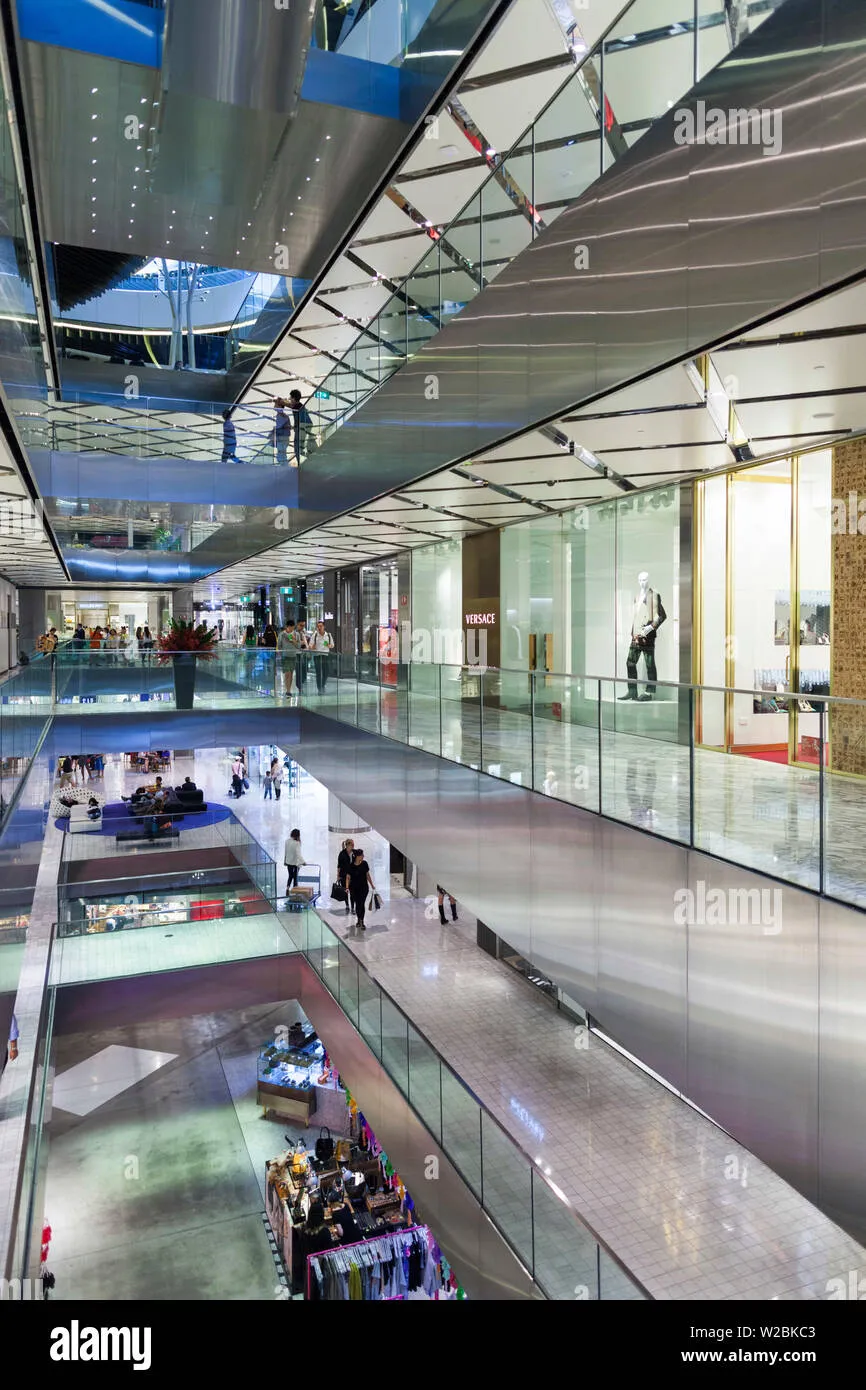 Photo: Westfield Shopping Center, via c8.alamy.com
Chen's iPhone continued pinging cell towers for another six minutes before the signal died somewhere between the customer service desk and the food court storage area. The distance between those points, according to the mall's architectural blueprints, is exactly forty-three feet. The search teams would later walk that corridor 847 times.
The Pattern Emerges
Chen's disappearance might have remained an isolated mystery if not for Dr. Sarah Whitmore's research into what she terms "threshold events"—cases where individuals vanish in architecturally mundane spaces under circumstances that defy conventional explanation. Her database, compiled over seven years of obsessive documentation, contains 247 verified cases. Eight of them form a cluster so specific, so geometrically consistent, that they demand separate analysis.
Each case involves an American who disappeared while alone in a commercial or institutional space characterized by specific architectural elements: dropped ceilings with fluorescent lighting, industrial carpeting or linoleum flooring, and corridor systems that create repetitive visual patterns. More critically, each disappearance occurred in a space that had recently undergone renovation or structural modification.
The surveillance footage from St. Mary's Regional Hospital shows nurse Jennifer Walsh entering Supply Closet 4-B at 2:17 AM on August 3rd, 2020. The camera angle captures the doorway perfectly. She enters. She does not emerge. When security checked the closet fourteen minutes later, they found only shelves of medical supplies and a faint smell they described as "old carpet in summer."
The Phone Records Tell Stories
What makes these cases particularly unsettling is not what the evidence shows, but what it suggests about the nature of space itself. Cell phone data from all eight cases reveals a consistent anomaly: in the minutes preceding each disappearance, the devices began connecting to towers in impossible sequences, triangulating positions that placed the phones simultaneously in multiple locations.
Derek Martinez's iPhone, according to Verizon's tower logs, was simultaneously connected to transmitters in downtown Phoenix and rural Montana during his final three minutes in the basement of the Maricopa County Administrative Building. The Montana tower was 847 miles away. The basement where Martinez was conducting an after-hours inspection had no windows and was surrounded by thirty feet of concrete on all sides.
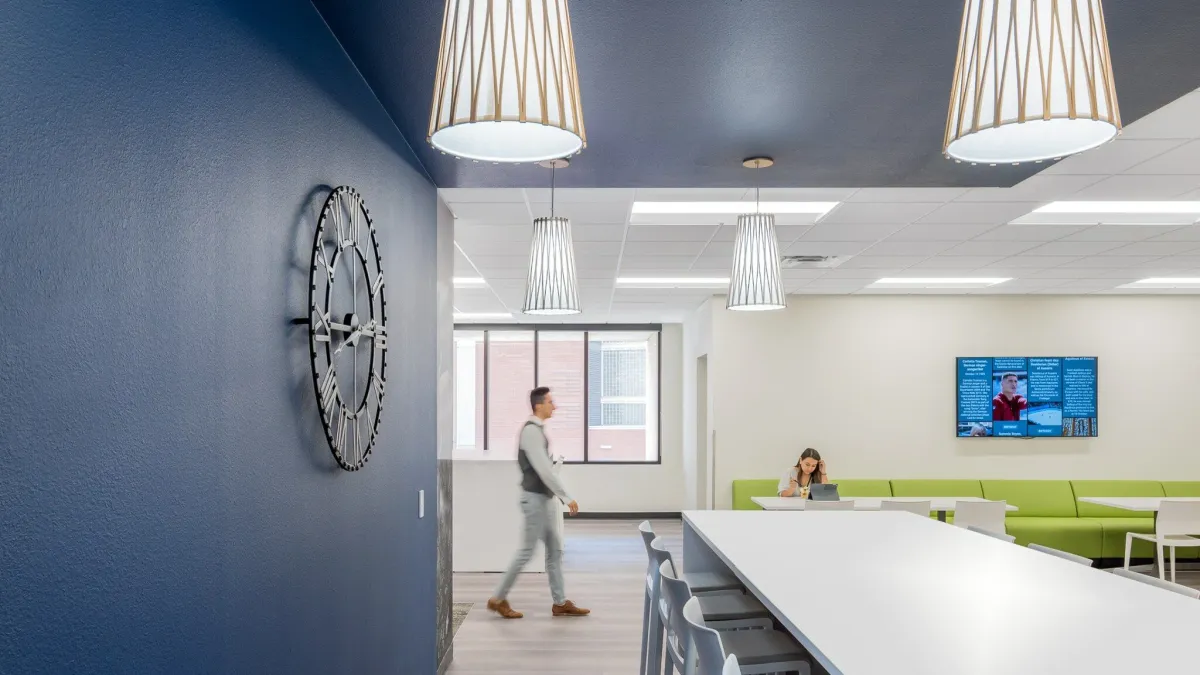 Photo: Maricopa County Administrative Building, via www.dekkerdesign.org
"The data suggests these individuals were experiencing some form of spatial displacement even before they disappeared," explains telecommunications analyst Robert Kim, who has studied the tower logs independently. "It's as if their phones were trying to maintain connection across impossible distances, as if space itself was stretching."
The Witnesses Who Saw Nothing
Perhaps most disturbing are the witness accounts from those who were present but saw nothing unusual. Security guard Tom Harrison was monitoring the cameras when Marcus Chen disappeared. He watched Chen enter the corridor and simply assumed the maintenance worker had taken a different route back. It wasn't until the next shift that anyone realized Chen had never left the building.
"I've watched that footage maybe a thousand times," Harrison told investigators. "There's nothing weird about it. A guy walks into a hallway. That's it. But when I really focus on it, when I try to remember watching it happen live, I get this feeling like... like I'm trying to remember a dream. Like my brain doesn't want to hold onto that specific moment."
Similar statements appear in all eight case files. Witnesses describe a quality of forgetting, as if the moment of disappearance created a cognitive blind spot that only became apparent in retrospect.
The Renovation Connection
The architectural commonality extends beyond aesthetics. Each location had undergone recent structural modification that involved the installation of new dropped ceiling systems or the reconfiguration of corridor layouts. The work orders, when examined together, reveal an unsettling pattern: in each case, the renovations created spaces that were geometrically identical despite being in different states, different building types, different architectural firms.
The measurements are precise: corridor widths of exactly 8.5 feet, ceiling heights of 8.2 feet, fluorescent fixtures spaced at 4.1-foot intervals. The carpeting, sourced from different manufacturers, nonetheless shared identical fiber composition and dye lots that, according to industry experts, should not have existed simultaneously across multiple production runs.
These eight Americans walked into spaces that looked like everywhere and nowhere, places that existed in the liminal gap between intention and accident. The security cameras captured their entries but not their destinations. Their phones tracked positions in impossible geographies. And somewhere in those fluorescent-lit corridors that measured exactly the same despite being hundreds of miles apart, they found doorways that led to places that do not appear on any map.
The investigations remain open. The families wait for answers that may exist only in the humming silence of empty corridors, where the mathematics of space itself seems to have forgotten the rules.