Field Notes from the Impossible
The graph paper was supposed to save me.
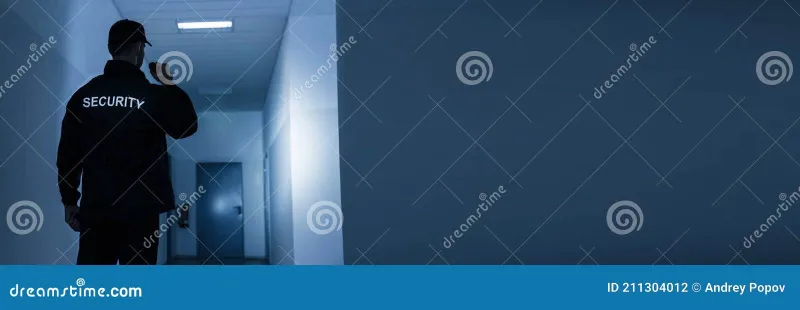
I'd torn it from my field notebook the moment I realized where I was—or rather, where I wasn't anymore. One second I'd been inspecting the load-bearing wall in the Riverside Medical Center's basement, flashlight beam tracing hairline cracks in the concrete, and the next I was standing in a corridor that stretched beyond my light's reach. The transition felt like stepping through a soap bubble: sudden, weightless, wrong.
 Photo: Riverside Medical Center, via medresidency.com
Twenty-three years as a structural engineer had trained me to trust measurements, angles, the reliable mathematics of space. When confronted with the impossible, I did what any engineer would do: I started documenting.
The first sketch was simple. A straight corridor, fluorescent fixtures every twelve feet, carpet with a moisture stain pattern I noted as "consistent dampness, no visible source." The walls measured eight feet apart—I paced it twice to be sure. Standard commercial construction, nothing unusual except for the way it continued without variation past the limits of my vision.
I walked for what felt like an hour, marking my progress on the graph paper. Each square represented ten feet. The hallway never turned, never branched, never ended. When I finally stopped, exhausted, I'd filled three pages with a perfectly straight line.
That's when I noticed the first impossibility.
The Mathematics of Wrong
I'd been walking in a straight line for over three hours—my watch was still working, thank God—but when I turned around, the corridor behind me looked identical to the one ahead. Not similar. Identical. The same water stain on the carpet, the same flickering fluorescent fixture, the same small tear in the wallpaper at shoulder height.
I marked it on my map with a question mark, then kept walking.
The branching started on day two. Right turns that led to corridors identical to the one I'd left, except for subtle differences I documented obsessively: a slightly different shade of yellow paint, carpet fibers that lay in the opposite direction, the hum of the lights pitched a half-tone higher.
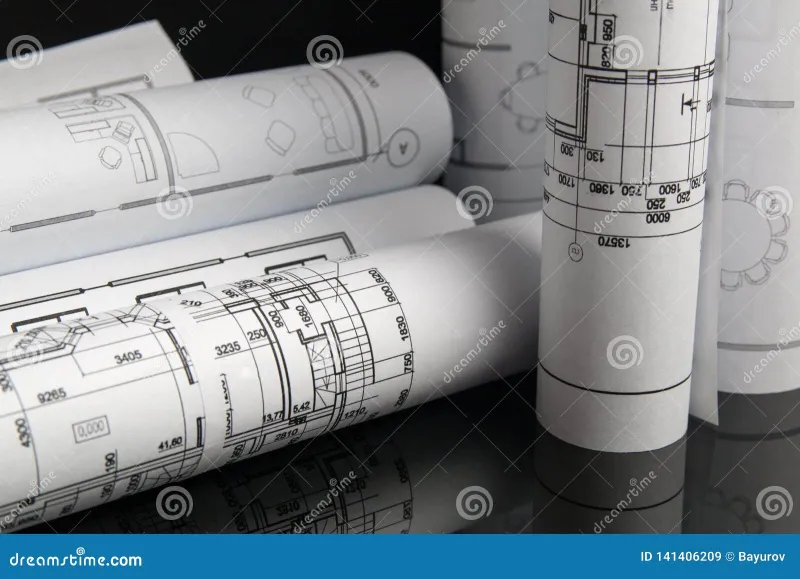
Each new corridor earned its own page in my notebook. I developed a system: solid lines for confirmed passages, dotted lines for suspected connections, hash marks for dead ends. The maps grew complex, then contradictory, then impossible.
Room 247 connected to Corridor C-7, which led to Room 247. The same room. I checked the measurements three times, counted the ceiling tiles, noted the specific pattern of wear on the carpet. Identical in every way except for the number on my map.
That night—if it was night; the fluorescents never dimmed—I sat in the corner of Room 247 (or its twin, or its original) and stared at my drawings. The lines seemed to shift when I wasn't looking directly at them, corridors rearranging themselves like living things.
The Sound Behind the Wall
By day five, I'd filled seventeen pages with maps that made no geometric sense. Hallways that intersected themselves, rooms larger on the inside than the outside, corridors that existed in my drawings but led nowhere when I tried to walk them.
I started to suspect I wasn't alone.
The sound began as a soft scratching, like pencil on paper, coming from somewhere inside the walls. At first, I thought it was my imagination—the stress of displacement, the isolation, the growing certainty that my maps were somehow wrong in ways that mathematics couldn't explain.
But the scratching followed a pattern. It started whenever I began drawing, stopped when I put my pencil down. And it was getting closer.
I tested it. Drew a simple square on a fresh page. The scratching responded immediately, mimicking my strokes with perfect timing. When I drew a circle, the sound traced curves through the drywall. When I sketched a corridor, the scratching moved in a straight line, fading as it traveled deeper into the impossible architecture.
Something was copying my maps. Something in the walls, in the spaces between spaces, learning the geography I was creating.
Final Entry
I don't know if anyone will find this notebook. I don't know if anyone should.
The maps aren't maps anymore. They're invitations. Every line I've drawn has become a path for something that shouldn't exist to follow. I can hear it moving now, not just scratching but walking, its footsteps echoing through corridors I drew but never visited.
I thought I was mapping my way out. Instead, I was mapping its way in.
The sound is right behind the wall now. The wall that, according to my drawings, shouldn't exist. The wall that, according to my measurements, is somehow both there and not there, solid and permeable, a barrier that exists only because I haven't drawn a door through it yet.
But I won't draw that door. I won't complete the path.
The pencil is getting heavy in my hand. The graph paper is almost full. And the scratching has stopped.
It doesn't need to copy my maps anymore.
It knows where I am.