Marcus Chen had been swinging hammers for twenty-three years, and he'd never met a wall that didn't have something sensible behind it. Insulation, maybe some mice, electrical that wasn't up to code—the usual suspects hiding in the bones of suburban America. The Hendricks place was supposed to be straightforward: gut the kitchen, open up the living room, turn a cramped 1970s split-level into something that could sell in today's market.
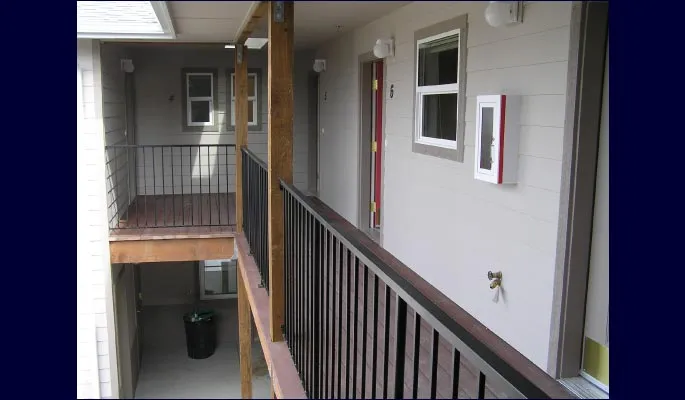 Photo: the Hendricks place, via www.goodhut.com
 Photo: Marcus Chen, via mir-s3-cdn-cf.behance.net
The sledgehammer felt good in his hands that Tuesday morning. The wall between the kitchen and dining room was load-bearing according to the blueprints, but the homeowner had gotten an engineer's approval for the beam replacement. Marcus had done this dance a hundred times before. Three measured strikes to test the structure, then systematic demolition working from the edges inward.
The first swing punched through drywall with the satisfying crunch of a job well done. The second swing should have hit studs, maybe some old newspaper insulation if the house was as old as he suspected. Instead, his hammer disappeared into empty space with a hollow thunk that echoed longer than it should have.
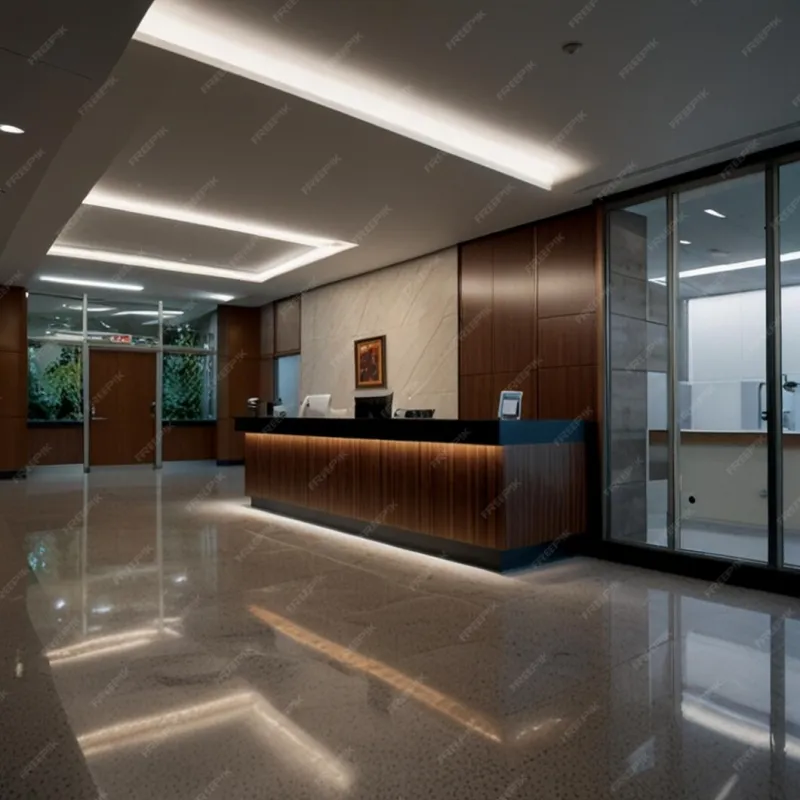
Marcus pulled the hammer back and peered through the hole. Instead of the dining room wall he expected to see eighteen inches away, yellow light spilled out from what looked like a corridor. Not the warm yellow of incandescent bulbs or the blue-white of modern LEDs, but something in between—the sickly fluorescent glow of office buildings and hospital hallways.
He widened the hole with his hands, pulling away chunks of drywall and joint compound. The space behind the wall stretched further than the house was wide. Marcus knew this house's footprint by heart; he'd measured it twice and walked the property lines with the surveyor. Thirty-six feet from the front door to the back fence. The corridor he was looking at extended at least fifty feet in one direction, disappearing around a corner that shouldn't exist.
The rational part of his mind—the part that had passed contractor licensing exams and calculated load distributions for two decades—insisted there was an explanation. Maybe the blueprints were wrong. Maybe there was an addition that hadn't been documented properly. Maybe the Hendricks had mentioned a crawlspace he'd forgotten about.
But crawlspaces didn't have carpet.
The flooring was industrial-grade, the kind of low-pile carpet you'd find in office buildings or schools. It was slightly damp under his boots when he stepped through the opening, and it muffled sound in a way that made his breathing seem unnaturally loud. The walls were the same institutional yellow as the light, punctuated every twelve feet by identical doorways that led to rooms he couldn't quite see into.
Marcus kept his tools with him out of habit. The hammer hung from his belt, and he'd grabbed his measuring tape and level before climbing through. Professional instincts die hard, even when the job site stops making sense. He measured the corridor width: exactly eight feet. He checked the walls for plumb: perfectly vertical, though the level's bubble seemed to drift slightly even when he held it steady.
The humming started about fifty feet in. Not the sixty-cycle drone of electrical transformers he was used to, but something lower and more organic. It seemed to come from the walls themselves, or maybe from somewhere much further away. Marcus had worked in enough basements and crawlspaces to know that buildings make noise—settling foundations, expanding joints, mice in the walls—but this was different. This sounded almost like breathing.
He tried to retrace his steps after an hour of walking. The corridor behind him looked identical to the corridor ahead: same carpet, same walls, same doorways leading to rooms that were always just dark enough to hide their contents. The opening he'd made in the Hendricks' kitchen wall should have been visible from anywhere in this space, but when he turned around, he saw only more corridor stretching toward a vanishing point that seemed to shift when he wasn't looking directly at it.
Marcus's phone showed no signal, which wasn't surprising in a basement or crawlspace. What was surprising was that the timestamp kept jumping—10:47 AM, then 2:23 PM, then 9:15 AM. The battery indicator fluctuated between full charge and completely dead, sometimes changing while he watched.
The footsteps started on his second day in the corridor. At first, he thought they were echoes of his own movement, but they had a different rhythm—heavier, more deliberate, always just around the next corner or through the next doorway. Marcus called out once, his voice swallowed by the carpet and walls, but the footsteps stopped immediately. They resumed an hour later, closer this time, matching his pace with unsettling precision.
He found his way back to the Hendricks house on Thursday morning, though he couldn't remember making the decision to turn around. The hole in the kitchen wall was gone, sealed with new drywall that matched the existing texture perfectly. Mrs. Hendricks was in the living room, reading the newspaper and sipping coffee as if nothing had happened.
"Marcus," she said without looking up, "your boots are muddy. You'll need to clean them before you go back to work."
Marcus looked down at his feet. His work boots were caked with something that wasn't quite mud—darker, with an oily consistency that seemed to shift in the light. He couldn't remember stepping in anything like that in the corridor, but then again, he couldn't remember much about how he'd gotten back.
The renovation proceeded normally after that. The wall came down clean, revealing proper studs and insulation. The beam went in without incident. Mrs. Hendricks never mentioned the muddy boots again, and Marcus never asked about the corridor. Some things, he'd learned, were better left unmeasured.
But sometimes, late at night in his own house, Marcus would put his ear to the walls and listen. And sometimes, just sometimes, he could swear he heard that humming again—fainter now, but still there, waiting behind the drywall like a promise he wasn't sure he wanted kept.