Methodology and Site Selection Criteria
The data emerges from the intersection of missing persons reports, social media posts, and urban exploration forums. Cross-referencing these sources with architectural surveys reveals locations that appear with statistical frequency in accounts of spatial displacement. The nine sites documented here represent the most thoroughly investigated commercial spaces where multiple independent sources report similar anomalous experiences.
Each location demonstrates measurable acoustic properties that deviate from architectural norms. Sound propagation patterns, reverberation characteristics, and ambient noise signatures create environments where normal spatial perception becomes unreliable. The acoustic anomalies appear to correlate with reports of geometric impossibility — as if sound itself becomes lost in spaces that extend beyond their physical boundaries.
Northgate Shopping Center — Akron, Ohio
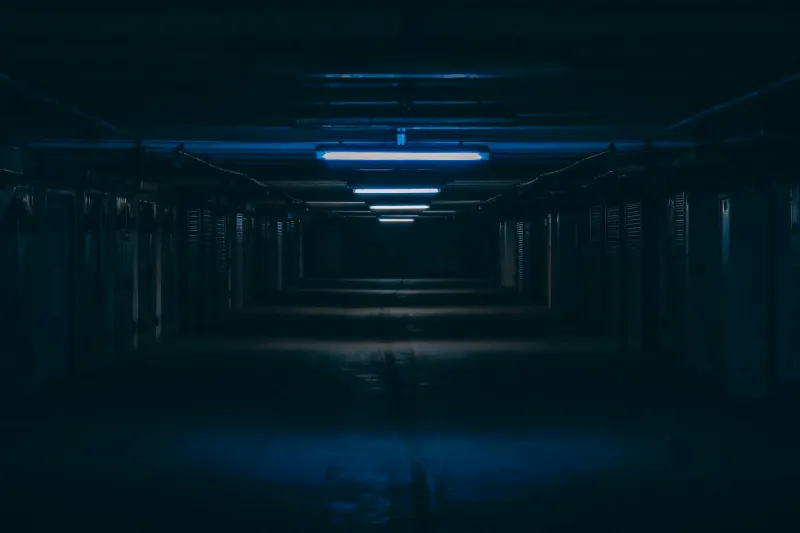
The abandoned Sears anchor store has stood empty since 2018, but the building's fluorescent fixtures continue operating on automated timers. Local utility records show consistent electrical draw despite the absence of active leases. Urban explorers report that footsteps echo with delay patterns suggesting corridor lengths far exceeding the building's measured dimensions.
Acoustic analysis reveals reverberation times of 3.2 seconds in spaces that should produce 0.8-second delays based on physical measurements. The sound propagation patterns indicate the presence of additional architectural volume that cannot be visually confirmed. Temperature readings show consistent cool spots near the former escalator well, where the acoustic anomalies are most pronounced.
Five separate missing persons cases have been filed for individuals last seen entering this location. Security footage from neighboring businesses shows subjects entering but never exiting the structure. Police investigations conclude with standard determinations of voluntary disappearance, noting that the building contains no concealed areas large enough to hide human remains.
Desert Hills Mall — Victorville, California
Half-demolished since 2019, this high desert shopping center retains only its food court and central corridor system. The demolition process halted abruptly when construction crews reported tools and equipment disappearing from secured areas overnight. Work resumed with modified protocols requiring constant visual contact between team members.
The remaining structure produces acoustic phenomena that violate basic physics principles. Conversations held at normal volume near the fountain area can be heard clearly from the opposite end of the building, while shouting from the same location produces no audible response. Sound engineers describe the effect as "selective acoustic transmission" — as if the space chooses which sounds to carry and which to absorb.
Construction workers documented temperature fluctuations of 15-20 degrees within the same room, creating microclimates that shift position throughout the day. The patterns suggest air circulation systems operating beyond the building's documented HVAC capacity. Attempts to map these air currents using standard techniques have failed to locate their source or destination.
Crossroads Shopping Plaza — Memphis, Tennessee
This strip mall complex features a central corridor that connects twelve individual storefronts, most vacant since 2020. The architectural layout appears straightforward, but surveying equipment consistently produces measurements that contradict visual observation. Laser distance meters register corridor lengths varying by 15-30 feet between successive measurements taken from identical positions.
The acoustic signature includes a persistent low-frequency hum at 52 Hz that cannot be attributed to any mechanical system in the building. The sound appears to originate from within the walls themselves, suggesting resonance cavities that don't correspond to any documented construction features. Tenants in the few remaining occupied units report that this hum becomes more pronounced during overnight hours.
Local police respond to regular calls about "people trapped in the walls" — voices calling for help that seem to come from solid concrete. Investigations reveal no concealed spaces or hidden passages. The voices are recorded clearly on body cameras but cannot be located despite extensive searching.
Riverside Mall — Utica, New York
Closed to public access since 2021, this facility maintains minimal lighting and climate control while ownership disputes prevent redevelopment. The main concourse features a central atrium with skylights that produce unusual shadow patterns throughout the day. Time-lapse photography reveals shadows that move independently of the sun's position, creating geometric shapes that don't correspond to any physical obstructions.
Acoustic testing reveals that the atrium space produces perfect acoustic isolation — sounds generated within the central area cannot be detected from the surrounding corridors, while external noise penetrates the space normally. This creates an acoustic "dead zone" with no apparent physical explanation.
Security patrols report equipment malfunctions limited to the atrium area. Flashlights dim without battery drain, radio communications fail despite strong signal strength outside the space, and digital cameras produce images with geometric distortions that don't appear in the viewfinder during shooting.
Additional Documented Locations
Five other sites demonstrate similar patterns with varying degrees of documentation:
Westfield Southcenter (Seattle, Washington) — Escalator wells that produce echo patterns suggesting depths exceeding foundation specifications.
Park City Center (Lancaster, Pennsylvania) — Department store anchor spaces where fluorescent lighting creates strobe effects not corresponding to electrical system cycling.
Eastland Mall (Charlotte, North Carolina) — Service corridors with persistent chemical odors despite environmental testing showing normal air quality.
Sunrise Mall (Citrus Heights, California) — Food court seating areas where ambient temperature varies by location in patterns that shift throughout the day.
Century III Mall (West Mifflin, Pennsylvania) — Now demolished, but reports from the coordinates continue with consistent frequency.
Architectural Commonalities
These locations share specific design elements that may contribute to their anomalous properties. Extended linear corridors with minimal visual interruption create sightlines that exceed normal human spatial processing capacity. Drop ceiling systems with modular fluorescent fixtures produce uniform lighting that eliminates natural shadow patterns used for depth perception.
The acoustic properties appear most pronounced in spaces with hard surface materials — polished concrete floors, painted drywall, and vinyl ceiling tiles that create reflective sound environments. The combination of these materials with specific geometric proportions may create resonance conditions that affect human spatial awareness.
Most significantly, all documented locations feature architectural transitions — escalator wells, corridor intersections, or atrium spaces — where multiple spatial zones converge. These transition points consistently produce the strongest acoustic anomalies and the highest frequency of reported incidents.
Ongoing Monitoring
Remote monitoring equipment installed at three locations continues collecting data despite access restrictions. The acoustic signatures show consistent patterns that correlate with reported missing persons cases in surrounding areas. When the anomalous sound characteristics intensify, local law enforcement typically receives increased calls about disoriented individuals found wandering in nearby neighborhoods with no memory of how they arrived.
The research raises questions about the relationship between architectural design and human spatial cognition. Whether these locations represent genuine dimensional vulnerabilities or demonstrate how specific built environments can trigger psychological dissociation remains under investigation.
What cannot be disputed is that these spaces continue producing measurable effects that exceed normal architectural parameters. The acoustic phenomena persist regardless of occupancy status, suggesting that whatever mechanisms create these anomalies operate independently of human presence. The implications for commercial architecture and public safety continue to evolve as documentation expands.